Beyond The Diagnosis
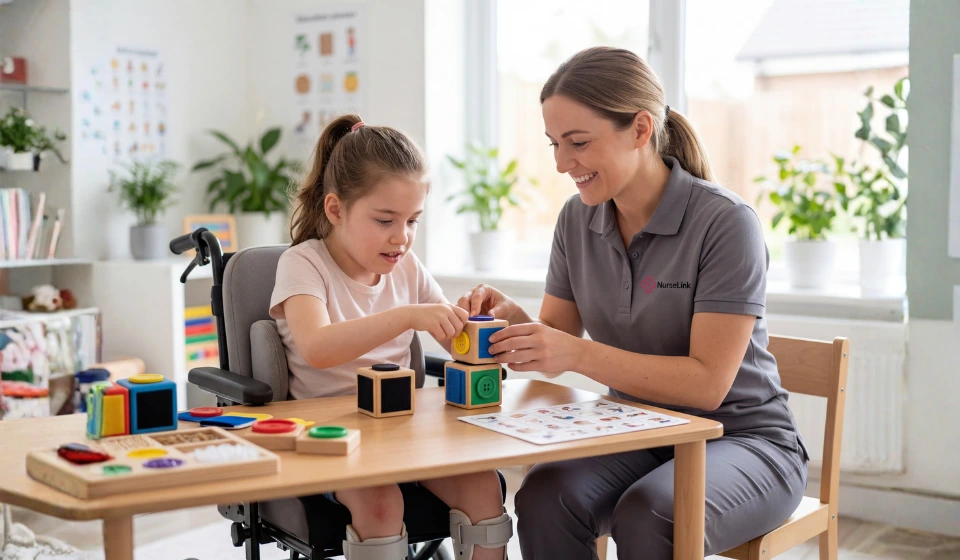
Beyond The Diagnosis
How NurseLink Healthcare Delivered NDIS Capacity Building Support For A Child With Cerebral Palsy In Victoria
Introduction
Cerebral palsy is the most common physical disability in childhood. It affects movement, muscle tone and motor skills in ways that vary enormously from one child to the next — but in every case, it arrives in a family’s life as something that reshapes everything. The plans they had, the milestones they were watching for, the future they had quietly imagined: all of it shifts, not necessarily into something lesser, but into something that requires far more intention, far more support and far more fight to reach.
For parents of a child with cerebral palsy, the NDIS represents both a lifeline and a labyrinth. The funding is there. The potential to build real, lasting capability in their child is real. But navigating the system, finding the right provider and building a support plan that genuinely moves the dial – rather than simply filling hours – is a challenge that many families find overwhelming on top of everything else they are already carrying.
Capacity building support, done well, is not about managing a child’s limitations. It is about systematically expanding what they can do, what they believe they can do, and how they move through the world. The difference between support that achieves this and support that does not comes down entirely to how seriously a provider takes the goal of genuine progress.
At NurseLink Healthcare, we are a registered NDIS provider committed to delivering support that creates meaningful, measurable change in the lives of the participants we work with. This case study documents how our team supported a young girl with cerebral palsy and her family in Victoria to rebuild confidence, develop daily living skills and work toward independence in ways that had felt out of reach before our involvement. To protect the privacy of the participant and her family, her name and all identifying details have been kept confidential throughout this case study.
To protect the privacy of the client and his family, his name and all identifying details have been kept confidential throughout this case study.
The Participant's Background & Her Challenges
The participant is a nine-year-old girl living with her parents and younger brother in suburban Victoria. She was diagnosed with spastic diplegia cerebral palsy – a form primarily affecting the legs – shortly after birth, following complications during delivery that resulted in a period of oxygen deprivation. From her earliest years, her parents had navigated a demanding landscape of medical appointments, therapies and school support plans, advocating consistently and tirelessly for their daughter in every setting.
She is, by every account of those who know her, a bright, determined and socially engaged child. She has a sharp sense of humour, a fierce competitive streak and opinions about most things. She attends a mainstream primary school with support and has always been included in her peer group in a way her parents have worked hard to protect.
In the year prior to NurseLink Healthcare’s involvement, the family had been through a difficult period. Their daughter had undergone selective dorsal rhizotomy – a surgical procedure aimed at reducing the spasticity in her legs and improving her long-term mobility – followed by an intensive period of post-surgical rehabilitation. The surgery had gone well clinically, but the recovery had been long, painful and emotionally exhausting for the whole family. Many of the functional skills she had built before the surgery had regressed during the recovery period, and rebuilding them required a structured, sustained effort that her existing support arrangement was not equipped to deliver.
Her NDIS plan had been reviewed following the surgery and now included capacity building funding specifically directed at daily living skills, communication and social participation. Her parents had been through one provider who, despite good intentions, had not produced the kind of structured, goal-oriented work that the plan was designed to fund. They came to NurseLink Healthcare having already experienced what inadequate capacity building looked like, and with a clear and specific expectation of what they needed instead.
The challenges were significant. Post-surgical fatigue was still affecting her stamina, which meant that sessions needed to be carefully structured to achieve real work without depleting her. The regression in her self-care skills – dressing, personal hygiene tasks, some aspects of meal preparation – was a source of frustration for her, as she had managed many of these independently before the surgery and the loss of that independence stung. Her confidence in social settings had also taken a knock during the long months of reduced school attendance, and re-engaging with her peers in a way that felt natural rather than effortful required deliberate support.
Understanding What The Participant & Her Family Actually Needed
NurseLink Healthcare’s assessment process began, as it always does, with the person rather than the paperwork. Before reviewing the NDIS plan or the goals documented within it, our team spent time understanding who this child was, what mattered to her, what frustrated her and what she was working toward.
She was asked directly – not her parents on her behalf, but her – what she most wanted to be able to do that she couldn’t do as easily as she wanted to right now. Her answers were specific and telling. She wanted to be able to get dressed for school without needing her mum to help with the buttons. She wanted to be able to join in with her friends at lunch without getting tired and having to sit out. She wanted to go to a friend’s house for a sleepover.
These were not clinical goals. They were a nine-year-old’s goals. And they were precisely the right starting point for building a capacity development plan with any real meaning.
Her parents’ needs were equally clearly identified. They wanted structured, documented progress toward measurable outcomes – not sessions that felt productive in the moment but left no trail of evidence that anything was actually being built. They wanted communication that kept them genuinely informed rather than reassured. And they wanted their daughter to be supported by someone she actually liked spending time with, because they had seen what happened to her engagement when she didn’t.
The assessment also engaged with her treating physiotherapist and occupational therapist to ensure that NurseLink Healthcare’s capacity building work was directly aligned with and complementary to the therapeutic goals already in place. This coordination was not a formality. It shaped the entire design of the support plan.
The NurseLink Healthcare Solution Delivered
Goal-Oriented Sessions With Clear, Documented Progress
Every session delivered by NurseLink Healthcare was structured around specific, documented goals drawn from the participant’s NDIS plan and her own stated priorities. Each visit began with a brief, age-appropriate check-in about how she was feeling and what she wanted to focus on that day – giving her genuine agency within the structure – and ended with a short note recording what had been worked on, how she had responded and what the next step was.
This documentation was shared with her parents after every session and contributed to the six-monthly progress review submitted to her NDIS planner. For a family who had previously experienced support that left no evidence of progress, the rigour of this approach was immediately and noticeably different.
A Carefully Matched Support Worker
The matching process for this participant was taken seriously. She was nine, she had strong preferences and she was perceptive enough to know immediately whether she liked someone. NurseLink Healthcare identified a support worker whose experience with paediatric disability was strong, whose energy and communication style were well-suited to working with a child of her age and personality, and who had the specific skills to deliver capacity building work rather than simply companionship.
An introductory visit was arranged before formal sessions began – low stakes, no agenda, just time for them to get to know each other. By the end of it, the participant had shown her support worker her bedroom, explained the rules of her favourite board game and told her mum she was fine. That was the foundation the work was built on.
Rebuilding Self-Care Skills & Daily Independence
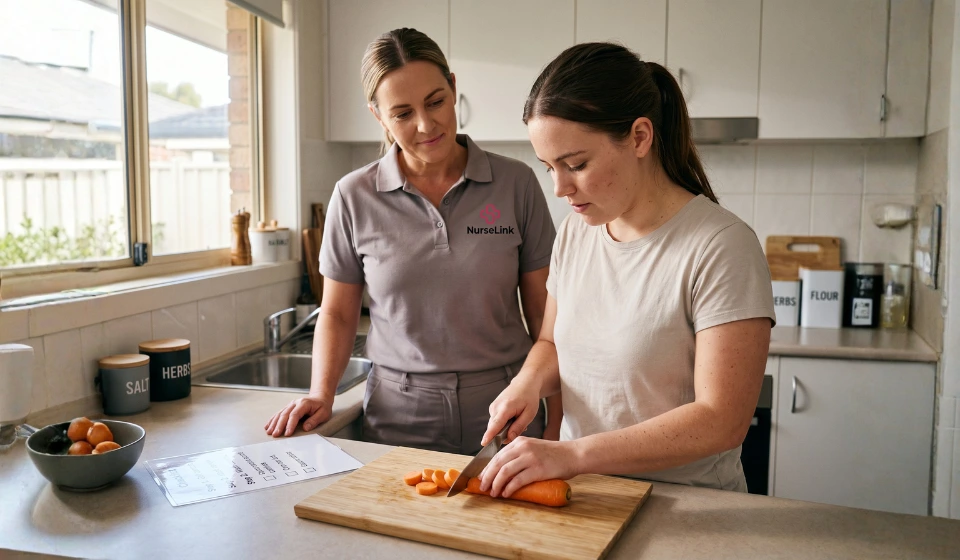
The regression in her self-care skills following surgery was addressed through a structured, graduated programme that broke each task – dressing, personal hygiene routines, preparing a simple snack – into its component steps, identified exactly where the difficulty lay and built capability from that point forward. Progress was incremental, celebrated genuinely and never rushed.
The approach was always to work one step ahead of where she currently was, keeping the challenge real without making it discouraging. Within six weeks, she was managing her school shirt buttons independently. Within three months, she was completing her full morning routine with verbal prompts only, where previously she had required hands-on assistance for several steps.
Building Stamina & Social Confidence
Post-surgical fatigue had limited her ability to sustain participation in social activities, and her confidence in group settings had diminished during the months she had been less present at school. NurseLink Healthcare incorporated stamina-building activities into sessions in a way that felt like play rather than therapy – physically engaging games and activities calibrated to push her endurance gradually without overwhelming it.
Her support worker also worked with her on the social scenarios she found most challenging: joining a group already mid-activity, managing the physical tiredness that sometimes made her short-tempered with friends, asking for help without feeling diminished by it. These were practised, discussed and reinforced over weeks, with her parents given specific ways to continue the work in everyday situations at home.
Coordination With Her Therapy Team
NurseLink Healthcare maintained active communication with the participant’s physiotherapist and occupational therapist throughout the engagement. Session notes were shared with the therapy team, and the capacity-building work was adjusted on two occasions in response to clinical guidance from her physiotherapist about what her body was ready for. This coordination meant that every hour of NDIS capacity building funding was working in the same direction as her clinical therapy, rather than operating in a parallel track that occasionally crossed it.
Outcomes & Impact
Her Daily Independence Rebuilt Itself, Step By Step
The regression that had followed her surgery was systematically reversed over the course of the engagement. By the four-month mark, she was completing her morning routine independently, managing her personal hygiene tasks without assistance and preparing simple snacks for herself after school. Skills that had felt far away in the months immediately following her surgery had been rebuilt on a foundation that was, if anything, more solid than before.
She Had Her Sleepover
At the five-month mark, the participant attended her first sleepover since before her surgery. She had identified this as one of her goals at the very first session. Her mother described the morning after her daughter arriving home full of things to say about it – as one of the moments in the past year she would not trade for anything.
Her Confidence Returned Visibly
Those around her – her parents, her teacher, her therapy team – all noted a visible shift in her confidence and engagement over the course of the NurseLink Healthcare involvement. She was more willing to attempt things she was uncertain about. She was more resilient when something was difficult. She was, as her father put it, more herself again.
Her Parents Got Their Footing Back
The period following their daughter’s surgery had taken a significant toll on both of her parents. The combination of her physical recovery, the regression in her skills and the inadequacy of the support previously in place had left them exhausted and, at times, disheartened. As NurseLink Healthcare’s work began to produce visible, documented progress, and as the communication structure gave them genuine insight into how each session had gone, they described finding their footing again – a renewed belief that the work being done was genuinely moving their daughter forward.
Participant Reflection
The participant’s mother shared her family’s experience several months into the NurseLink Healthcare engagement:
“After her surgery, we went through a really hard stretch. She’d worked so hard to be able to do things herself, and then so much of that had to be rebuilt from scratch. The team at NurseLink understood that this wasn’t just about ticking goals on a plan – it was about giving our daughter her confidence back. They found someone she genuinely loves working with, and the progress has been real and consistent in a way we hadn’t experienced before. She went to her first sleepover in over a year last month. If you knew how much that meant to her, you’d understand why we’re so grateful.”
Key Takeaways From This Case Study
NDIS capacity building only works when it is genuinely goal-oriented. Funding hours is not the same as building capability. Every session must be structured around specific, documented goals and must produce a clear record of what was achieved and what the next step is. Families deserve evidence that the funding is doing what it is meant to do.
The participant’s own goals must drive the plan. A nine-year-old who wants to do her own buttons and go to sleepovers is giving her support team exactly the information they need to build a plan that will actually matter to her. When the goals belong to the participant, the motivation to work toward them is real.
Matching on personality and connection is not optional in paediatric support. Children cannot engage productively with someone they do not like or trust. The quality of the relationship between a child and their support worker is the single most important determinant of whether the capacity-building work achieves anything. Getting the match right is a clinical decision.
Post-surgical recovery requires a support plan that understands the clinical context. Rebuilding skills after a significant surgical procedure is different from building them in the first instance. The regression is real, the fatigue is real, and the emotional dimension of having to relearn things you could already do is real. Support that does not account for all three of these will underserve the participant.
Coordination between NDIS support workers and the therapy team is essential, not optional. When capacity building support and clinical therapy are not communicating with each other, the participant pays the cost in duplicated effort, conflicting approaches and missed opportunities. A provider who treats coordination as a core responsibility rather than a courtesy will consistently produce better outcomes.
Conclusion
Cerebral palsy does not define what a child can become. It shapes the path, it raises the effort required and it demands more of everyone around that child – but it does not set the ceiling. The capacity building support delivered under an NDIS plan, when it is done with rigour, genuine care and a real understanding of the participant as a person, can move that ceiling in ways that matter deeply.
At NurseLink Healthcare, we understand that capacity-building support for a child is not about filling a plan. It is about building a future, one skill, one session and one goal at a time. Our approach reflects that understanding in how we assess, how we match, how we deliver and how we measure the work we do.
This case study is an example of NDIS support at its most purposeful – a child who had ground to regain, a family who needed a provider they could trust, and a support arrangement that delivered both. If your family is looking for an NDIS provider who will take your child’s goals seriously and build toward them with consistency and care, reach out to the NurseLink Healthcare team today.
Latest Post
When Parents Learned to Trust NDIS Support
The Life He Thought The Accident Had Collapsed
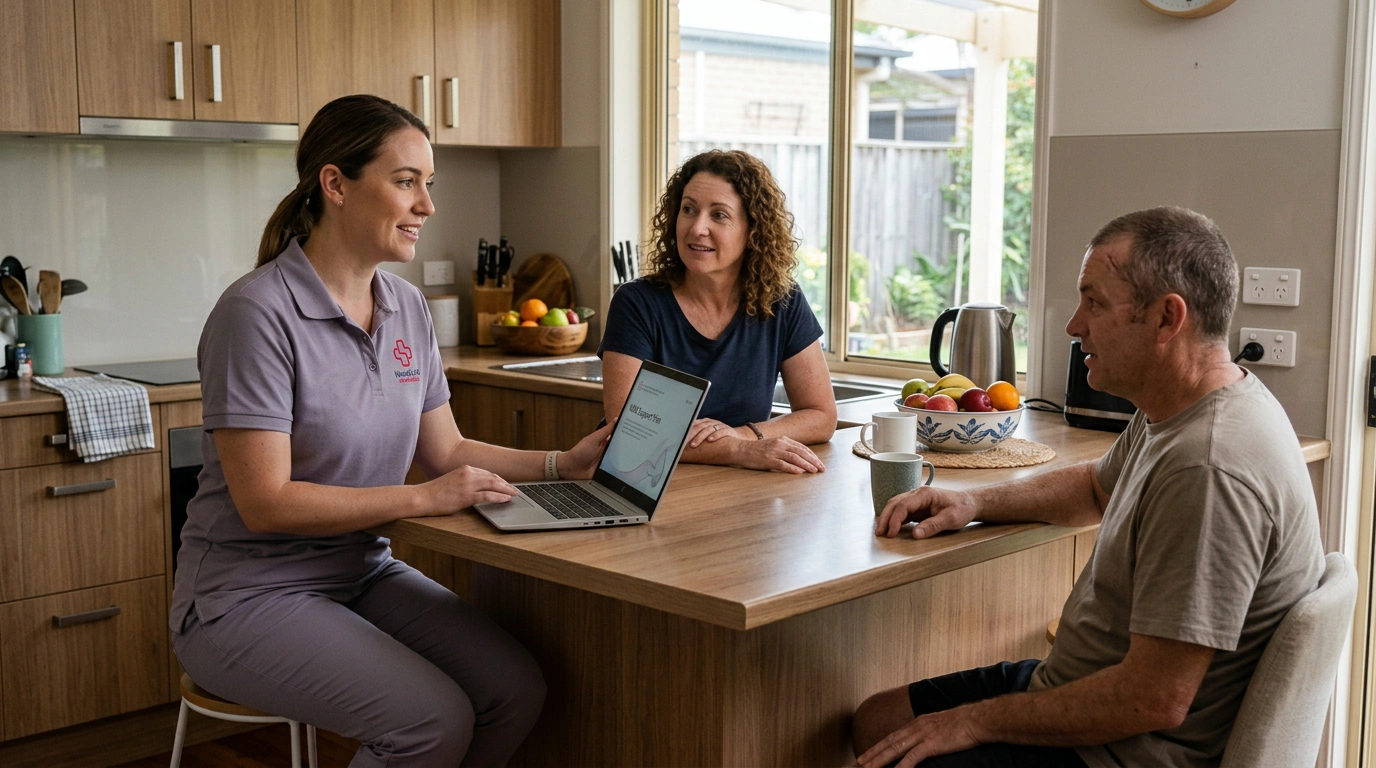
Someone Finally Holding The Whole Picture
A Home That Was Finally His Own
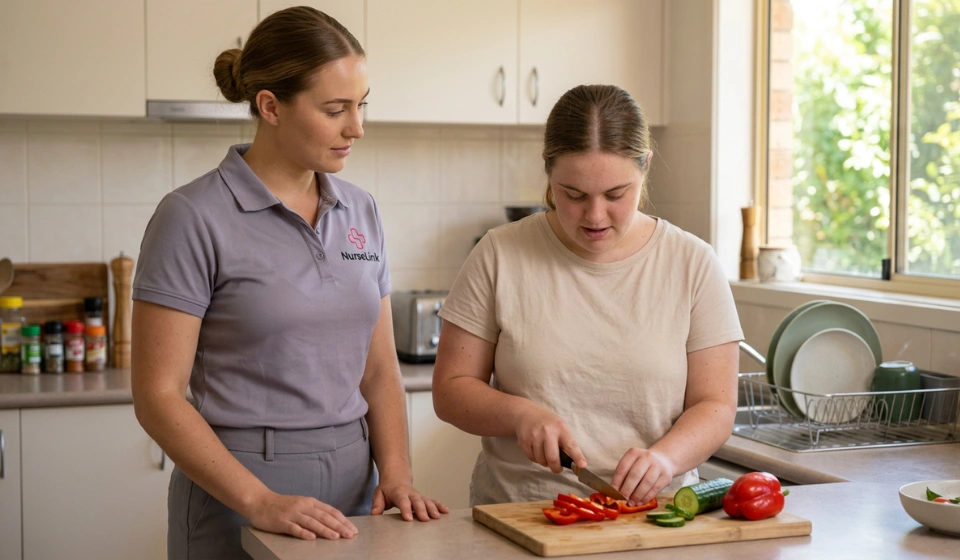
Learning To Do It Herself, With Someone Beside Her
What Was Still Possible
Finding Her Way Back To Her Own Kitchen Table
From Aged Care To Her Own Front Door
She Was Ready. We Helped Her Get There.
Room To Breathe
The Man He Was Getting Back To
They Did Not Give Up On Him
Returning To Community Life
Rebuilding Independence After A Diabetes-Related Amputation
Cooking By Heart
The World Beyond The Front Door
Finding Home Again After A Stroke
Relearning Independence After A Life-Changing Accident
Beyond The Diagnosis
Two Years In Care. One Giant Step Toward Home.
When Transport Barriers Disrupted NDIS Care
Supported Independent Living Success
A Journey Towards Independence With NDIS Support
Daniel’s Journey