How Coordinated Support Restored Access, Improved Outcomes, And Reduced Missed Care
Introduction
Access to healthcare is often assumed to be straightforward. However, for many individuals living in rural and regional parts of Australia, even routine medical appointments can become difficult to attend. When transport is unreliable or poorly coordinated, the consequences can extend far beyond inconvenience.
For participants under the National Disability Insurance Scheme, transport is not just a logistical need. It is a critical support that enables access to therapies, medical care, and community participation. When this link breaks down, it can lead to underutilised funding, declining health outcomes, and increased frustration for both participants and their families.
This case study explores how transport barriers disrupted the care journey of an NDIS participant living in a rural community, and how a coordinated approach helped restore consistency, confidence, and overall wellbeing.
Note: All names and identifying details have been changed to protect client privacy.
The Participant’s Background & Challenges
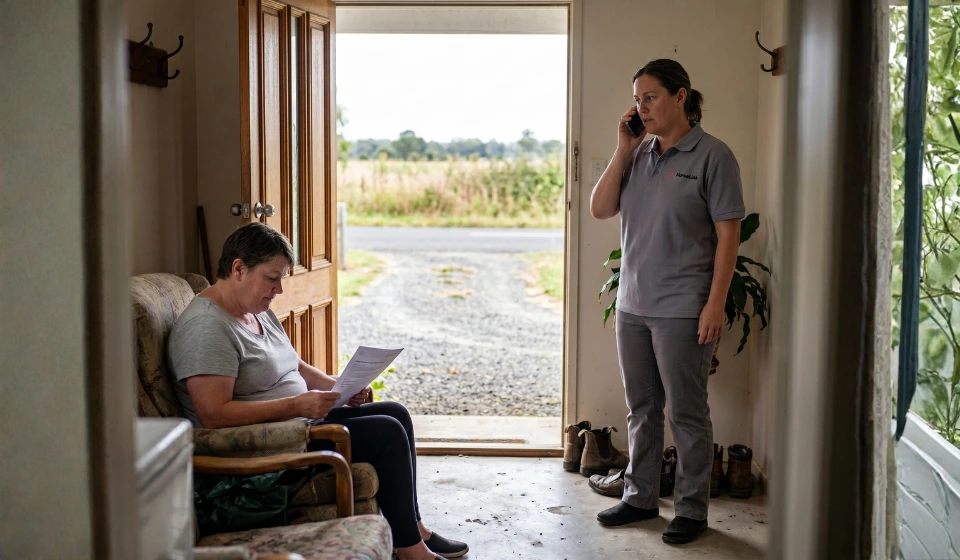
The participant was a 52-year-old individual living in a regional area of Queensland, approximately 90 minutes from the nearest major healthcare facility. They were an active NDIS participant with a plan that included funding for transport, allied health services, and community access supports.
The participant had a primary physical disability following a neurological condition, which affected mobility, coordination, and endurance. While they retained a degree of independence within the home, travelling long distances or navigating public transport independently was not feasible.
Their NDIS plan included regular appointments such as:
- Physiotherapy sessions to maintain mobility.
- Occupational therapy to support daily living skills.
- Specialist medical reviews every few months.
- Occasional diagnostic and follow-up visits.
On paper, the plan was well-structured and appropriately funded. However, in practice, several barriers prevented effective utilisation.
Limited Local Services
The rural setting meant that most specialised services were located in larger towns or cities. This required consistent, reliable transport arrangements for appointments that were often scheduled weeks in advance.
Local transport options were limited. Public transport was infrequent and not suitable for the participant’s mobility needs. Community transport services were often booked out or unavailable at required times.
Inconsistent Transport Coordination
Although transport funding was included in the participant’s NDIS plan, there was no consistent system in place to coordinate bookings. Different providers were used intermittently, often leading to confusion around schedules, availability, and responsibilities.
Missed communications and last-minute cancellations became common. In some cases, transport simply did not arrive. In others, it arrived too late, causing missed or shortened appointments.
Increasing Missed Appointments
Over time, the participant began missing key appointments. Physiotherapy sessions became irregular, specialist reviews were delayed, and follow-up care was inconsistent.
This had a direct impact on health outcomes. Mobility began to decline, and the participant reported increased discomfort and fatigue. There was also growing anxiety around whether transport would arrive on time.
Emotional & Psychological Impact
Beyond the physical effects, the situation began to affect the participant’s confidence and motivation. The uncertainty around transport created stress, leading to reluctance in booking appointments altogether.
The participant expressed frustration with the system, feeling that despite having funding available, accessing care remained difficult. There was also a growing sense of isolation due to reduced community engagement.
Family & Support Network Strain
Family members attempted to assist where possible, but balancing work commitments and travel distances made it unsustainable to provide consistent support.
The situation highlighted a key issue. While funding existed within the NDIS plan, the lack of coordination and reliable service delivery created a gap between what was funded and what was actually received.
Identifying The Gap In Support
The turning point came during a routine plan review discussion involving the participant, their support coordinator, and service providers.
While reviewing utilisation reports, it became clear that a significant portion of the participant’s transport funding remained unused. At the same time, therapy attendance rates were below expected levels.
This contradiction highlighted a critical issue. The problem was not a lack of funding, but rather a lack of structured coordination and reliable service delivery.
Key Observations
Several patterns emerged during the review:
- Transport bookings were often reactive rather than planned in advance.
- Multiple providers were being used without clear communication between them.
- There was no single point of accountability for transport coordination.
- Appointment scheduling did not always align with transport availability.
- The participant was left managing too many logistical details independently.
It became evident that transport needed to be treated as a core enabler of care, rather than a secondary or optional support.
The Coordinated Transport Solution Delivered
To address these challenges, a more structured and proactive approach was introduced, focusing on consistency, communication, and reliability.
Centralised Booking & Scheduling
A dedicated system was implemented to manage all transport bookings. Instead of arranging transport on an ad hoc basis, appointments and transport were scheduled together in advance.
This ensured that:
- Transport availability aligned with appointment times.
- Travel routes were planned efficiently.
- The participant had clear visibility of upcoming schedules.
Consistent Service Provider
Rather than relying on multiple providers, a consistent transport team was assigned. This created familiarity and reduced confusion.
The participant became comfortable with the staff, which helped reduce anxiety and improve overall experience.
Proactive Communication
Clear communication channels were established between the transport provider, support coordinator, and healthcare providers.
Appointment confirmations, schedule changes, and updates were communicated promptly. This reduced last-minute surprises and improved overall coordination.
Flexible Support For Rural Conditions
Given the challenges of rural travel, flexibility was built into the system. Buffer time was allowed for longer distances, traffic variations, and unexpected delays.
Contingency planning ensured that if changes occurred, alternative arrangements could be made quickly.
Integration With NDIS Plan Goals
Transport was reframed as a critical component of achieving the participant’s broader NDIS goals, including:
- Maintaining physical health.
- Improving independence
- Increasing community participation
This ensured that transport was prioritised appropriately within the overall support framework.
Outcomes & Impact
The introduction of a coordinated transport approach led to significant improvements across multiple areas.
Improved Appointment Attendance
Missed appointments were reduced dramatically. The participant was able to attend physiotherapy, specialist reviews, and other services consistently.
This restored continuity of care, which had previously been disrupted.
Better Health Outcomes
With regular therapy sessions reinstated, the participant experienced improvements in mobility, strength, and overall physical wellbeing.
Early signs of decline were addressed before becoming more serious.
Increased Confidence & Reduced Anxiety
Knowing that transport would arrive reliably reduced stress and uncertainty. The participant felt more confident in booking and attending appointments.
This had a positive impact on mental wellbeing and motivation.
Greater NDIS Plan Utilisation
Transport funding that had previously gone unused was now being effectively utilised. This demonstrated that the issue was not funding levels, but access and coordination.
Enhanced Independence
The participant no longer relied heavily on family members for transport. This increased independence and reduced pressure on informal support networks.
Improved Community Engagement
With reliable transport in place, the participant was able to engage more in community activities, not just medical appointments.
This contributed to a stronger sense of connection and inclusion.
Conclusion
This case demonstrates that even well-funded NDIS plans can fall short without proper coordination. Transport, often overlooked, plays a critical role in ensuring that participants can access the supports they need.
By shifting from a reactive to a structured approach, the participant was able to regain consistency in care, improve health outcomes, and restore confidence in the system.
Ultimately, the solution was not about increasing funding, but about making existing supports work effectively. In doing so, it reinforced a simple but important principle.
Access is not just about availability. It is about reliability, coordination, and ensuring that support systems truly work for the people they are designed to serve.