
The Job Nobody Thought He Could Hold
How NurseLink Healthcare’s NDIS Support Helped A Warrnambool Family See Their Son Take His First Real Job A Case Study In Employment Support That Built The Job Around The Person, Not The Other Way Around Introduction For most young people, a first job is a rite of passage. It is a mix of nerves and pride, an early taste of independence and the first time the world treats you, however briefly, as someone with something to contribute. For young people with an intellectual disability, the same milestone can feel much further away. Families are often told, kindly and with good intentions, that open employment may not be realistic. Over time, they begin to say it themselves. Yet the evidence from people with intellectual disability who do work is consistent. Meaningful work builds confidence, widens social networks and changes how a person is seen, by employers, by neighbours and by themselves. The barrier is rarely the person’s capacity. It is the lack of a bridge: someone to help find the right role, to teach the job in a way that makes sense, and to stay alongside long enough for the person and the workplace to find their rhythm. This is the territory of NDIS employment and capacity-building support. It is also where families need the most reassurance, because the stakes feel high. A failed placement can set a young person back, and the fear of that outcome can keep families from trying at all. This case study documents how NurseLink Healthcare supported a family in Warrnambool whose son, a young man with an intellectual disability, took his first open-employment job, and how treating the family as part of the process helped everyone move from doubt to pride. To protect the privacy of the participant and his family, all names and identifying details have been kept confidential throughout this case study. The Family & Their Situation The family lives in Warrnambool, on Victoria’s south-west coast, and consists of two parents, in their fifties, and their son, a young man of twenty-one who is the NDIS participant. He also has an older sister who lived in Melbourne and visited on school holidays and special occasions. The participant lives with a mild to moderate intellectual disability. He is friendly, funny and intensely loyal, with a good memory for routines and a deep love of animals. He reads simple text with some effort and manages money with support. He had attended a special school and then a post-school day program, where he had been happy and well liked, but where, as his mother put it, the days had begun to feel like waiting. His parents were the kind of parents who had done everything right. They had attended every meeting, fought for every support and built a calm, loving home. They also had a quiet, unspoken fear that their son’s life was, in a sense, already mapped out. Employment had been raised in plans before, and each time, the conversation had ended in a list of reasons why it might not work: the pace of a workplace, the risk of being let go, the possibility of being treated unkindly. His father had worked at the same company for thirty years and could not quite imagine his son in that world. His mother worried about the first time her son came home upset. The participant, meanwhile, had been telling anyone who would listen that he wanted a job. He watched his sister and cousins with pay slips and uniforms and he wanted the same. In his planning meeting, when asked what he would like to do, he said, with great seriousness, that he wanted to work with animals and have his own name tag. Understanding What The Family Actually Needed The NurseLink Healthcare coordinator who joined the family in the early stages of his plan recognised that the participant’s goal was clear and genuine. What stood between him and employment was not a lack of readiness, but a set of practical and emotional obstacles that nobody had yet worked through systematically. The participant needed a role that matched his interests and strengths, an employer who understood how to work with him, and a structured way to learn the job. He needed someone alongside him, at least at first, who could translate between his way of learning and the workplace’s way of working. He needed time to build confidence, and a plan for what would happen if things did not go smoothly. His parents needed something that is harder to define: permission to hope, backed by a plan that took their fears seriously. They needed to know that a placement would be carefully chosen, that their son would not be left to sink or swim, and that any difficulty would be addressed quickly and kindly. They needed, too, a way to let go gradually, without feeling they had abandoned him. His employer, once found, would need clear information, practical training and reassurance that support would be available. Small businesses, particularly in regional areas, often want to do the right thing but are unsure how. The NurseLink Healthcare Solution Starting With The Participant’s Interests, Not A Job List Rather than begin with a list of available positions, the NurseLink Healthcare team began with a conversation. A support worker with experience in disability employment spent time with the participant exploring what he enjoyed, what he was good at and what he wanted. Animals came up repeatedly. So did routines, tidiness and helping people. These became the starting points for the job search. Finding An Employer Through Local Relationships The support worker approached a small local business, a pet supplies and produce store on the edge of town, whose owner was known in the community and had previously expressed interest in hiring locally. Rather than present the participant as a placement, the support worker presented him as a candidate with specific strengths: reliability, enthusiasm, a memory for product locations and a genuine love of animals. The owner agreed to
The Daughter Who Stopped Leaving Her Room
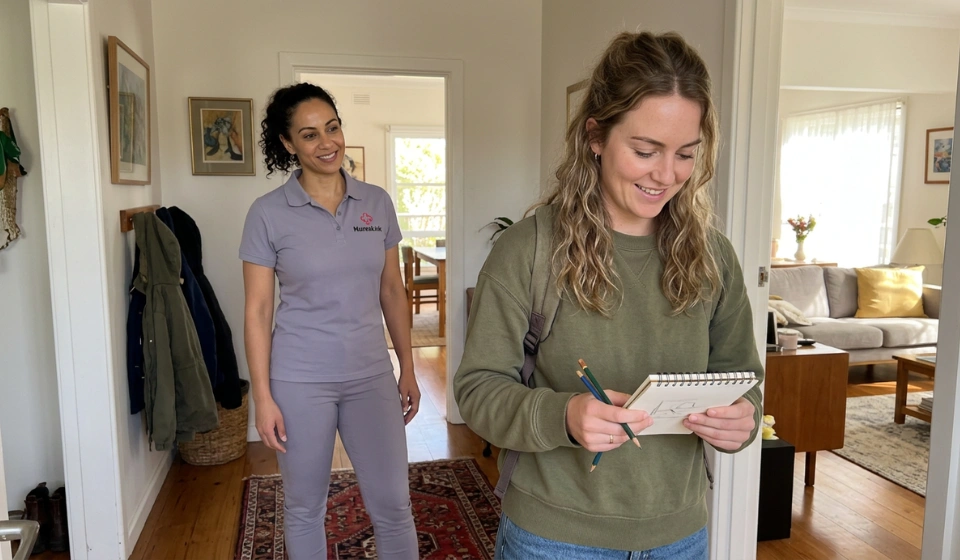
How NurseLink Healthcare’s NDIS Support Helped A Springvale Family Rebuild Daily Life Around Their Daughter’s Recovery A Case Study In Psychosocial Disability Support That Treated The Whole Household As Part Of Recovery Introduction Recovery from a serious mental illness is rarely a straight line, and for the families who live alongside it, the long middle stretch can be one of the hardest parts. The acute crisis is over, the hospital stays are behind them, and the medication and clinical follow-up are in place. But daily life has not come back. The person at the centre of the family is safe, but not yet well in the broader sense, and the household has quietly reorganised itself around that fact. This is the territory in which psychosocial disability support operates. The NDIS recognises that some people living with mental illness experience lasting impacts on their capacity to manage everyday life, to maintain routines, to relate to others, to take part in the community. Support in this area is rarely about treatment. It is about the slow rebuilding of structure, confidence and connection, in a way that respects the person’s pace and keeps her in charge of her own recovery. It also affects everyone around her. Families often adapt without discussing it. They lower their expectations, tread carefully, stop inviting people over and stop making plans. Over time, a household can become organised entirely around avoiding the next difficult day. This case study documents how NurseLink Healthcare supported a family in Springvale whose adult daughter was living with a psychosocial disability, and how treating the household as a whole, rather than only the participant, helped them rebuild routine, connection and hope at the same time. To protect the privacy of the participant and her family, all names and identifying details have been kept confidential throughout this case study. The Family & Their Situation The family lives in Springvale and consists of two parents, in their early sixties, their daughter, a woman in her early thirties who is the NDIS participant, and her younger brother, who lived nearby and visited often. The participant had been living with a serious mental illness for several years. She had worked in retail before becoming unwell, and had lived independently for a time, but a significant deterioration two years earlier had led to a hospital admission and a return to her parents’ home. Since coming home, her clinical situation has stabilised. She attended appointments, took her medication and had a supportive treating team. But her days had lost shape. She slept late, stayed in her room for most of the day and rarely left the house except for appointments. She had stopped seeing friends, stopped answering messages and, in her own words, felt like she was waiting for her life to start again without knowing how to begin. Her parents were devoted and exhausted. Her mother had reduced her hours at work to be home more, and her father had begun to avoid conversations that might upset her. They spoke in lowered voices and had stopped inviting relatives to the house. They loved her and were frightened of doing the wrong thing, and had slowly stopped doing much at all. Her brother, for his part, felt he had lost his sister and was not sure how to find her. Understanding What The Family Actually Needed The NurseLink Healthcare coordinator who began working with the family recognised, early on, that the participant’s NDIS goals, building daily routine, increasing social participation and exploring return to study or work, were realistic and well chosen. What stood out was the distance between those goals and the household’s current rhythm. The participant had no meaningful structure to her day, no regular reason to leave the house and no relationships outside her family. She needed a support worker who could work alongside her at her own pace, someone who would not push, but who would keep showing up, and who could help her take small, achievable steps back into the world. She needed her own choices to be central, and she needed to feel that the pace of recovery was hers. Her parents needed something less obvious. They needed to understand that their cautious, protective approach, however loving, was unintentionally reinforcing the very withdrawal they hoped to see lessen. They needed permission to expect a little more, and practical guidance on how to do so without tipping into pressure. They also needed a space in which to acknowledge their own exhaustion, which neither had felt able to do. Her brother needed to be included, and to find a way of relating to his sister that was not defined by worry. The NurseLink Healthcare Solution A Support Worker Chosen For Patience & Recovery-Focused Practice NurseLink Healthcare assigned a support worker with experience in psychosocial disability support and a recovery-focused approach, chosen for patience, warmth and an ability to be present without hovering. The coordinator judged that the participant would respond best to someone who treated her as a capable adult with a temporarily difficult path, rather than as a patient. Starting With Presence, Not Programs The first weeks focused entirely on building a relationship. The support worker visited at consistent times, spent time with the participant in whatever way she was comfortable, sometimes watching a show, sometimes making tea, sometimes simply sitting while the participant talked or did not. No goals were pushed. The aim, the coordinator explained to the family, was for the participant to experience someone who showed up reliably and asked nothing of her except company. Rebuilding Routine One Small Anchor At A Time Once trust was established, the support worker and the participant began identifying small anchors that could give shape to the day. A regular morning time to get up. A short walk around the block on set days. A standing coffee at a café a few streets away. Each anchor was chosen by the participant and adjusted when it did not work. Within a few weeks, the household
The Dinner Table Where One Person Couldn’t Follow The Conversation
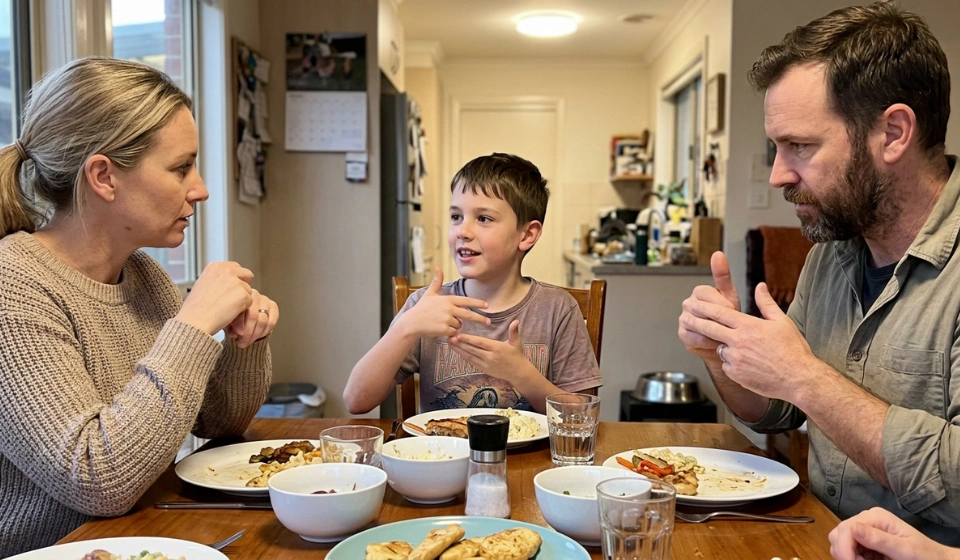
How NurseLink’s NDIS Support Helped A Footscray Family Learn To Talk To Their Deaf Son A Case Study In Sensory Disability Support That Treated Communication As A Family Skill, Not Just A Participant Goal Introduction When a child is born deaf into a hearing family, the early years tend to be dominated by the practical: audiology appointments, assessments, equipment, early intervention and decisions about communication approaches that no parent expects to have to make. Families often manage this period with remarkable energy and commitment. What is far less visible, and far less often funded or discussed, is what happens later, when the child is older, the appointments have thinned out, and the family realises that despite everything they have done, one person at the dinner table is still quietly missing most of the conversation. For a deaf child in a hearing household, exclusion rarely looks like exclusion. It looks like a child who nods along, smiles when others laugh, and learns to read the room well enough to avoid being caught out. It looks like jokes that get explained later, if they get explained at all. It looks like a family that loves each other deeply and communicates, on a daily basis, in ways that only partly include one of its members. Over years, the gap becomes a part of ordinary family life, unspoken precisely because nobody intends it. Good NDIS support for a child with a sensory disability recognises that the participant’s goals cannot be achieved in isolation from the people around him. If the family cannot communicate with him fluently, no amount of individual support will fully close the gap. This case study documents how NurseLink Healthcare supported a family in Melbourne’s inner west, hearing parents and siblings of an eleven-year-old Deaf boy, to build the shared communication that had been missing from their home, and how treating the whole family as the client changed the way every member of it experienced everyday life together. To protect the privacy of the participant and his family, all names and identifying details have been kept confidential throughout this case study. The Client & Her Situation The family lives in Footscray and consists of two hearing parents, an older sister aged fourteen and a younger brother aged eight, alongside the participant, an eleven-year-old boy who is profoundly deaf. His parents had followed professional advice throughout his early childhood, pursuing hearing technology and speech therapy, and had also begun learning Auslan, Australia’s sign language, when he was around five. But Auslan is a full language, and learning it as an adult alongside work, a household and two other children is slow. Six years on, his parents could manage everyday basics, greetings, simple requests, short exchanges, but not the kind of fluent, flowing conversation that makes up most family life. His siblings, who had learned some signs from him directly, communicated in a bright but limited way. His older sister, in particular, had developed a habit of translating for him at family gatherings, sitting beside him and signing summaries of the conversation a few moments after it happened. She had done this faithfully for years, and the family had come to rely on it without really thinking about what it asked of her, or what it meant that her brother’s access to his own family’s conversation depended on a fourteen-year-old. The participant himself was bright, funny and well-liked at school, where he had an Auslan-fluent aide. At home, his support coordinator observed, he was noticeably quieter. During the first planning conversation, he was asked, through an interpreter, what he would change about his life if he could change one thing. He thought for a while and then signed that he wished dinner was not so boring. His mother, watching the interpreter, realised with a jolt that what he meant was not the food. Understanding What The Family Actually Needed The initial NDIS planning conversations identified goals around communication, social participation and independence, but the NurseLink Healthcare coordinator who joined the family early in their plan year recognised that the goals as written risked missing the point. They focused on the participant, his communication skills, his social connections, his confidence. But the real constraint was not his capability. It was the family’s shared fluency, and the fact that nobody, including the family themselves, had ever framed that as the thing to be worked on. The family needed, first, a support person fluent in Auslan, ideally from the Deaf community, who could work alongside the boy outside school hours, giving him a fluent communication partner and, equally importantly, a model of what confident Deaf adulthood could look like. Many hearing families raising deaf children have never had meaningful contact with Deaf adults, and the participant had met very few. They also needed practical, structured support for the family’s own Auslan development, not as an afterthought to the participant’s goals but as a central element of them. His parents wanted to talk to their son properly and had no idea how to get from where they were to where they wanted to be, given the demands of daily life. His sister, the coordinator recognised, needed something quieter and just as important: relief from the unspoken role she had been carrying, and recognition that being a good sibling did not require her to act as her brother’s permanent interpreter. The NurseLink Healthcare Solution A Deaf Support Worker Chosen As A Communication Partner & A Role Model NurseLink Healthcare identified a support worker who was herself Deaf, a native Auslan user with experience supporting children and young people and strong connections within Melbourne’s Deaf community. Her role was framed from the outset not as a translation service but as genuine, fluent companionship for the participant, with the added value of showing him that a Deaf adult could be funny, capable and entirely at home in the world. After-School Support Built Around Real Interests Support sessions were structured around the participant’s own interests, in his case, drawing, football
When Parents Learned to Trust NDIS Support
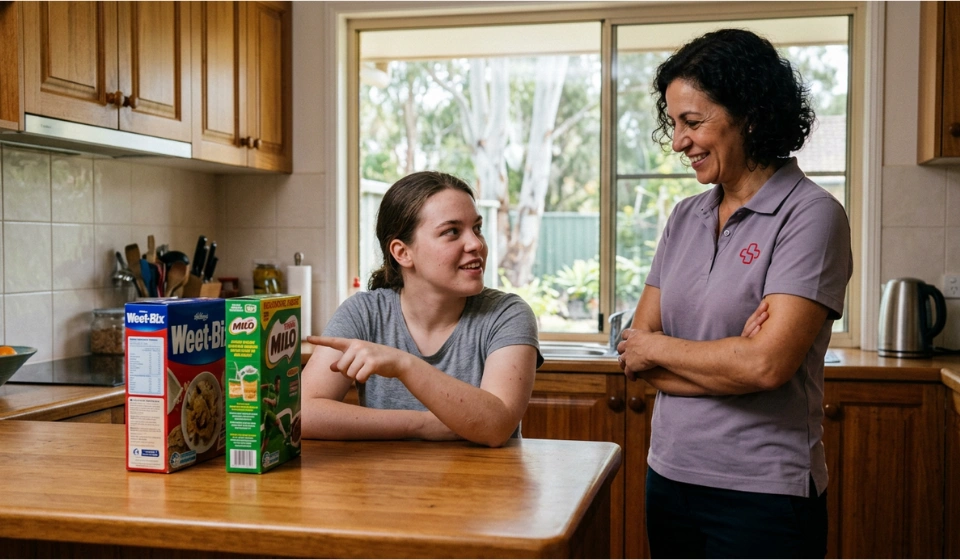
How NurseLink’s Coordinated NDIS Support Helped A Family Trust Their Daughter’s First Steps Toward Independence A Case Study In Complex Care That Earned A Family’s Trust One Careful Step At A Time Introduction For families supporting a person with complex, multiple disabilities, the idea of that person eventually living apart from them is often approached with a particular kind of fear, one built not from doubt about their loved one’s capability, but from an accumulated, hard-won understanding of exactly how much coordinated care that person’s daily safety actually depends on. Years of managing multiple therapists, complex communication needs, seizure protocols, feeding routines and physical support requirements can leave a family with a level of vigilance that is very difficult to hand over to anyone else, however qualified, without genuine dread about what might be missed. This dread is not overprotection. It is, in most cases, an entirely reasonable response to genuinely complex support needs, where a single missed detail, a misunderstood communication cue, an overlooked seizure warning sign, an incorrectly prepared meal, can carry real consequences. Supported independent living, for a person with this level of complexity, succeeds or fails largely on whether the support team can demonstrate, consistently and in granular detail, that they have absorbed every piece of the family’s accumulated knowledge, not just the version written down in a formal care plan. This case study documents how NurseLink Healthcare provided coordinated, high-support NDIS care to a young woman in her early twenties in Wangaratta, living with cerebral palsy, an intellectual disability and a seizure disorder, through her transition from her family home into supported independent living, and how a deliberately thorough, trust-building approach to care coordination allowed her parents to genuinely believe, for the first time, that she would be safe without them there every day. To protect the privacy of the client and her family, all names and identifying details have been kept confidential throughout this case study. The Client & Her Situation The client is a woman in her early twenties living in Wangaratta with her parents, managing cerebral palsy affecting her mobility and fine motor control, a mild to moderate intellectual disability, and a seizure disorder requiring careful monitoring and a specific emergency response protocol her parents had refined, through years of experience, into an almost instinctive routine. She communicated primarily through a combination of limited speech, a communication device and gestures well understood by her family but requiring genuine familiarity to interpret accurately, particularly regarding pain, discomfort or the subtle early signs that often preceded a seizure. Her parents, now in their late fifties, had spent over two decades building a system of care so detailed and interconnected, medication timing linked to meal preparation, specific positioning requirements to reduce aspiration risk, a precise sequence of steps during seizure onset, that they had genuine, well-founded difficulty imagining any external support team absorbing it thoroughly enough to keep her safe. Her NDIS plan had, for several years, included a stated long-term goal of supported independent living, a goal she herself had expressed clearly and consistently through her communication device, telling her support coordinator on more than one occasion that she wanted her own home, her own bedroom, the chance to make her own daily choices the way her older siblings had. But her parents, while wanting this for her too, had quietly delayed pursuing it, telling her support coordinator honestly that they simply did not trust that any provider could learn what they knew well enough to keep her safe. Understanding What The Family Actually Needed The initial engagement, led by a NurseLink Healthcare complex care coordinator working closely with the client, her parents and her existing allied health team, made clear within the first meeting that the central obstacle to progressing her stated goal was not a lack of appropriate housing or funding, both of which were largely in place, but her parents’ entirely reasonable fear that no external team could replicate the depth of knowledge they had built over two decades without her paying the price for whatever got missed in the handover. The client needed a support team capable of managing her complex physical care, communication needs and seizure protocol competently and consistently, delivered in a way that respected her clearly stated desire for genuine independence and daily choice, rather than a supported living arrangement that simply relocated her parents’ level of control to paid staff instead. Her parents needed something considerably harder to provide than a written care plan: demonstrable, granular evidence, built gradually and with genuine patience for their scepticism, that the team supporting their daughter had absorbed not just the clinical facts of her care but the accumulated, instinctive knowledge that made the difference between a plan that looked adequate on paper and one that actually kept her safe day to day. Her coordinator recognised explicitly that rushing this transition, however strong the underlying support plan, would likely fail regardless of its clinical quality, because her parents’ trust, not the paperwork, was the genuine precondition for the move succeeding at all. The NurseLink Healthcare Solution An Extended Learning Period Before Any Transition Began Rather than proceeding directly to a transition timeline, NurseLink Healthcare proposed, and her parents accepted, an extended period of support delivery within the family home first, support workers learning her routines, communication style and seizure protocol under her parents’ direct observation, months before any move toward independent living was formally scheduled. Support Workers Selected & Trained With Unusual Specificity The support workers assigned to her care were selected specifically for prior experience with complex communication needs and seizure management, and underwent training that went well beyond her formal care plan, direct, detailed sessions with her parents covering the specific, instinctive cues they had learned to recognise over twenty years, the kind of knowledge rarely captured adequately in standard documentation. Her Parents’ Expertise Treated As Genuine Clinical Knowledge Throughout this extended learning period, the care coordinator consistently framed her parents’ accumulated experience as expert knowledge to
The Life He Thought The Accident Had Collapsed
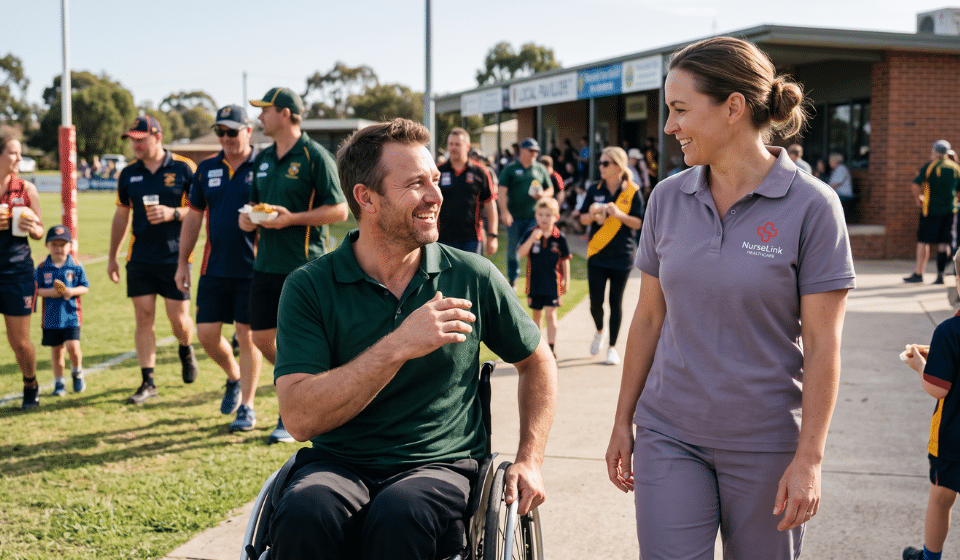
How NurseLink’s NDIS Support Helped A Shepparton Man Rebuild Independence After A Spinal Cord Injury A Case Study In Mobility Support That Looked Beyond The Wheelchair To The Life Behind It Introduction A spinal cord injury changes a life in ways that extend well beyond the physical. For many people navigating the early years after such an injury, the practical challenges, transfers, equipment, home modifications, are often more manageable, in the end, than the quieter loss that tends to follow: the sense that the life they had planned, the independence they had taken for granted, the future they had assumed for themselves, has been permanently and irreversibly narrowed. Good NDIS support recognises that mobility assistance alone rarely addresses this. A participant can receive every piece of correctly prescribed equipment and every hour of appropriately funded personal care, and still remain, in the ways that matter most to how he sees his own future, stuck. The task is not simply to make daily physical tasks possible again. It is to help someone rebuild a sense that their own life, and not just their body, still belongs to them. This case study documents how NurseLink Healthcare provided mobility and personal care support to a man in his early forties in Shepparton, whose incomplete spinal cord injury following a workplace accident had left him navigating a world redesigned almost entirely around able-bodied assumptions, and how a support approach built around his own goals, not just his physical needs, helped him return to a genuinely independent life. To protect the privacy of the client, all names and identifying details have been kept confidential throughout this case study. The Client & His Situation The client is a man in his early forties living in Shepparton, a qualified electrician and father of two, whose incomplete spinal cord injury, sustained in a fall at a workplace site eighteen months prior, had left him with significant lower limb weakness and reliance on a wheelchair for most daily mobility, alongside limited capacity for the standing and manual work his trade had always required. The eighteen months since the accident had been, by his own account, a slow and often disheartening process of adjustment. He had received competent acute rehabilitation and appropriately prescribed equipment, a wheelchair, a modified vehicle hoist, grab rails through a home modification grant, but had, by the time his NDIS plan was reviewed and support coordination referred him to NurseLink Healthcare, largely stopped leaving the house beyond medical appointments. He had not returned to any form of work. His previous social life, built substantially around the football club he had played for and later coached at, had quietly fallen away, not because anyone had excluded him but because he had stopped putting himself in situations where his wheelchair felt like the only thing anyone would see. His wife, present for the initial contact with his support coordinator, described a man who had become, in her words, a version of himself that mostly stayed home, competent and independent within the house but increasingly reluctant to engage with anything beyond it, a pattern she worried was becoming permanent rather than a phase of early adjustment. Understanding What He Actually Needed The initial assessment, conducted by a NurseLink Healthcare support coordinator in his home, identified a picture common to this stage of adjustment after a significant physical injury, a client whose practical needs, personal care assistance with morning routines, support with transfers, and general mobility assistance, were being met adequately, but whose broader goals, the things that had originally motivated his NDIS plan, community participation, a pathway back toward some form of meaningful work, remained largely untouched. He needed, first, consistent and genuinely competent physical support that let him trust the practical side of his day without having to think constantly about it, morning personal care and transfer assistance delivered efficiently and respectfully, so that the physical foundation of his day was no longer something requiring conscious effort and worry. But the coordinator recognised, from his own comments across the assessment, that what he actually wanted, beneath the practical requests, was a pathway back toward relevance, some version of purposeful activity, whether that meant an adapted return to his trade, further study, or simply a reason to leave the house that did not feel like a medical outing. He mentioned, almost in passing, that he had once considered training apprentices and had wondered, without much conviction, whether there was some way to use what he knew without needing to be the one physically doing the wiring. His wife added that what she needed, beyond the practical support, was to see some sign that her husband’s world was widening again rather than continuing to shrink, a concern the coordinator treated as central to the support plan rather than incidental to it. The NurseLink Healthcare Solution Reliable Personal Care As The Foundation, Not The Whole Plan NurseLink Healthcare assigned a consistent support worker for his morning personal care and transfer assistance, chosen for both technical competence with manual handling and a manner the coordinator judged would build easy rapport rather than clinical distance. Establishing this reliable foundation quickly, without drama or disruption to his routine, freed up both his energy and his trust for the broader work the coordinator believed mattered more. Goal Setting That Started With Curiosity, Not A Form Rather than working through a standard goals checklist, the support coordinator spent much of the early engagement simply asking him about his working life before the accident, what he had enjoyed about it, what skills he still felt confident in, and what had made him hesitate when he mentioned training apprentices. This unstructured conversation, more than any formal assessment, surfaced the outline of a genuinely achievable goal that a checklist alone would likely have missed. Exploring A Modified Return To His Trade Working with his support coordinator, the client was connected with a local TAFE offering a Certificate IV in Training and Assessment, alongside exploration of a role as
Someone Finally Holding The Whole Picture
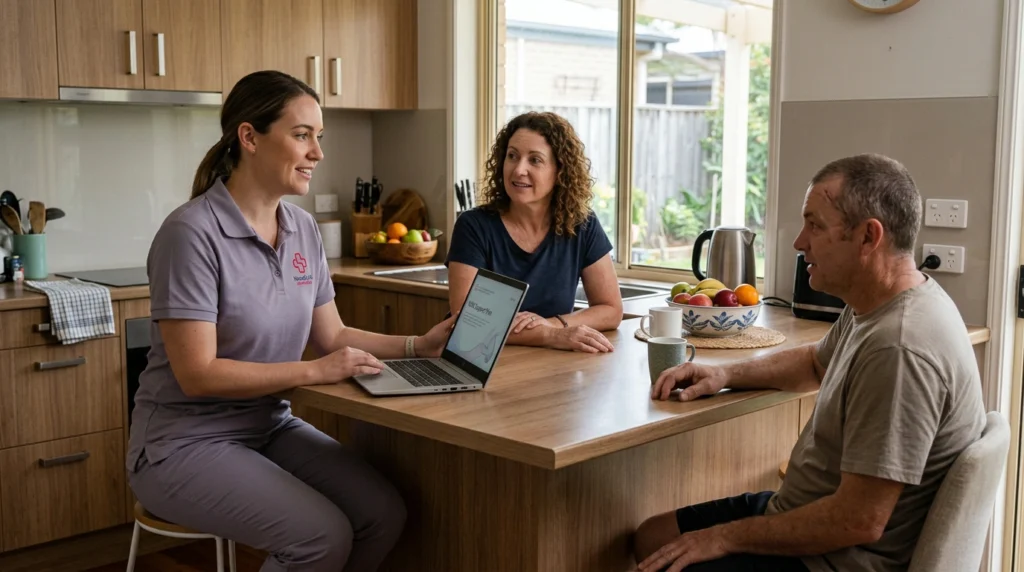
How NurseLink’s Support Coordination Rescued A Brisbane Family After An Acquired Brain Injury A Case Study In NDIS Support Coordination That Turned Chaos Into A Plan That Actually Worked Introduction An NDIS plan built around complex, multi-provider needs can, on paper, look like exactly what a participant requires, appropriately funded, comprehensive in scope, designed around genuine goals. In practice, for the participant and family responsible for actually making that plan function, it can become something closer to a second full-time job, a constant, exhausting cycle of invoices, provider communications, service agreements, plan reviews and scheduling coordination that consumes far more time and energy than most families have any capacity to sustainably provide, especially when they are also managing the practical and emotional demands of the disability itself. This burden falls hardest on families managing the aftermath of an acquired brain injury, where the participant’s own capacity to manage administrative complexity is often significantly affected by the injury itself, and where the range of services required, therapy, support work, medical care, sometimes accommodation and equipment, can involve a genuinely large number of separate providers, each requiring their own communication, coordination and oversight. Without someone actively holding the whole picture together, a well-funded, well-designed plan can quietly fail to deliver its intended benefit, not because the services themselves are inadequate, but because no one has the capacity to make them function as a coordinated whole. Support coordination exists precisely to solve this problem, and its value is often most visible in exactly the kind of situation this case study describes: a family who had reached a genuine breaking point managing the administrative weight of a complex plan, not because they lacked commitment or capability, but because the sheer volume of coordination required had become more than anyone reasonably could have managed alongside everything else already on their plate. This case study documents how NurseLink Healthcare provided support coordination for a man in his late thirties in Brisbane, living with the significant and complex effects of an acquired brain injury, and how properly resourced coordination transformed a family’s exhausting administrative burden into a plan that finally functioned the way it was meant to. To protect the privacy of the participant and his family, all names and identifying details have been kept confidential throughout this case study. The Participant & His Family The participant is a man in his late thirties who sustained a significant acquired brain injury in a workplace accident several years before NurseLink Healthcare became involved, an injury that left him with a complex combination of cognitive, physical and behavioural impacts requiring an extensive and multifaceted package of support under his NDIS plan. He lived with his wife and their two young children in Brisbane’s southern suburbs, in a household that had, in the years since his injury, absorbed an enormous amount of change and strain. His plan, by the time NurseLink Healthcare became involved, included occupational therapy, physiotherapy, speech pathology, psychology, behaviour support, regular support work for daily living assistance and community access, and specialist equipment funding, a genuinely comprehensive package reflecting the significant complexity of his needs. But the plan’s comprehensiveness had, in practice, become its own considerable burden. Each service involved a separate provider, each provider required its own communication, scheduling, invoicing oversight and periodic review, and the sheer administrative volume of managing all of this had fallen, in the absence of properly resourced coordination, almost entirely onto his wife. She described, in the initial conversation with NurseLink Healthcare, a level of administrative overwhelm that had become genuinely unsustainable. She was managing correspondence and scheduling with more than half a dozen separate providers, tracking invoices and plan budget usage across all of them, attending or arranging appointments around her own work and her children’s school schedules, and doing all of this while also providing a significant amount of direct daily support to her husband and managing the ordinary demands of raising two young children. She had, by her own account, reached a point of such sustained exhaustion that she had begun missing provider communications entirely, invoices going unpaid past their due dates, appointments double-booked or missed, not through any lack of care but through simple, human administrative overload that had finally exceeded what one person could reasonably sustain. Her husband’s own capacity to manage this administrative complexity was significantly limited by his injury itself, meaning the burden could not realistically be shared with him in any substantial way, a reality the family had been navigating largely alone for a considerable period before a friend, aware of the family’s exhaustion, suggested they investigate whether their plan included funding for proper support coordination. Understanding What The Family Actually Needed The initial assessment conversation, conducted primarily with his wife given the practical realities of her husband’s capacity, revealed a family in genuine crisis, not around the quality or adequacy of the services his plan funded, but around the sheer administrative weight of managing them all without proper coordination support. She needed, more than anything, someone to actually hold the whole picture of his plan and take direct responsibility for the coordination work that had been consuming her own life, provider communication, scheduling, invoice tracking, plan budget monitoring, and the periodic reviews and reporting the plan required. She was clear that she wanted to remain genuinely involved in decisions about her husband’s care and services, she did not want to be removed from the process entirely, but she needed the operational weight of managing it lifted from her shoulders in a way that let her actually be present for her family rather than perpetually consumed by administrative overwhelm. She also needed, though she articulated this somewhat hesitantly, an acknowledgement that the family had reached a genuine point of crisis, not a minor inconvenience to be politely worked around, and a coordinator who would treat the scale of what she had been managing with appropriate seriousness rather than simply adding one more service to an already unmanageable list. Her husband, participating in
A Home That Was Finally His Own
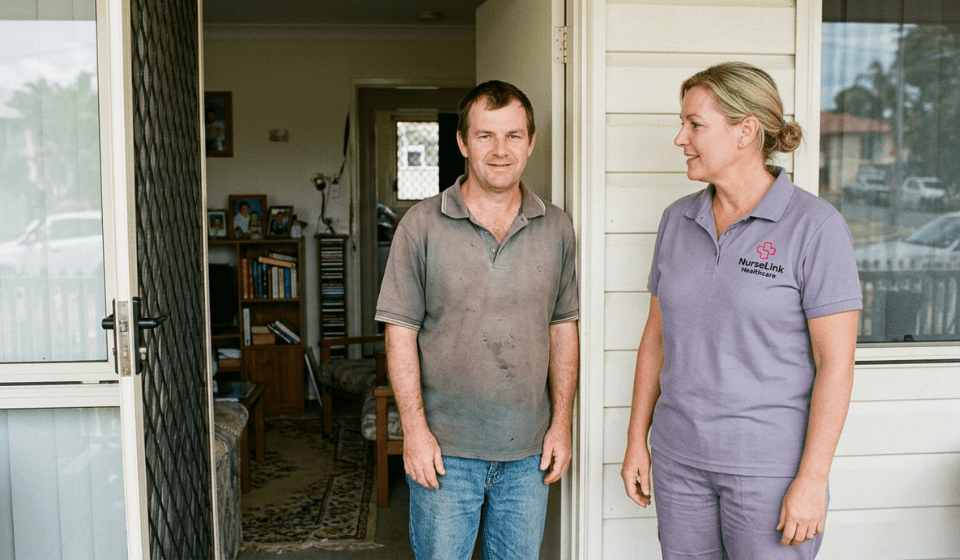
How NurseLink Supported A Male Patient’s Move From Twenty Years Of Group Homes Into A Place He Could Truly Call Home A Case Study In NDIS Transition Support That Turned Fear Of Change Into A Life He Chose Himself Introduction For many people with intellectual disabilities who have spent years, sometimes decades, living in shared supported accommodation, the idea of moving into their own place carries a complicated weight. It represents, on one hand, a genuine and long-held aspiration toward greater independence and choice. On the other hand, it represents the loss of a routine, a set of familiar faces and a form of safety, however limited, that has structured daily life for a very long time. The fear of losing that safety, even when the person genuinely wants more independence, is real and needs to be taken seriously rather than dismissed as simple resistance to a change that is objectively good for him. Supporting a successful transition out of a group home requires holding both of these truths at once: genuine respect for the person’s own pace and anxieties, and genuine, sustained belief in his capability to build a life of his own, given the right support at the right pace. Done poorly, this kind of transition can fail, sending a person back to shared accommodation feeling that independent living simply was not for him. Done well, it can open up a life considerably larger and more genuinely his own than the one that came before it. This case study documents how NurseLink Healthcare supported a man in his mid-forties in Brisbane, who had lived in a series of group homes for over two decades, to make a successful and sustained transition into his own unit, moving from initial fear and resistance to a genuine and settled sense of home. To protect the privacy of the participant, all names and identifying details have been kept confidential throughout this case study. The Participant & His Situation The participant is a man in his mid-forties with a moderate intellectual disability, who had lived in a succession of group homes since his early twenties, following a period living with his ageing parents that had ended when their own health made ongoing care no longer possible. He had, over the more than two decades that followed, moved through three different group home placements as circumstances and provider arrangements changed, each move bringing a period of disruption before a new, if familiar, routine settled back into place. His most recent group home, where he had lived for close to eight years, was, by all accounts, a reasonably comfortable and stable placement, staffed by people he knew well and shared with housemates he had grown genuinely fond of over the years. It was within this stability, somewhat unexpectedly to the staff who knew him, that he began raising, with increasing frequency over about a year, the idea that he wanted to try living on his own. His NDIS support coordinator, taking the request seriously rather than assuming it was a passing thought, began exploring what a transition to independent living might look like for him, a planning process that eventually identified a small, accessible unit not far from his current group home, close enough that he could remain within a familiar neighbourhood and maintain the community connections he had built over his years there. The idea, once it moved from conversation to genuine planning, brought a considerable amount of anxiety alongside the excitement he had originally expressed. He told his support coordinator, in one of the early planning conversations, that he wanted this, had wanted it for a long time, but was also frightened of it in a way he found difficult to fully explain, beyond saying that the group home was the only kind of home he had really known as an adult, and that living entirely alone felt like a much bigger step than he had perhaps understood when he first started talking about it. Understanding What He Actually Needed The initial assessment conducted by NurseLink Healthcare, once engaged to provide transition and independent living support, took his mixed feelings seriously as a central part of the planning rather than something to be managed around. The care coordinator spent considerable time in the early conversations simply letting him talk through what he wanted his life to look like, what specifically frightened him about the move, and what, if anything, might make the transition feel less overwhelming. He was clear that he wanted his own front door, his own space to arrange exactly as he liked, and the ability to make his own decisions about his day without the shared negotiations that group living, even a comfortable one, inevitably required. He was equally clear that he was frightened of being alone in a way he had never really experienced as an adult, frightened of managing an emergency without staff nearby, and frightened, in a way he articulated more hesitantly, of the move simply not working and having to go back to a group home having failed at something he had wanted badly enough to ask for repeatedly. Practically, he needed support learning and practising the daily living skills that independent living would require, skills that a structured group home environment, for all its benefits, had not required him to build independently over the years. He needed help setting up his new home in a way that felt genuinely his, help establishing a daily and weekly routine that gave his days the same kind of structure he had relied on in the group home, and support that would remain closely available in the early period of the transition without making him feel that independence was, in practice, just a differently staffed version of what he had left. His mother, still alive and closely involved despite no longer being able to provide his day to day care, was part of several of the planning conversations and was candid about her own anxiety regarding the move,
Learning To Do It Herself, With Someone Beside Her
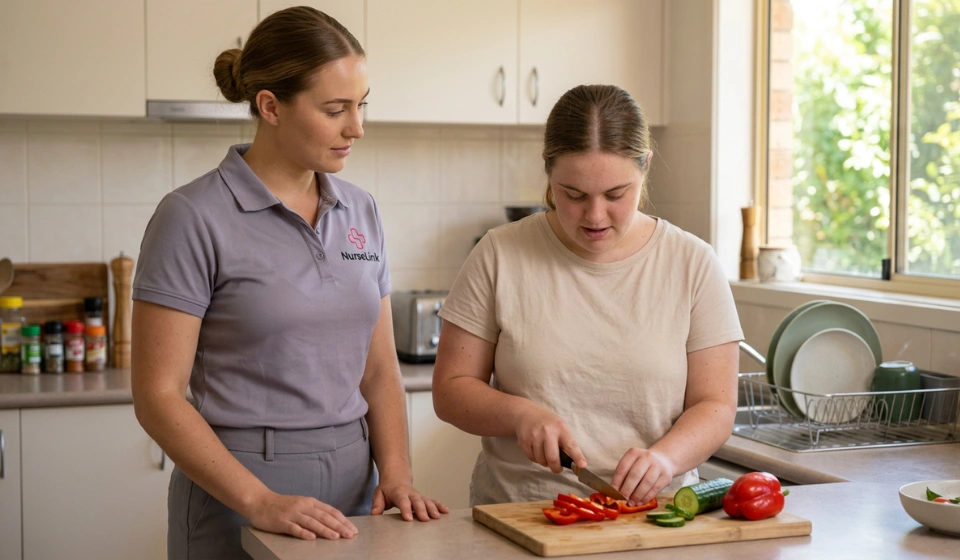
How NurseLink Healthcare Helped A Woman With An Intellectual Disability A Case Study In NDIS Support That Balanced Genuine Skill-Building With Her Family’s Trust Introduction For a young adult with an intellectual disability, the transition toward greater independence looks different than it does for most twenty-somethings, but the underlying want is often exactly the same. It is the want to make more of your own decisions, to manage more of your own day, to have a life that includes more than the routines your family has, out of love and necessity, built and maintained around you for years. For families, this transition can bring a particular and understandable tension. They want their adult child to have every opportunity for genuine independence, and they carry, often quietly, real concern about safety, capability and what independence should actually look like in practice. Getting this balance right, building real skills at a genuinely appropriate pace while keeping a family’s trust intact throughout, is one of the more delicate pieces of work that NDIS support can do. This case study documents how NurseLink Healthcare supported a woman in her early twenties in Melbourne, living with an intellectual disability, to build daily living skills and community participation over the course of an NDIS-funded engagement, moving her steadily toward a more independent life while keeping her family genuinely confident in the process the whole way through. To protect the privacy of the participant and her family, all names and identifying details have been kept confidential throughout this case study. The Participant & Her Family The participant is a woman in her early twenties living with her parents and a younger brother in Melbourne’s outer north. She has a mild to moderate intellectual disability, diagnosed in early childhood, and had, throughout school and the years immediately after, lived a life that was warm, stable and closely supported by her family, but also, as she and her parents both increasingly recognised, more limited in scope than she wanted it to be as she moved further into adulthood. She had finished a supported education program a couple of years before NurseLink Healthcare became involved and had, since then, spent most of her time at home or accompanied closely by her parents on the occasions she went out. She held part-time casual work at a local cafe two mornings a week, arranged and supported by her mother, which she enjoyed considerably, but beyond this her week had relatively little independent structure or activity of her own. Her parents, who had spent over two decades as her primary carers and advocates, had begun, in the period before engaging NurseLink Healthcare, to think seriously about what her life might look like as she moved further into adulthood and as they themselves grew older. Her mother was candid, in the initial conversation, that she recognised her own instinct to manage every part of her daughter’s day had, with the best of intentions, left comparatively little room for her daughter to build and practise skills of her own, and that this was something she genuinely wanted to change, even though the idea of stepping back also made her anxious. The participant herself, when asked directly what she wanted, was clear in a way that both moved and slightly unsettled her parents when she first said it plainly in a family conversation before the engagement began. She said she loved her family and loved her life at home, but she wanted to be able to do more things by herself, catch a bus somewhere on her own, cook a proper meal without her mother standing beside her, have friends of her own that she saw without a parent organising it. She was not asking to move out or to dramatically restructure her life. She was asking for more of it to belong to her. Understanding What The Family Actually Needed The initial NDIS planning conversation, and the subsequent assessment conducted by NurseLink Healthcare, involved the participant herself as the primary voice in the conversation, with her parents present and contributing, an approach the care coordinator was deliberate about from the outset, given how important it was that the plan reflect the participant’s own goals rather than only her family’s concerns. The participant was clear about what she wanted to work on. She wanted to learn to use public transport independently, at least for a couple of familiar and manageable routes. She wanted to build her cooking skills to the point where she could prepare simple meals herself without supervision. She wanted help finding activities and social opportunities that were her own, rather than ones organised entirely by her parents, and she specifically mentioned wanting to make friends outside her family who she saw regularly and independently. Her parents’ needs, which the care coordinator drew out carefully alongside the participant’s own goals, centred on trust and pacing. Her mother needed to see, concretely and incrementally, that each new piece of independence was being built safely and appropriately before the next one was introduced, rather than experiencing the process as a series of unplanned leaps that outpaced her comfort. Her father, quieter in the conversation but clear when he spoke, said he wanted his daughter to have a genuinely fuller life, and that his primary condition for supporting that was simply seeing, step by step, that the people helping her build it were doing so carefully and competently. The care coordinator was direct with the family about how the engagement would be structured to address this. Progress would be incremental, each new skill introduced only once the previous one was genuinely secure, and the family would be kept closely informed at every stage, not as a formality but as a genuine part of how trust would be built and maintained across the engagement. The NurseLink Healthcare Solution A Support Worker Matched For Patience And Genuine Rapport NurseLink Healthcare assigned a support worker with substantial experience supporting young adults with intellectual disabilities toward greater independence, chosen for
What Was Still Possible
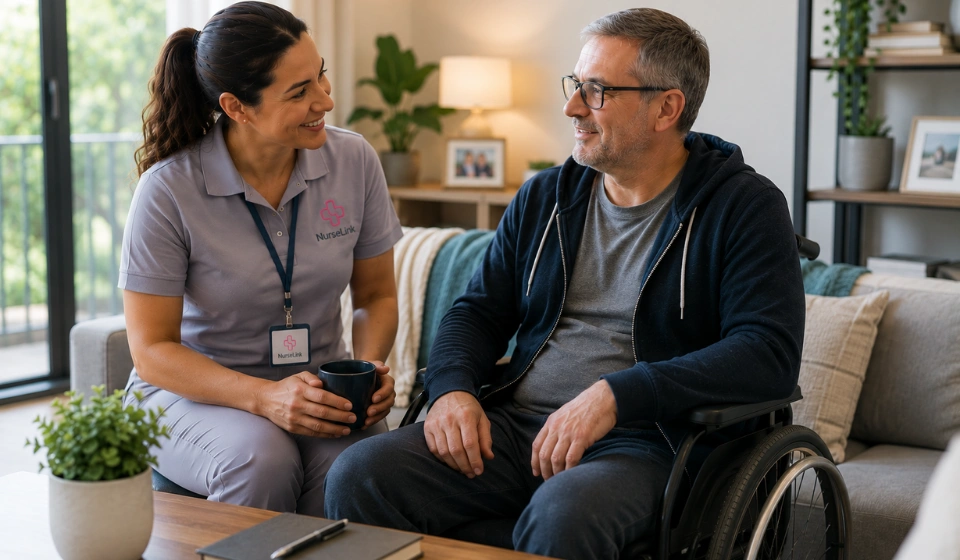
How NurseLink Helped A Sydney Man With MS Regain His Independence When His NDIS Plan Fell Behind NDIS Support That Adapted To His Needs Introduction Multiple sclerosis progresses. Not for everyone, not in the same way and not at the same pace, but for many people who live with it, the condition moves, taking things incrementally and sometimes suddenly, leaving the person managing it in the particular position of adapting to a present that keeps changing before the adaptation is complete. The NDIS plan that is written at one point in the progression of MS is a plan that reflects what the participant needed at the time it was written. If the condition has moved since then, the plan may no longer reflect what the participant actually needs now. The funding may be insufficient. The goals may be oriented toward a level of function that is no longer realistic. And the participant, who is managing a condition that is progressing, is also managing the frustration of a support system that is running behind the condition it is supposed to be supporting. For a man in his fifties who has spent his adult life being capable, independent and professionally active, the convergence of a progressing MS and an inadequate NDIS plan is not simply a logistical problem. It is an identity challenge. The question of what is still possible, when the condition keeps narrowing the answer and the support system keeps failing to ask the question properly, can feel like a question moving in only one direction. At NurseLink Healthcare, we believe that the right support, provided in response to where a participant actually is rather than where a plan assumes they should be, can change the direction of that question. This case study documents how our team supported a man in his fifties in Sydney, New South Wales, through exactly this situation, and how the right support at the right moment gave him back more than he had expected to still have. To protect the privacy of the client and his family, all names and identifying details have been kept confidential throughout this case study. The Client & His Situation The client is a man in his mid-fifties living in Sydney’s inner west with his wife. He had worked as an architect for most of his career, running his own small practice for fifteen years before his MS progressed to the point where maintaining it had become unsustainable. Closing the practice had been both practically necessary and personally significant, leaving a gap in his daily life that the NDIS plan he was operating under had not adequately addressed. He had been diagnosed with relapsing-remitting MS in his early forties and had managed it well for over a decade, maintaining his professional identity and his independence through disease-modifying therapy, rehabilitation and the practical adaptations that a person with MS learns to make. The transition to secondary progressive MS had changed the picture. His mobility had declined, requiring a wheelchair for distances beyond the home. His upper limb function had been affected. His fatigue was more pervasive and less responsive to rest. His NDIS plan had been written at an earlier stage of his condition, and the progression since the last review had outpaced the plan’s capacity to respond. The funding was insufficient for the daily support his current functional status required. The goals no longer reflected his reality. And the gap between what the plan described and what his life actually required had been growing, producing a situation where he was managing with less than he needed and managing it, by his own account, increasingly poorly. His neurologist raised the inadequacy of his plan at a clinical review and recommended he engage a new provider who could both address the immediate support gap and assist with the plan review that was overdue. She recommended NurseLink Healthcare. What He Had Been Living With The months before the engagement had been a period of quiet contraction. The things he had been able to do had been becoming the things he could no longer quite manage, and the support available through his existing plan had not been sufficient to hold the line. He had been falling more often than he had told his wife. Not serious falls, but the kind that left him shaken and required recovery time. His morning personal care was taking longer and costing more energy than the day could afford. He had stopped cooking the meals he had always been proud of, because the physical management of the kitchen without support had become more demanding than the outcome justified. He had stopped attending the professional events that had kept him connected to the architectural community he had belonged to for thirty years. His wife had been absorbing what the insufficient plan left uncovered, and the absorption was showing in ways he was aware of and that added a layer of guilt to an already difficult situation. He had not told his plan coordinator how bad it had gotten, partly because he was not sure she would understand and partly because saying it out loud felt like admitting something he was not ready to fully admit. He was managing. He was not sure he was managing well. Understanding What He Actually Needed The initial assessment required patience. He was not immediately forthcoming about the full picture of his daily life, approaching the conversation with the caution of a man who had spent his career making things work and was not entirely sure what would happen if he acknowledged how much was not working. The care coordinator did not push. She asked specific questions and gave him time to answer them. Gradually the full picture emerged. He needed daily personal care support that reflected his current functional status, not the status his plan assumed. He needed kitchen support that made cooking possible rather than taking it over. He needed support to attend the professional and social events that remained important to
Finding Her Way Back To Her Own Kitchen Table
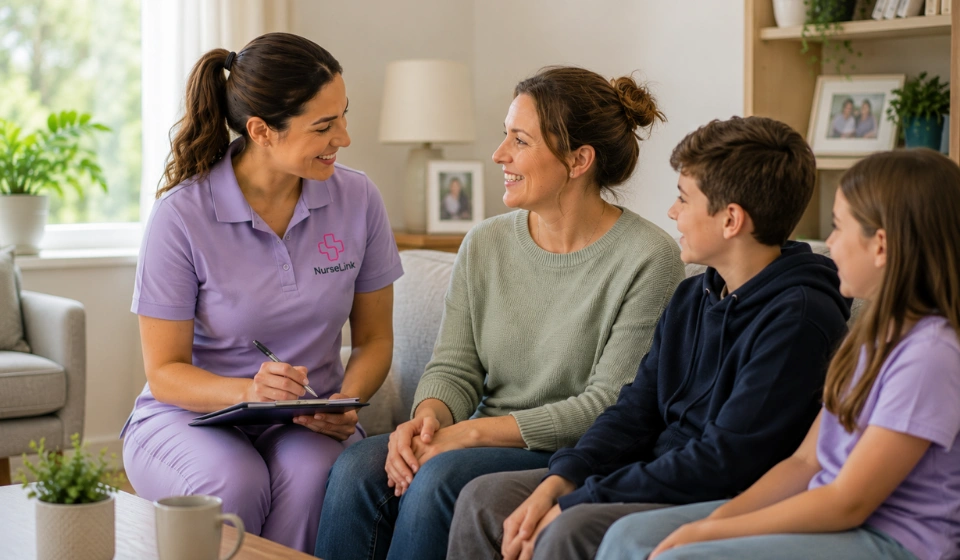
How NurseLink Supported An Mother To Rebuild Daily Life & Connection After A Major Depressive Episode A Case Study In NDIS Psychosocial Support That Helped A Family Come Back Together, Slowly And On Her Terms Introduction There is a particular kind of collapse that happens inside a family home, quietly, without an ambulance or a hospital admission to mark the moment it began. It is the collapse of a parent who has, for years, been the one who held everything together, the appointments, the meals, the school forms, the small daily maintenance of a household, and who then, through no failure of character or effort, simply cannot do it anymore. Major depressive and anxiety episodes do not always arrive as a single dramatic event. Often they arrive as an accumulation, a slow erosion of capacity that a parent tries to compensate for, quietly and privately, for far longer than is sustainable, until the compensation itself runs out and the household that depended on her can no longer function the way it once did. NDIS psychosocial support in these situations exists to do two things at once, and both matter equally. It exists to help the person rebuild her own functional capacity, and it exists to help repair the practical and emotional structure of the family that has been living inside the collapse alongside her. Neither can really succeed without the other. This case study documents how NurseLink Healthcare supported a mother in her early forties in Adelaide, following a major depressive and anxiety episode that had significantly eroded her capacity to manage her home and her role within her family, through a combination of consistent support work and gradual, carefully paced help reconnecting socially, both with her family and beyond it. To protect the privacy of the participant and her family, all names and identifying details have been kept confidential throughout this case study. The Participant & Her Family The participant is a mother of two, a boy of fourteen and a girl of eleven, living in Adelaide’s eastern suburbs with her husband. Before the episode that brought her into contact with NurseLink Healthcare, she had, by her own description and by her family’s, been the organiser of the household in the way that falls, still very often, to one parent more than the other. She managed the household budget, the children’s school commitments, most of the cooking, most of the social calendar for the family, and did all of it, for years, while also working part time in administration for a local business. The decline had not been sudden. It had built gradually across the better part of a year, beginning with a period of what she described as persistent low mood and exhaustion that she had attributed, initially, to simple overwork and had tried to push through in the way she had always pushed through difficult periods before. But this one did not resolve the way earlier difficult periods had. It deepened. She stopped being able to manage the household tasks she had once handled easily. She stopped, for stretches of time, being able to leave the house at all without significant anxiety. She withdrew from the small network of other parents and friends who had once been a regular part of her week, not because anything had gone wrong between them but because the effort of maintaining those connections had become more than she had left to give. Her husband, doing his best to hold the practical gaps together around his own full-time job, had reached a point of considerable strain himself by the time she was formally diagnosed and began treatment with a psychiatrist, which included a period of more intensive support before she was assessed as ready to be at home full time, managing her recovery with appropriate support in place. Her children, old enough to notice that their mother had become someone quieter, more withdrawn and less available than the mother they knew, had absorbed the change in ways that worried both parents considerably, her son in particular becoming withdrawn himself over the preceding months. Her NDIS access, once granted, included funding for psychosocial support designed to help her rebuild daily functional capacity and, over time, reconnect with the social and family relationships that the episode had disrupted. Her support coordinator referred the family to NurseLink Healthcare, having worked with the service previously on comparable psychosocial recovery engagements and having confidence in the approach. Understanding What The Family Actually Needed The initial assessment conversation, conducted primarily with the participant herself but with her husband present for part of it, was approached carefully by the NurseLink Healthcare care coordinator, who understood from the referral notes that the participant was managing not only her own recovery but a considerable weight of guilt about the impact her illness had had on her family. She was direct, once the conversation had settled into something less formal than an assessment, about what had been hardest. It was not, she said, the low mood itself so much as the sense of having disappeared from her own family’s daily life, of her children eating dinners she had not made, of missing things at their school that she would once have been at without a second thought, of her husband managing bedtime routines and forms and appointments that had always been hers to hold. She wanted, more than any single symptom resolved, to feel like herself again inside her own home. Practically, she needed support re-establishing a manageable daily structure, help with some of the household tasks that had become overwhelming while she rebuilt her own capacity for them, and support gradually re-engaging with the small social connections, other parents at the school gate, a friend she had once seen weekly, that had fallen away during the worst of the episode. She was clear that she did not want to be pushed. Her psychiatrist had been clear with her, and she repeated this clearly to the care coordinator, that recovery from