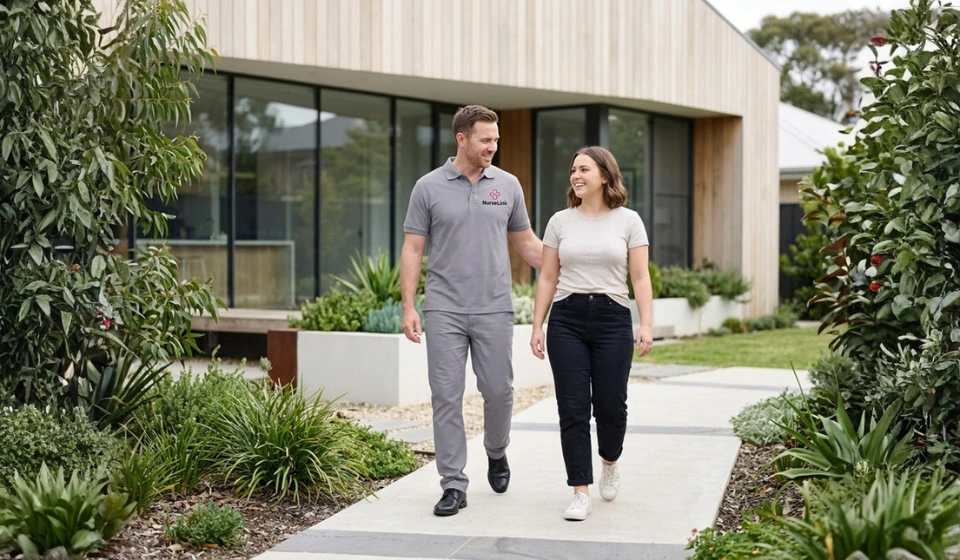
Finding Home Again After A Stroke
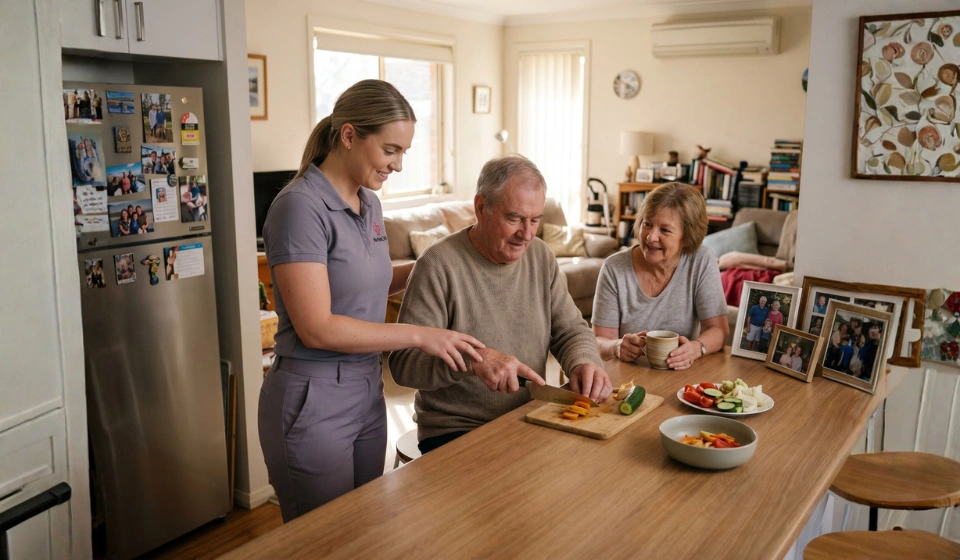
How NurseLink's Supported Independent Living Helped An Older NDIS Participant
A Representative Example Of Nurse-Led Complex Care Within NDIS Supported Accommodation
Introduction
A stroke changes everything in an instant.
It does not only change the life of the person who experiences it. It reshapes the lives of the people who love them, often overnight and without warning.
For older NDIS participants living with complex clinical needs, one of the hardest questions is not medical at all. It is deeply personal: where can I live safely without losing the feeling of home?
Too often, the answer falls entirely on a husband or wife, who steps into a nursing role they were never trained for, with no backup, no rest and no clear path forward.
This case study explores how NurseLink Healthcare supported a Melbourne man in his late fifties living with complex care needs following a severe stroke, and how the move into Supported Independent Living (SIL) with 24/7 support and registered nurse oversight helped both him and his wife rebuild a life that had become unsustainable at home.
This case study is a representative example drawn from the everyday experiences of participants and families NurseLink Healthcare supports. Names, details and quotes are illustrative and do not identify any individual.
About The Participant
The participant was a fifty-eight-year-old man living in metropolitan Melbourne with his wife of more than thirty years.
Before his stroke, he had worked as an electrician for over three decades. He was practical, independent and social. Weekends meant golf with friends, watching the football and family barbecues with his adult children.
At fifty-six, he experienced a severe stroke that changed his life permanently.
The stroke left him with significant weakness down one side of his body, swallowing difficulties requiring texture-modified meals, ongoing fatigue and changes to his speech that made long conversations tiring.
After several months in hospital and rehabilitation, he returned home requiring assistance with all transfers, personal care, continence support and a complex medication regimen, including blood pressure and blood-thinning medications. Every mealtime carried a genuine risk of choking or aspiration.
His wife became his full-time carer almost overnight. She left her part-time job, reorganised the house around his needs and committed herself completely to his care.
For a while, love and determination carried them through. But the demands of complex clinical care at home slowly became more than one person could safely manage.
The Challenges The Family Was Facing
Care Needs Beyond What One Person Could Safely Manage
The participant’s daily care involved tasks that would normally sit with trained clinical staff.
Medication management, swallowing safety at every meal, repositioning through the night, skin checks, continence care and physically demanding transfers all fell to his wife, without professional training or proper equipment.
Within six months of returning home, he was readmitted to hospital twice. Once for a chest infection linked to aspiration, and once after a fall during a night-time transfer that could easily have injured them both.
Each readmission deepened the family’s fear that home was no longer safe.
Carer Burnout Behind Closed Doors
The participant’s wife had not slept through the night in almost two years.
She was waking multiple times to reposition him, listening constantly for signs of trouble and carrying the mental load of medications, appointments and clinical decisions she never felt qualified to make.
Her own health began to decline. Her back was strained from lifting. Her doctor raised concerns about her blood pressure and exhaustion.
Like many carers, she hid most of this. Publicly she was coping. Privately she was running on empty, isolated from friends and afraid of what would happen if she became unwell herself.
A Marriage Becoming Patient & Carer
Perhaps the most painful change was the quietest one.
A marriage built on partnership had gradually reshaped itself around tasks, schedules and clinical routines. Conversations became handovers. Affection was replaced by logistics.
The participant felt it too. He often expressed guilt about what his care was costing his wife, and over time he became withdrawn, frustrated and reluctant to ask for help even when he needed it.
As his wife later put it, she had become so busy being his nurse that she no longer had the time or energy to simply be his wife.
Why The Family Reached Out To NurseLink Healthcare
After the second hospital readmission, the participant’s NDIS support coordinator raised the option of Supported Independent Living.
The family’s first reaction was resistance.
To his wife, supported accommodation felt like giving up. It felt like breaking a promise she had made decades earlier. She also feared it would mean a cold, clinical environment where her husband would be treated as a patient rather than a person.
The initial consultation with NurseLink Healthcare changed that.
Rather than starting with vacancy details or rosters, the conversation started with the two of them, exploring questions such as:
- What does a good day look like for the participant?
- Which routines, comforts and interests matter most to him?
- What clinical supports does he need to be genuinely safe every day?
- How can his wife remain at the centre of his life without carrying the clinical load?
- What would it take for a supported home to actually feel like his home?
Just as importantly, NurseLink Healthcare could answer the question many providers could not: whether his complex clinical needs could be safely met within supported accommodation.
Because NurseLink Healthcare’s SIL services are backed by registered nurses and clinically trained support workers, his medical complexity was not treated as a barrier to a normal home life.
For the first time since the stroke, the family felt there was a plan that looked after both of them.
The Support Strategy Implemented
A Gradual, Personalised Transition Into Supported Accommodation
Moving out of the family home after thirty years is an enormous emotional step, so nothing was rushed.
The participant visited the supported accommodation home several times before deciding, shared a meal with his future housemates, who were of a similar age, and met the support team who would be working with him.
A home was chosen close to the family’s local area, making it easy for his wife to visit often.
His room was set up around him before he arrived. His own recliner, family photographs, familiar bedding and his football memorabilia all came with him.
His routines were documented in detail, from how he takes his morning coffee to his favourite meals, prepared safely in texture-modified form, so the house adjusted to him rather than the other way around.
Nurse-Led Complex Care Built Into Everyday Life
The foundation of the support plan was clinical safety that did not feel clinical.
Registered nurses developed and oversaw his care plan, with support workers trained specifically against his needs. Day to day, this included:
- Medication management, including blood pressure and blood-thinning medications.
- Mealtime management and texture-modified meals for swallowing safety.
- Safe, equipment-assisted transfers and falls prevention.
- Pressure care, skin integrity monitoring and continence support.
- Routine clinical observations to detect early signs of deterioration.
- Coordination with his GP, neurologist, physiotherapist and speech pathologist.
The difference for the family was profound. The tasks that had once consumed every hour at home were now handled quietly in the background of ordinary daily life.
Care stopped feeling like a medical event and started feeling like living.
A Small, Consistent Support Team
Rather than rotating unfamiliar workers through shifts, NurseLink Healthcare introduced a small, consistent team matched to the participant’s personality, communication style and clinical needs.
Because his speech required patience, consistency mattered enormously. His regular team learned his rhythm, his humour and his preferences, so he never had to keep re-explaining himself to strangers.
Support workers also encouraged him to stay actively involved wherever safely possible, making choices, helping with simple meal preparation using one-handed techniques and taking part in the running of his own day.
The goal was never to take over. It was to support participation, dignity and control.
Keeping The Marriage At The Centre
From the very first planning meeting, the participant’s wife was treated as a partner in his care, not a visitor to it.
Open visiting meant she could come whenever she liked. Standing rituals were built into the week, including Sunday dinner together at the house and watching the football side by side on Saturday afternoons.
With transport and mobility support available, the couple also began going on outings together again, something that had felt impossible for a long time.
Because the support team carried the clinical worry, time together could finally just be time together.
Outcomes Achieved
Improved Health Stability & Fewer Hospital Admissions
In the year following the move, the participant experienced no preventable hospital readmissions.
Medications were given reliably, mealtimes were managed safely and his skin integrity was maintained.
On one occasion, staff noticed early signs of chest congestion and arranged a GP review the same day, allowing an infection to be treated at home before it escalated. Under the previous arrangement, that same episode would very likely have ended in hospital.
Renewed Confidence & Daily Participation
With a structured routine that respected his fatigue, the participant became noticeably more engaged in daily life.
He began helping with meal preparation, choosing his own outings, sharing banter with his housemates and accessing the community with support.
As staff gave him the time and patience his speech required, his confidence in conversation gradually grew as well.
A Wife Again, Not A Nurse
For the first time in almost two years, the participant’s wife began sleeping through the night.
Her health improved, and she eventually returned to part-time work.
Most importantly, her time with her husband changed character completely. Visits were no longer shifts. They were cups of tea, shared jokes and quiet afternoons together.
A Genuine Sense Of Home
Within a few months, the participant began referring to the house as home.
The move was never about an ending. It became a stable, safe base from which he could keep building a meaningful life, with his family firmly at the centre of it.
Reflection From The Family
At the end of the first year, the participant’s wife reflected on the journey:
“For almost two years I was frightened every single day. I was managing medications I barely understood, listening for him through the night and telling everyone I was coping when I wasn’t.”
“Saying yes to supported accommodation felt like breaking a promise. What I understand now is that I wasn’t stepping away from my husband. I was making room for us to be husband and wife again.”
“When I visit now, we have a cup of tea, we watch the football, we laugh. Someone else carries the clinical worry, and that has given us our marriage back.”
Key Takeaways From This Case Study
Complex Clinical Needs Should Never Be A Barrier To A Real Home
With registered nurse oversight built into supported accommodation, participants with high-intensity and complex care needs can live safely without their world becoming a hospital.
Choosing Supported Accommodation Is Not Giving Up
For many families, the move into Supported Independent Living is not the end of closeness. It is often the decision that protects health, restores relationships and makes long-term connection sustainable.
Carer Burnout Is Real, And Families Deserve Support Too
Spouses and family carers frequently carry clinical-level responsibility at enormous personal cost. Recognising burnout early, and putting professional support in place, protects everyone involved.
The Right Transition Changes Everything
Gradual, personalised transitions, with familiar belongings, documented routines and relationships built before moving day, turn supported accommodation from a frightening step into a genuine new beginning.
Conclusion
A stroke can take away many things, but with the right support it does not have to take away home, dignity or the relationships that matter most.
For this participant, the journey was never about returning to the life he had before. It was about finding a new way to live safely, confidently and connectedly, while giving his wife back the role she had missed the most: simply being his wife.
Through nurse-led Supported Independent Living, consistent care relationships and genuinely participant-centred support, NurseLink Healthcare helped one Melbourne family move from exhaustion and fear to stability and hope.
Every participant’s journey is different, which is why meaningful care begins with understanding the individual behind the support plan.
If you or your loved one are exploring Supported Independent Living or need NDIS support for complex care needs, NurseLink Healthcare is here to help.
Latest Post
When Parents Learned to Trust NDIS Support
The Life He Thought The Accident Had Collapsed
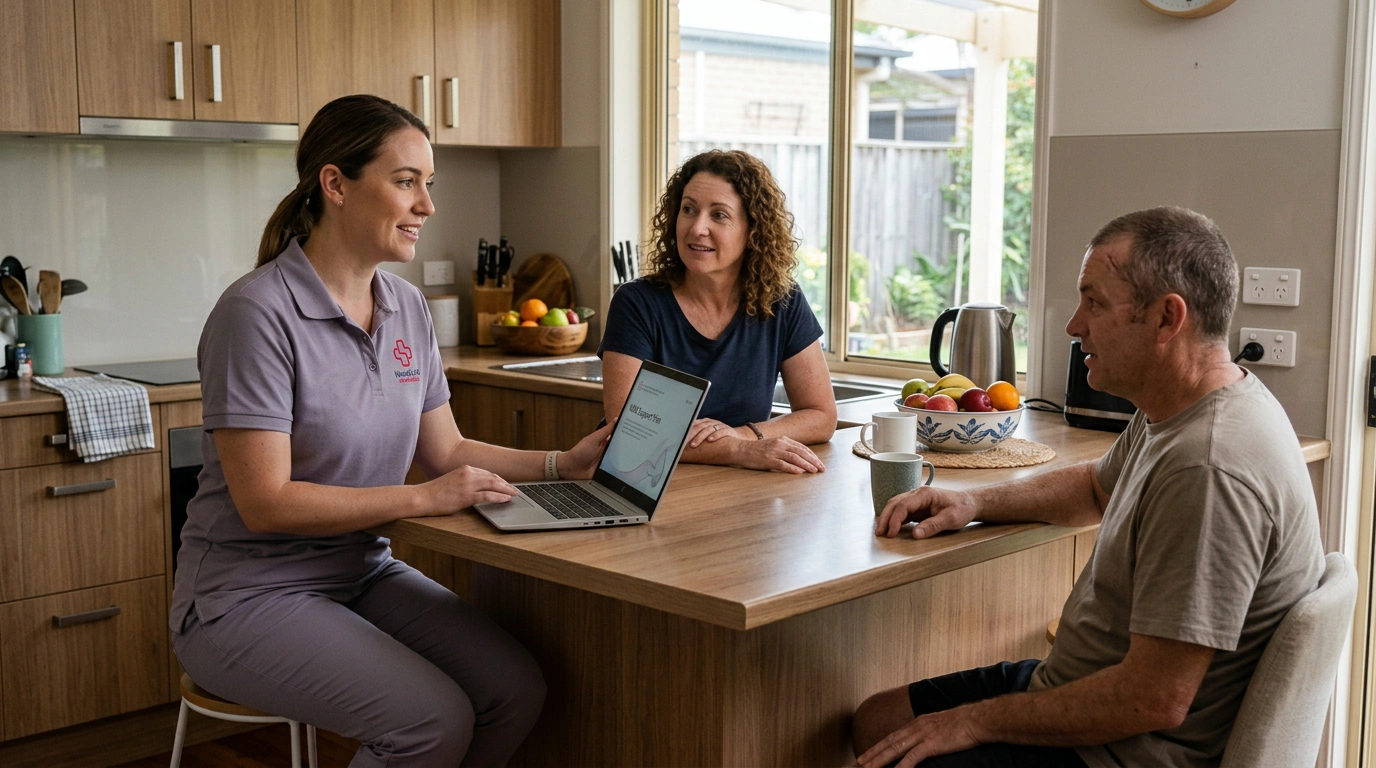
Someone Finally Holding The Whole Picture
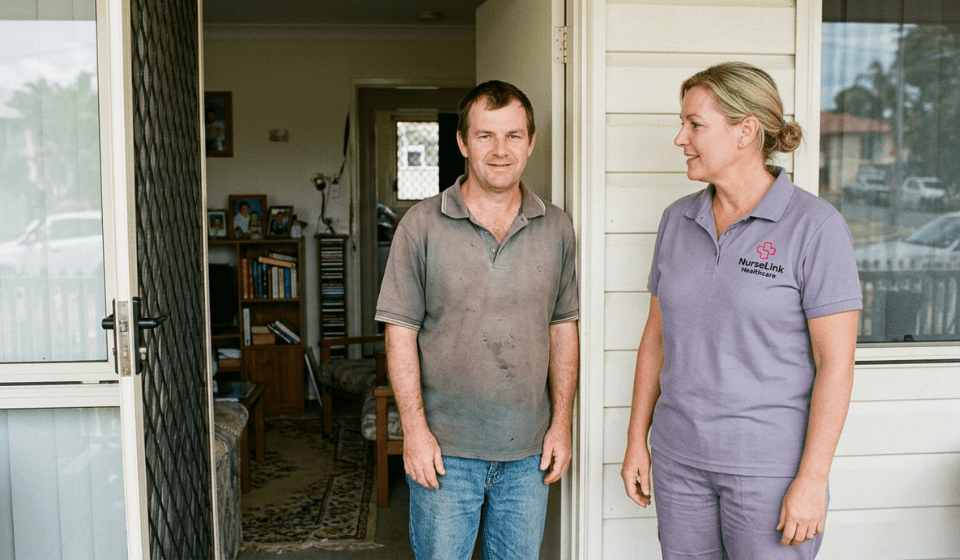
A Home That Was Finally His Own
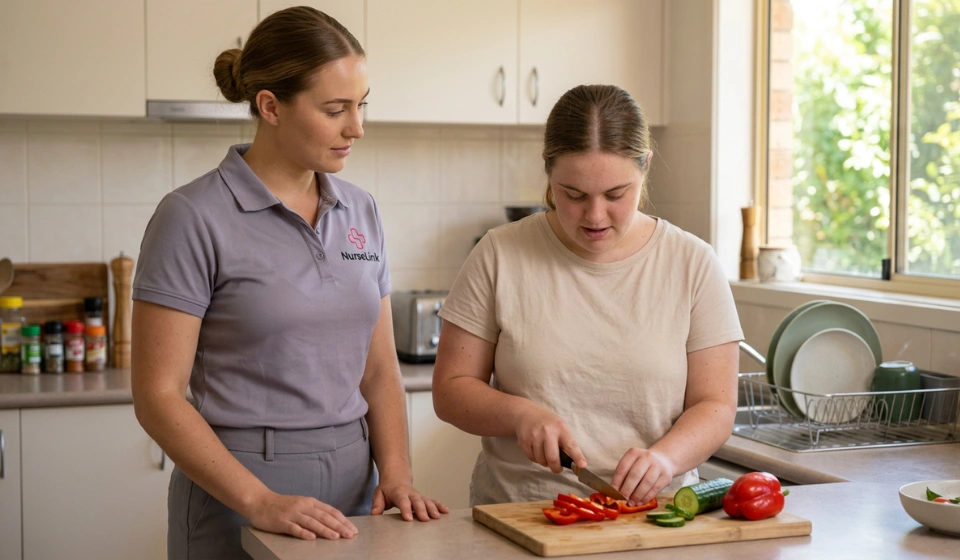
Learning To Do It Herself, With Someone Beside Her
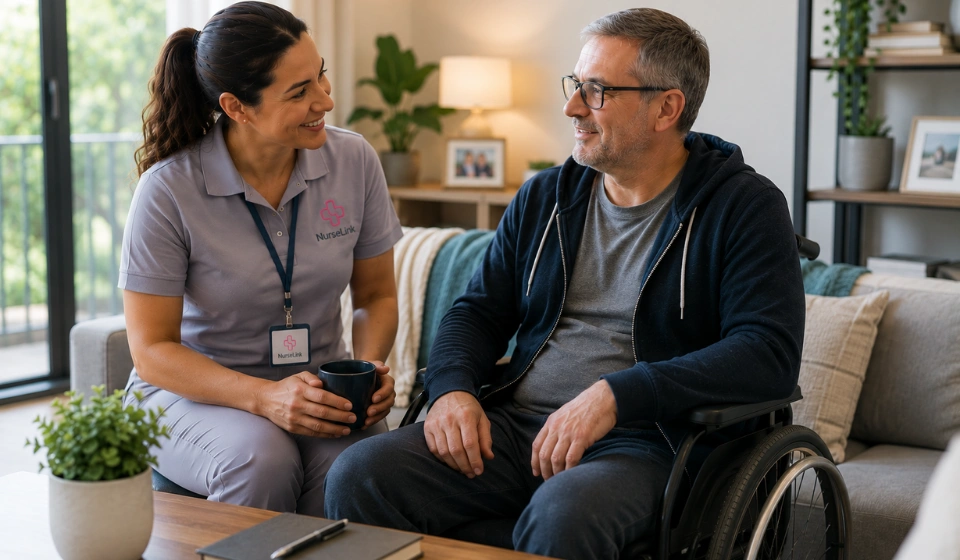
What Was Still Possible
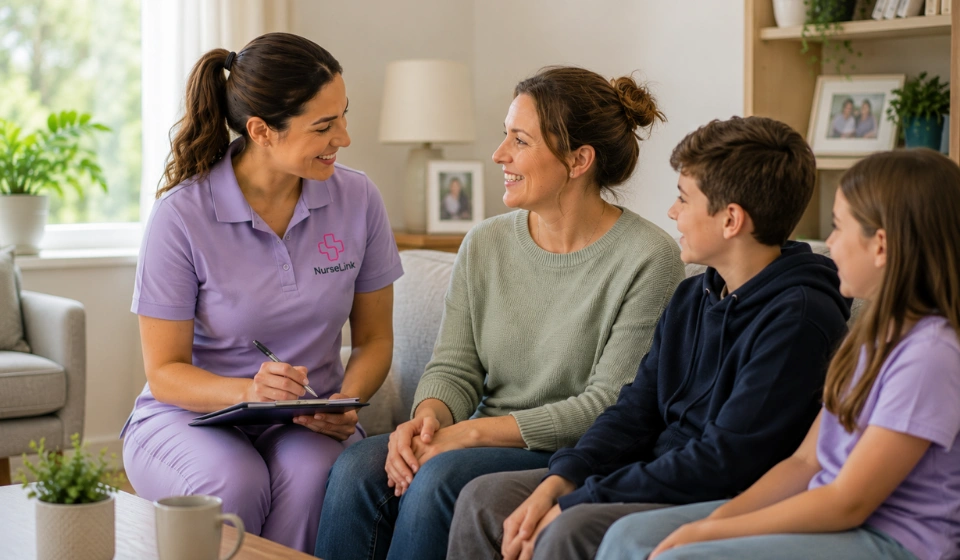
Finding Her Way Back To Her Own Kitchen Table
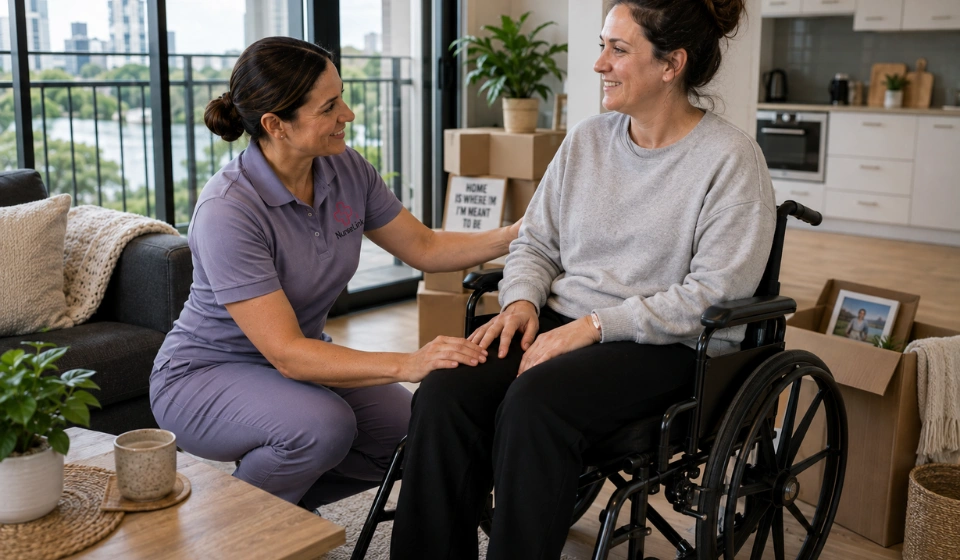
From Aged Care To Her Own Front Door
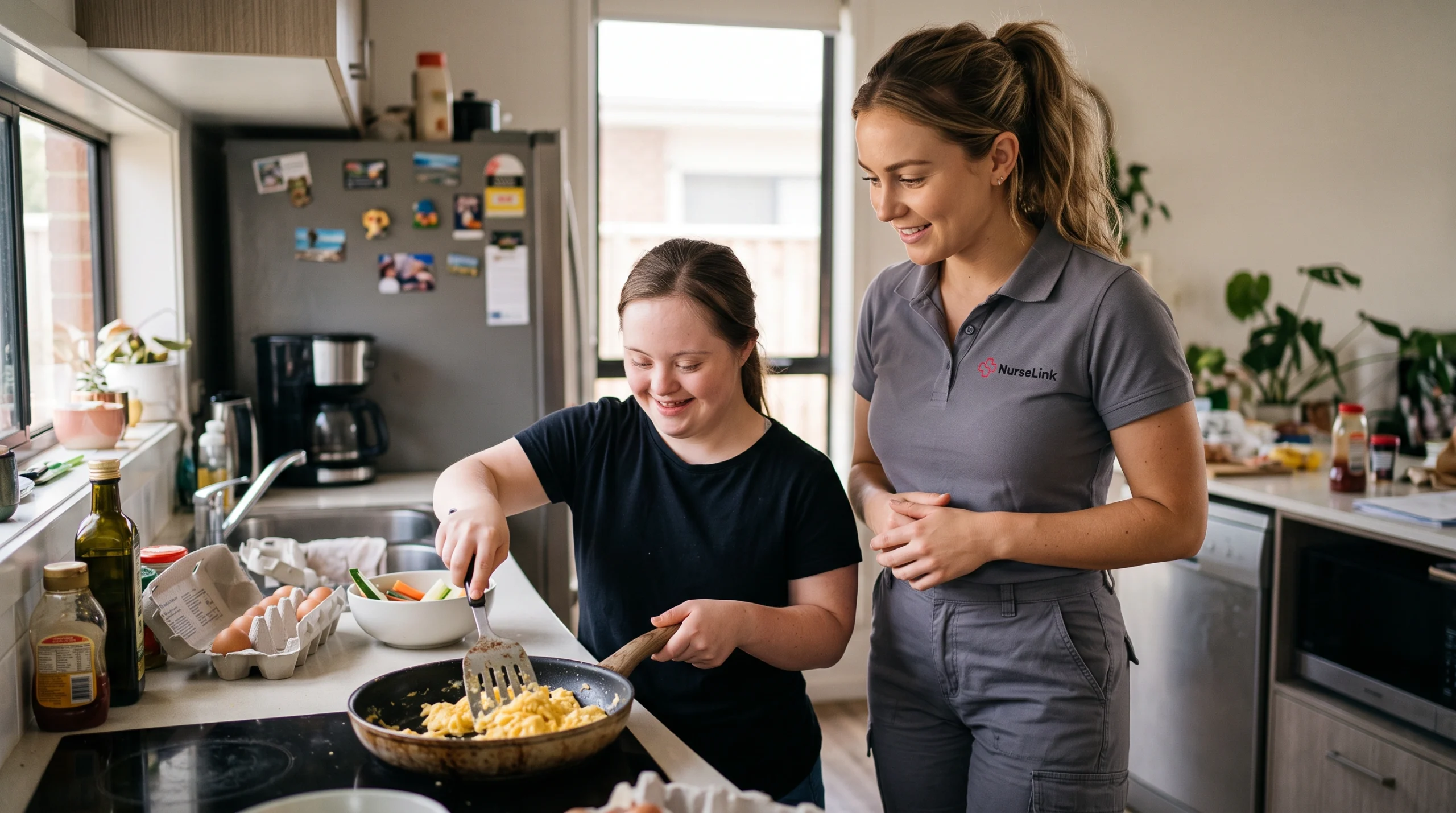
She Was Ready. We Helped Her Get There.
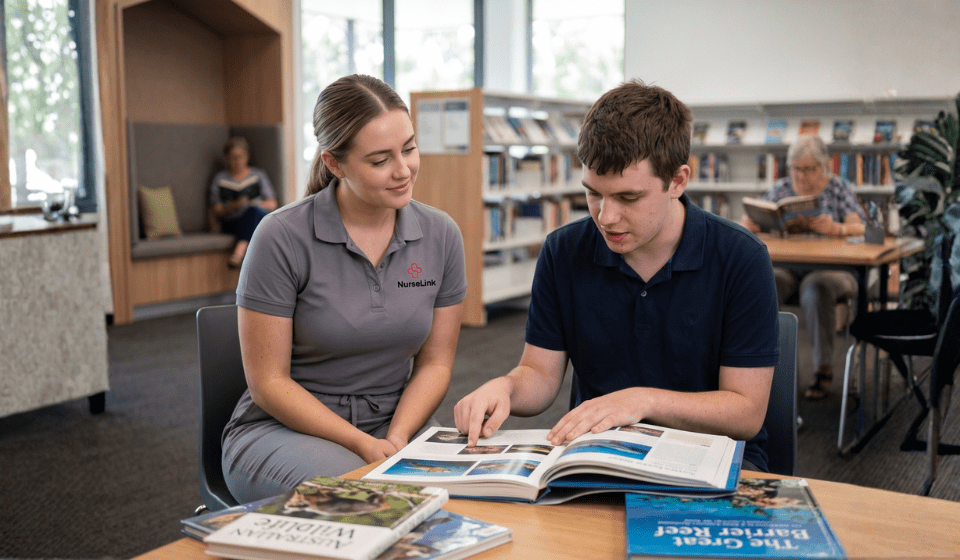
Room To Breathe
The Man He Was Getting Back To
They Did Not Give Up On Him
Returning To Community Life
Rebuilding Independence After A Diabetes-Related Amputation
Cooking By Heart
The World Beyond The Front Door
Finding Home Again After A Stroke
Relearning Independence After A Life-Changing Accident
Beyond The Diagnosis
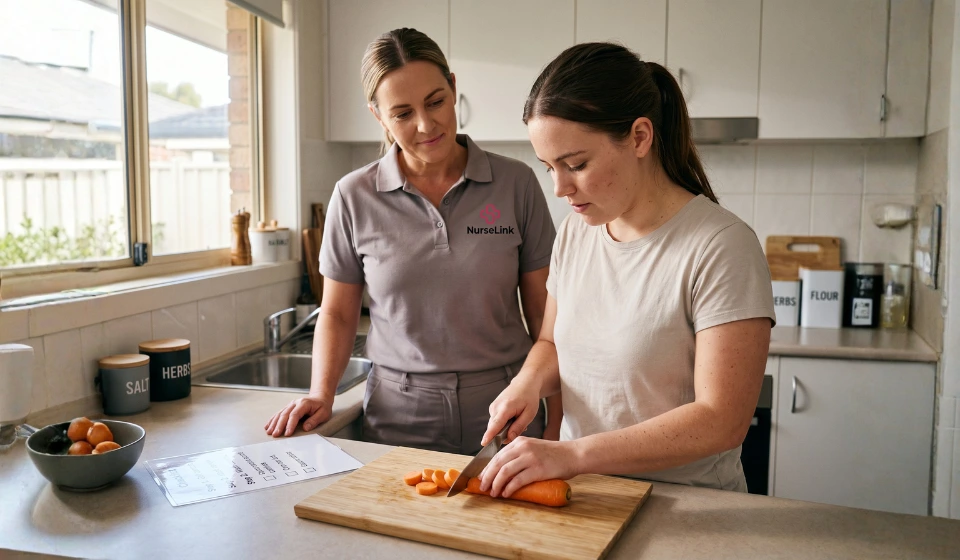
Two Years In Care. One Giant Step Toward Home.
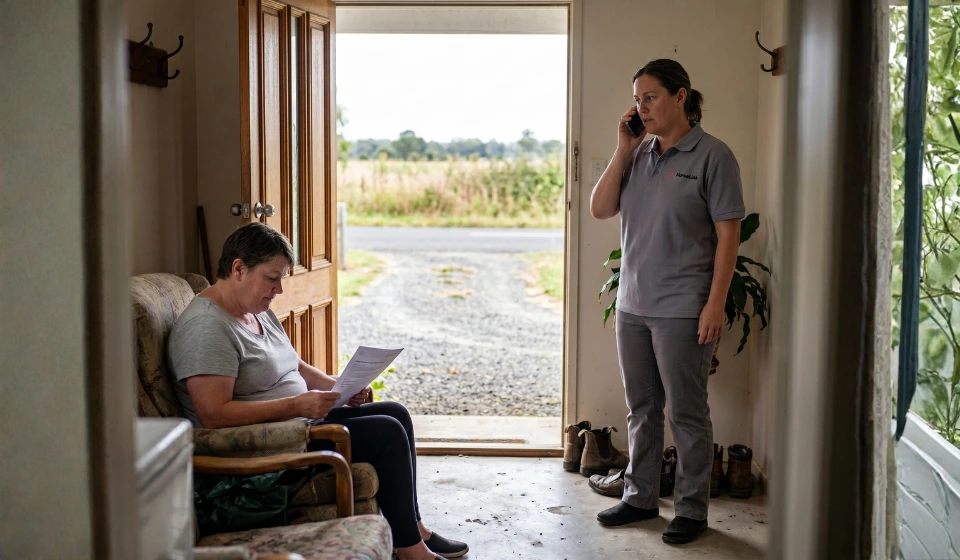
When Transport Barriers Disrupted NDIS Care

Supported Independent Living Success
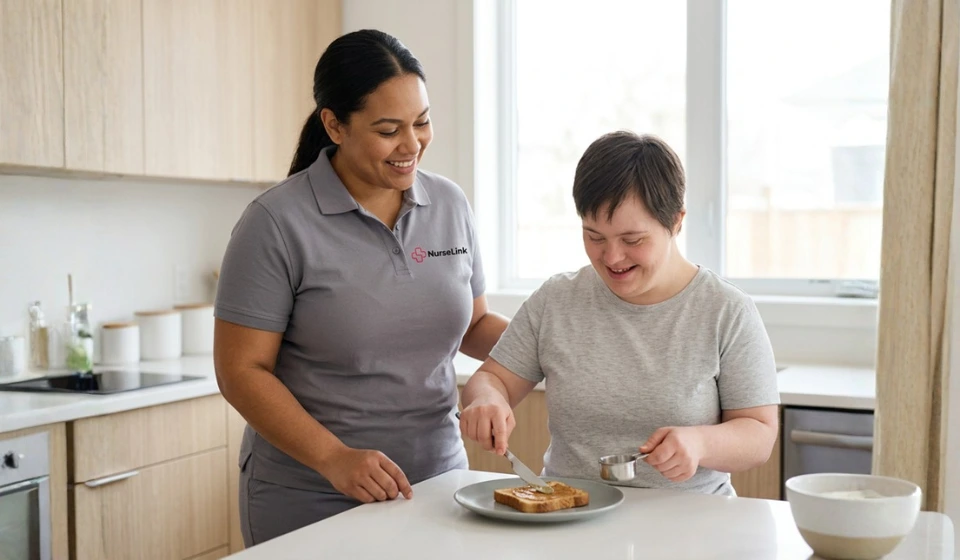
A Journey Towards Independence With NDIS Support

Daniel’s Journey