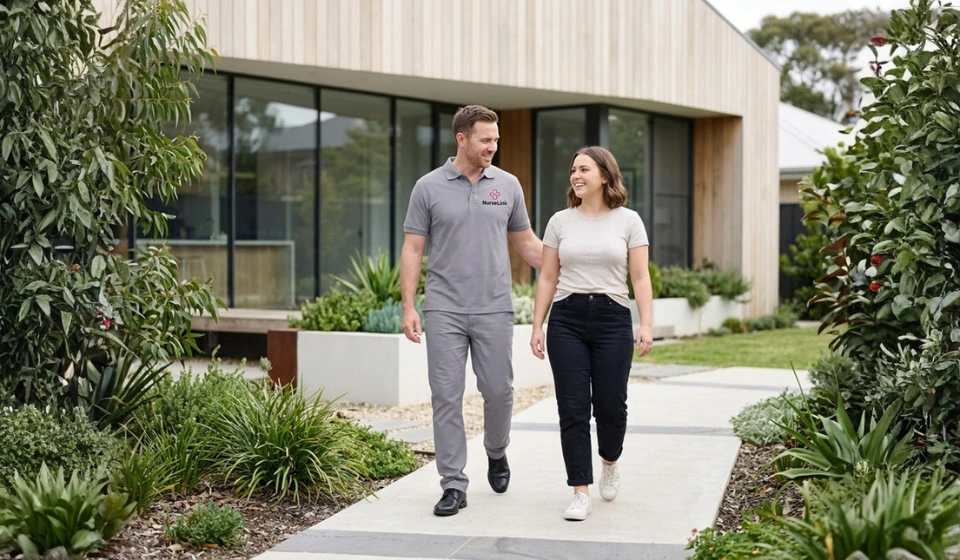
How NurseLink Supported A Young Woman's Mental Health Recovery Journey
A Story Of Trust, Patience & Recovery-Focused NDIS Psychosocial Support
Introduction
Some disabilities are visible the moment you meet someone. Others live quietly behind closed curtains, in homes where the phone goes unanswered and the world slowly shrinks to the size of a single room.
Psychosocial disability is one of the most misunderstood areas of the NDIS. There is no wheelchair, no hospital bed, no outward sign. There is simply a person who once had a full life, trying to find their way back to it.
This case study follows a young woman in her early thirties whose long battle with severe mental ill-health had gradually taken away her work, her friendships, her confidence and, eventually, her ability to walk out her own front door.
It is the story of how patient, consistent and genuinely compassionate psychosocial support from NurseLink Healthcare helped her take the smallest of steps back into the world, and how those small steps quietly became a new life.
To protect privacy and confidentiality, the participant’s name and all identifying details have been kept anonymous throughout this case study.
About The Participant
The participant was a thirty-three-year-old woman living alone in a small unit in metropolitan Melbourne.
Years earlier, her life had looked very different. She had worked at a local florist, a job she adored. She loved the early morning deliveries, the colour, the customers, and the small ritual of bringing home a bunch of flowers for herself every Friday.
But through her twenties, her mental health slowly deteriorated. What began as anxiety grew heavier with each passing year, deepening into long periods of severe depression. There were crisis points. There were hospital admissions. There were promising stretches that ended in painful setbacks.
Piece by piece, the life she had built came apart. The job went first. Then the friendships faded, one unanswered message at a time. Sleep turned upside down. Days blurred into weeks.
By the time she was approved for the NDIS with a psychosocial disability, she had barely left her unit in months.
The flowers had stopped coming home a long time ago.
The Challenges The Family Was Facing
When Leaving The House Feels Impossible
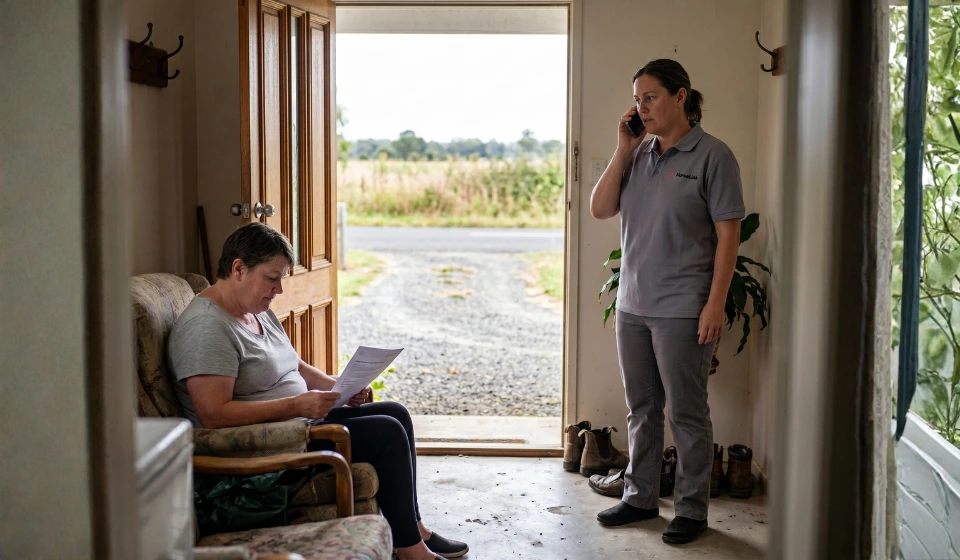
For the participant, the front door had become the hardest thing in her world.
Appointments were missed, not through carelessness, but because the thought of the bus, the waiting room and the crowded footpath was simply overwhelming. Each cancelled appointment brought guilt, and each wave of guilt made the next attempt harder.
The curtains stayed drawn. The mail piled up unopened. Her world had quietly contracted to a few small rooms, and she had begun to believe it would never grow again.
The Quiet Collapse Of Daily Living
During her lowest periods, even the simplest tasks became mountains.
Cooking gave way to skipped meals. Washing sat unfinished. The unit she had once been proud of slowly slipped beyond her control.
And with every corner that grew messier, her shame grew heavier. The more ashamed she felt, the harder it became to start. It was a cycle she could see clearly but could not break alone.
She later described this period simply: “I wasn’t living. I was waiting.”
A Mother Running Out Of Strength
Watching from the outside was her mother, in her sixties, driving across the city several times a week with bags of groceries and a heart full of fear.
She had spent years being the safety net. She had learned to dread the phone ringing late at night. She had sat in hospital corridors, filled out forms, and cried in the car park where her daughter could not see her.
She loved her daughter completely. But love alone was no longer enough, and both of them knew it. Their conversations had narrowed to worry, checklists and crisis plans, and the easy warmth they once shared had been buried somewhere underneath it all.
Why She Was Referred To NurseLink Healthcare
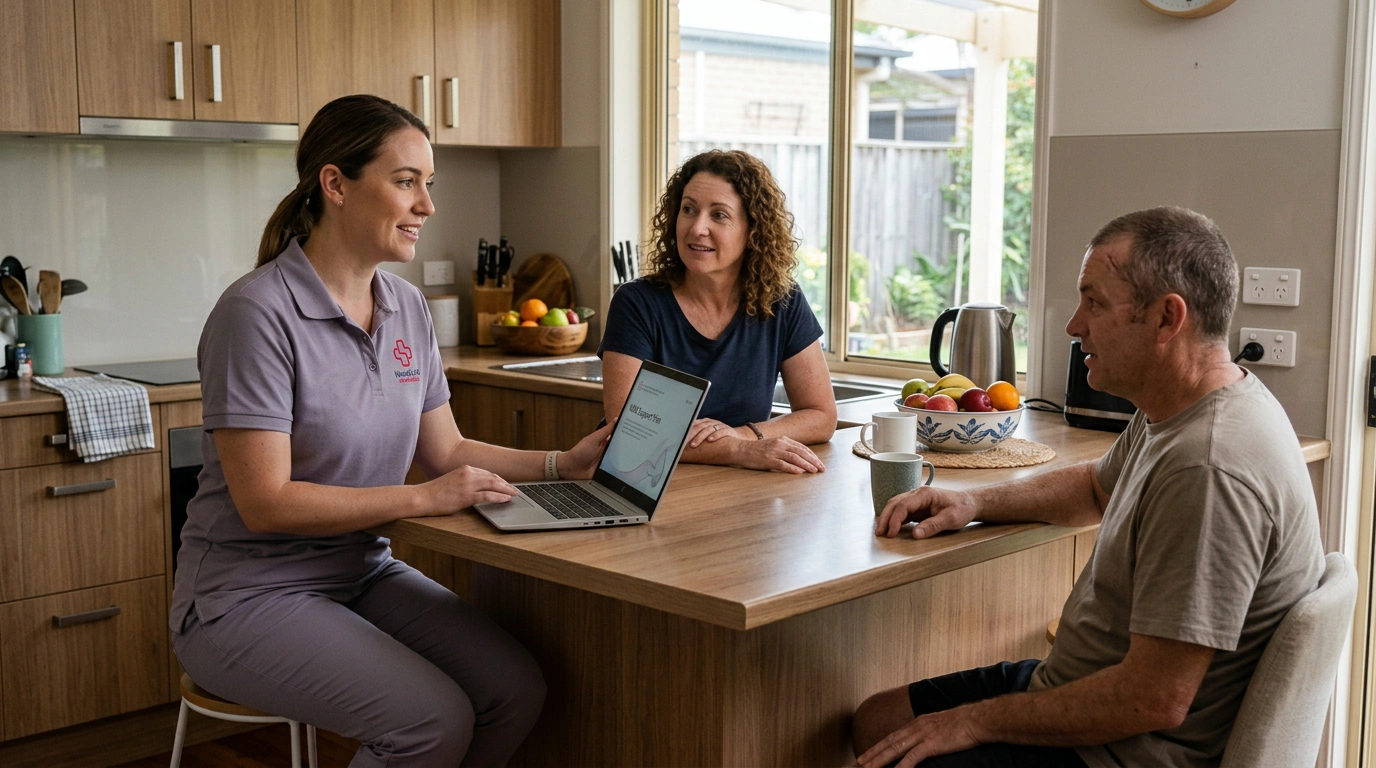
Following her NDIS approval, the participant’s support coordinator recognised that she needed more than a roster of services. She needed people who understood that psychosocial recovery is built on trust, and that trust cannot be rushed.
The support coordinator connected the family with NurseLink Healthcare.
The first meeting happened in the participant’s own home, at her own pace. She managed ten minutes before the anxiety became too much. The NurseLink team member simply smiled, thanked her for her time, and told her that ten minutes was a wonderful start.
For someone who had spent years feeling like a burden and a failure, that single sentence mattered more than any brochure ever could.
Rather than arriving with forms and checklists, the early conversations gently explored questions such as:
- What does a good day actually look like for her?
- What did she love before she became unwell, and what does she miss most?
- What feels completely impossible right now?
- How would she like support to show up on the hard days?
- Who does she want walking beside her on this journey?
For the first time in years, she felt like someone was asking about her, not just about her illness.
The Support Strategy Implemented
Starting Small, Starting Safe
NurseLink Healthcare knew that no goal could be achieved until the participant felt genuinely safe.
She was matched with one consistent support worker, carefully chosen for her warmth, patience and experience in mental health support. There was no rotating roster of strangers. There was one familiar face, arriving at the same time, keeping every promise she made.
The first visits were nothing more than cups of tea and quiet conversation. No pressure. No agenda. No judgement about the state of the unit or the weeks she had struggled.
Slowly, visit by visit, something the participant had not felt in years began to return: trust.
Rebuilding Daily Living, Side By Side
Once trust had taken root, support gently moved into everyday life, always doing things with her, never for her.
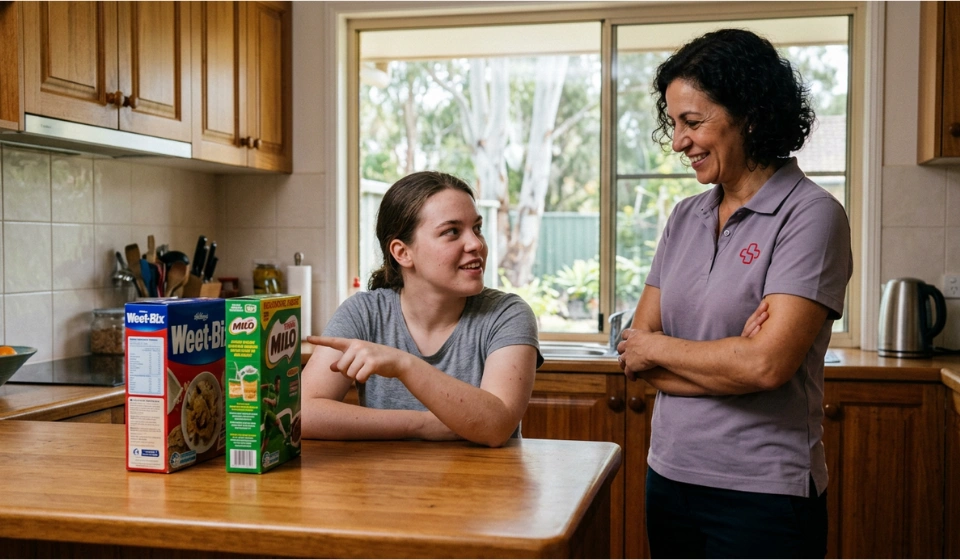
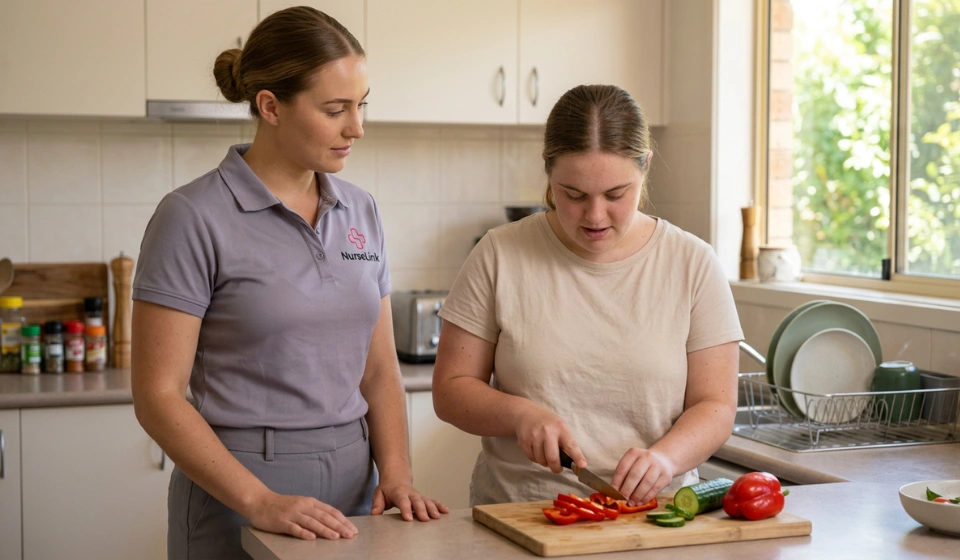
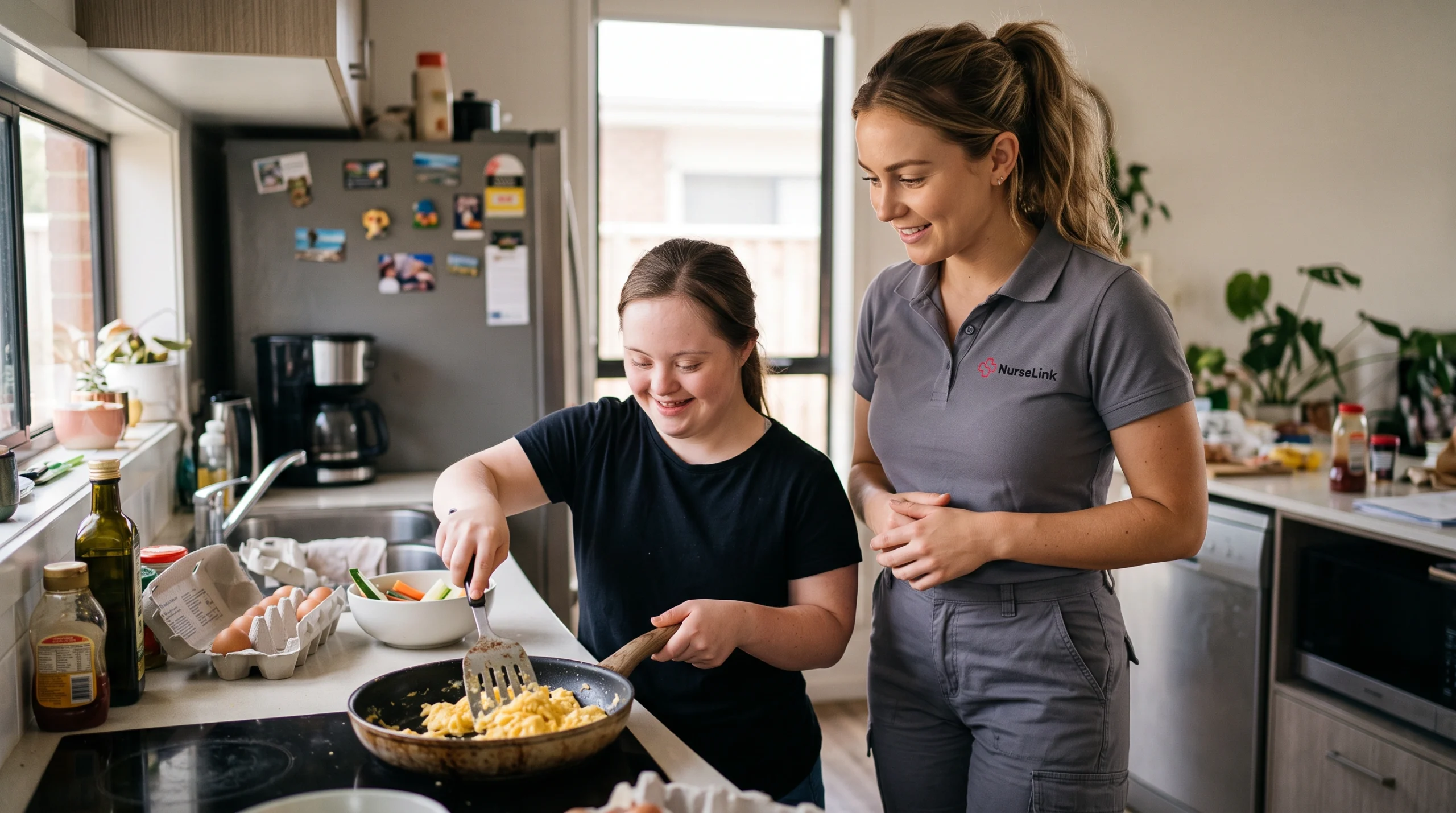
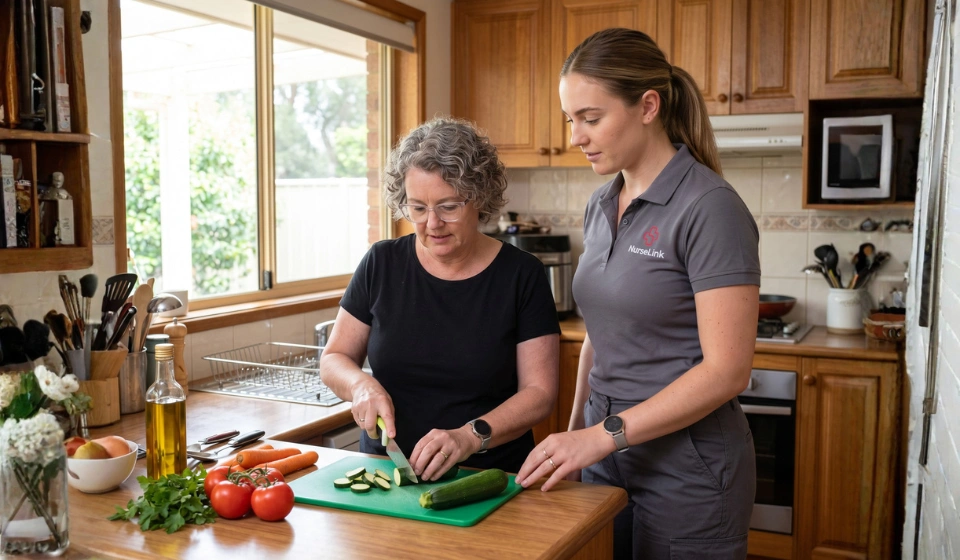
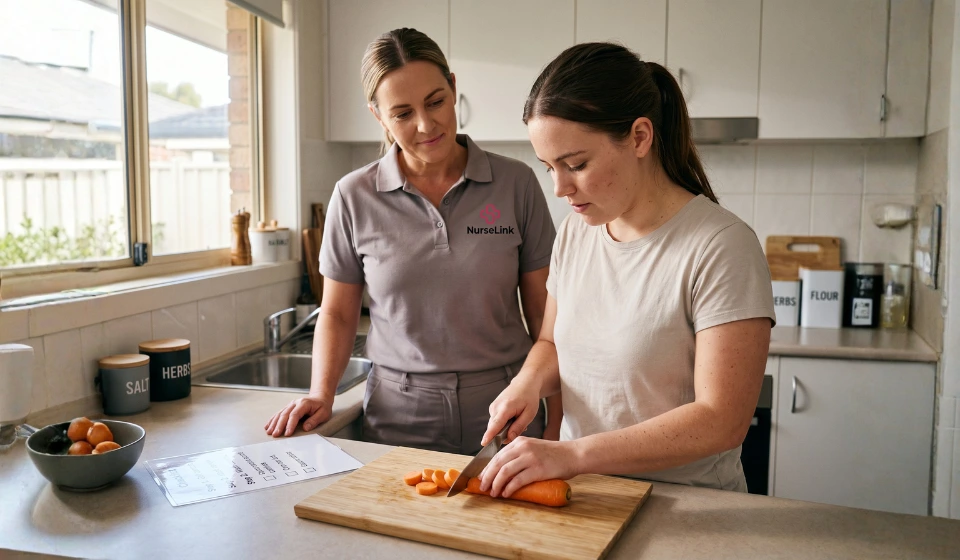
They cooked simple meals together, starting with her old favourites. They tackled the unit one small corner at a time, at her pace, celebrating each finished drawer like the victory it truly was. They rebuilt a morning routine, then a sleep routine, then a calendar with appointments she could actually attend.
Her dignity was protected at every step. Nothing was taken over. Nothing was done to her. Every bit of progress belonged to her.
One Step Outside At A Time
The front door was approached the same way: gently, gradually, together.
The first goal was simply the letterbox. Then a short walk to the end of the street. Then a quiet café at its quietest hour, where she sat with her support worker, hands wrapped around a coffee, heart racing, and stayed.
To anyone else, it was just a coffee. To her, it was a mountain climbed.
Then one Saturday, at the local market, she stopped at a flower stall. Without thinking, she began naming every bloom on the table, the way she once had behind the florist’s counter. Her support worker noticed, and quietly built on it.
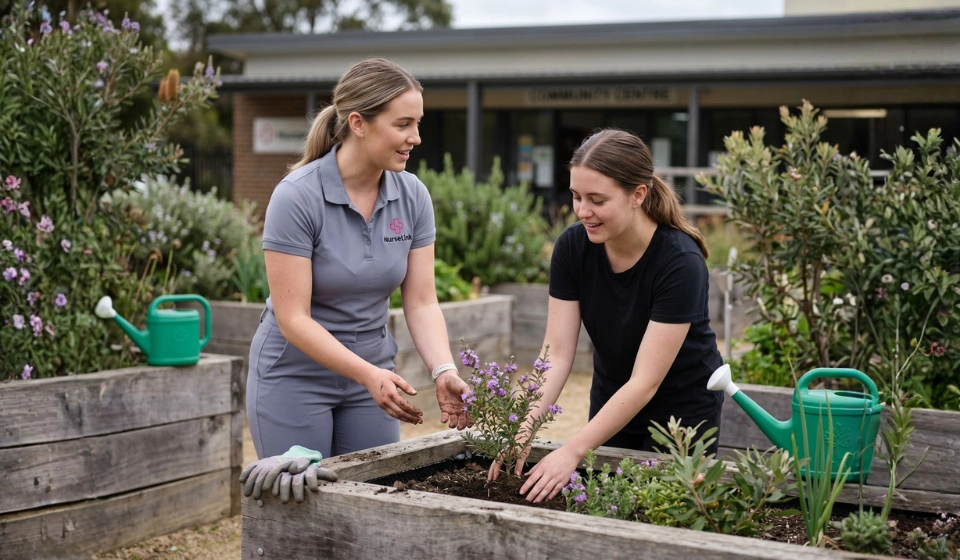
Within a few months, the participant was volunteering one morning a week at a community garden, hands back in the soil, surrounded by the colours she had loved all along.
Staying Through The Setbacks
Recovery from psychosocial disability is never a straight line, and NurseLink Healthcare never pretended it would be.
Partway through the journey, the participant hit a difficult period. For more than a week, she could not open the door. Old feelings of shame came flooding back, along with the fear that she had ruined everything.
Her support team did not withdraw, and they did not judge. With her consent, they kept gently showing up. Notes under the door. Short phone calls. A simple, steady message: we are still here, and this changes nothing.
When she was ready, the door opened again. The plan flexed instead of failing.
Just as importantly, her mother was finally able to step back from constant crisis mode, knowing a professional, compassionate team was walking beside her daughter every week.
Outcomes Achieved
A Front Door That Opens Again
Twelve months on, the participant leaves her home several times every week.
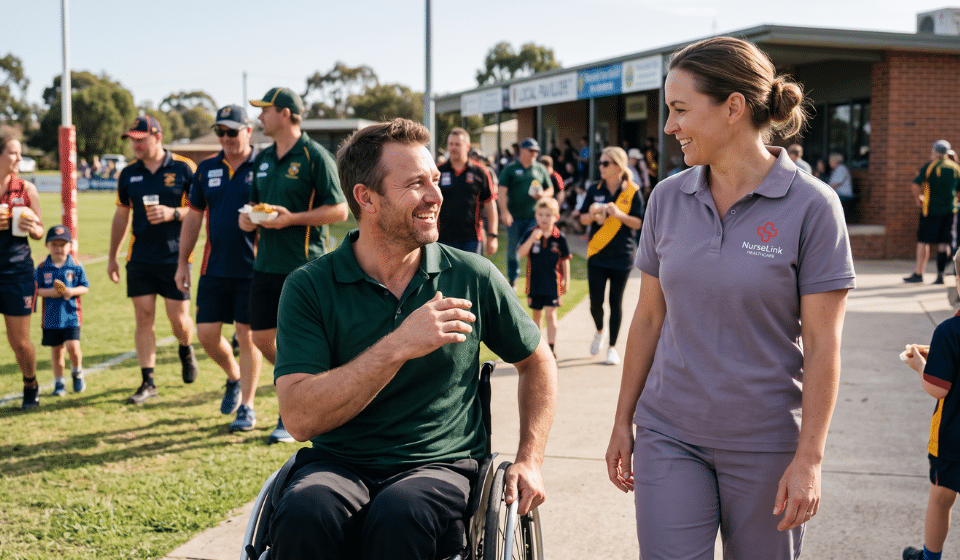
The market on Saturdays. The community garden on Wednesdays. Appointments she attends on her own. The curtains are open, and so is the world behind that once-impossible front door.
Confidence In Everyday Living
The participant now cooks regularly, keeps her unit in a way that makes her feel proud rather than ashamed, and manages a routine that supports her mental health instead of working against it.
There are still hard days, and there always may be. The difference is that hard days no longer undo everything. She has strategies, she has support, and she has proof that she can find her way back.
A Family Finding Each Other Again
The change in the participant’s relationship with her mother has been one of the most beautiful outcomes.
Grocery drop-offs have become Sunday lunches. Crisis calls have become long, easy chats about nothing in particular. A mother who once lay awake listening for the phone now falls asleep peacefully most nights.
They are no longer patient and safety net. They are mother and daughter again.
Hope For What Comes Next
Perhaps the most powerful outcome cannot be measured at all.
The participant has enrolled in a short floristry refresher course, with her support worker’s encouragement, and speaks openly about one day working a few hours a week among the flowers again.
After years of waiting for her life to end each day, she has started planning for it instead.
And on most Fridays now, there is a small bunch of flowers on her kitchen table. She buys them herself.
Reflection From The Participant & Her Family
Reflecting on the journey, the participant shared:
“For a long time, I believed the world had ended at my front door. The team never gave up on me, even in the weeks when I had completely given up on myself.”
“My support worker never made me feel like a task on a list. She made me feel like a person worth showing up for. That changed everything.”
Her mother added:
“For years I was so busy being afraid for her that I forgot what it felt like to just enjoy her. I have my daughter back now. When I hear her laugh on the phone, I could cry every single time.”
Key Takeaways From This Case Study
Recovery Is Not A Straight Line
Psychosocial recovery moves forward, pauses and sometimes slips back. The right support team plans for setbacks with compassion instead of treating them as failures, so one hard week never has to undo a year of progress.
Trust Must Come Before Progress
For participants living with psychosocial disability, no goal can be reached until they feel safe. Consistent support workers, kept promises and judgement-free care are not soft extras. They are the foundation everything else is built on.
Small Steps Are Enormous Victories
A cup of coffee in a café. A walk to the letterbox. An opened curtain. In psychosocial recovery, these are not small things. They are life changing, and they deserve to be recognised and celebrated as exactly that.
Supporting The Person Means Supporting Their Family Too
Behind many participants is a parent, partner or sibling quietly carrying years of fear and exhaustion. Reliable psychosocial support gives families permission to step out of crisis mode and back into the relationships they were always meant to have.
Conclusion
Psychosocial disability can take away almost everything that makes a life feel like living. But with patience, trust and genuinely person-centred support, it can be rebuilt, one small, brave step at a time.
For this participant, recovery was never about becoming who she was before. It was about discovering who she could still become, and learning that she did not have to make that journey alone.
Through consistent, compassionate and recovery-focused psychosocial support, NurseLink Healthcare helped a young woman move from a life lived behind closed curtains to a life filled with markets, gardens, family lunches and flowers on the kitchen table.
Every participant’s journey is different, which is why meaningful care begins with understanding the individual behind the support plan.
If you or your loved one are living with a psychosocial disability and looking for compassionate, recovery-focused NDIS support, NurseLink Healthcare is here to help.