They Did Not Give Up On Him
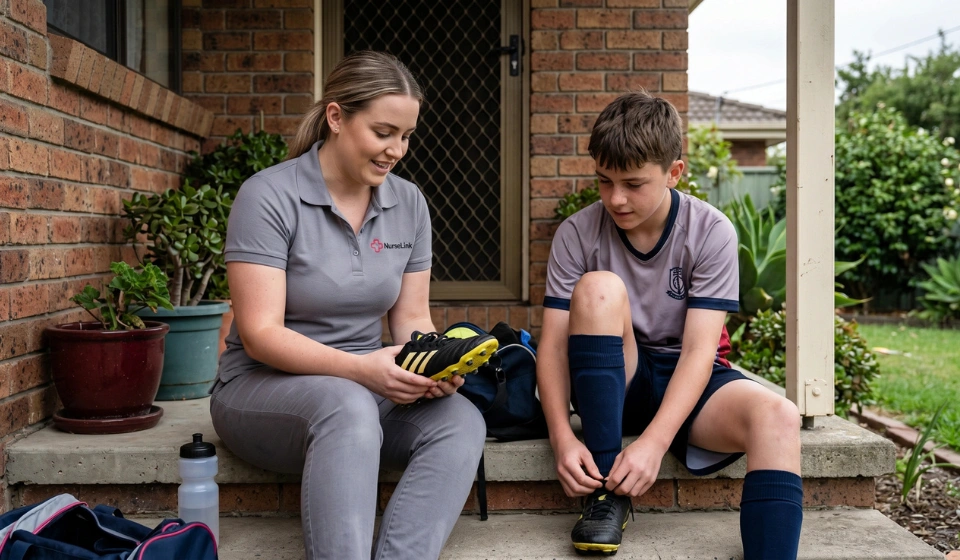
Supporting A Teen With Complex Needs When Others Could Not
A Case Study In NDIS Support That Stayed When Others Walked Away.
Introduction
There is a particular kind of devastation that a family feels when a service provider looks at their child and decides he is too hard. Not in those words, of course. The words are usually more careful than that. Funding constraints. Insufficient capacity. Unable to meet complex needs at this time. The language is professional and the reasons are documented and the outcome is the same regardless of how it is phrased. The family is left, again, with a child who needs more than the system has been willing to provide, and the quiet accumulating knowledge that the people who are supposed to help have looked at their son and found him wanting.
For the families of young people with complex, high-support needs, this experience is not rare. It is, for many of them, a recurring feature of their relationship with a disability support system that is designed around what it can accommodate rather than around what the person in front of it actually needs. The participants who fit neatly into standard support models receive standard support. The ones who do not, the ones whose behaviours are challenging or whose communication is non-standard or whose needs do not resolve themselves into a predictable and manageable pattern, too often find themselves at the end of a phone call being told, with regret, that the current provider can no longer continue.
What those families need, and what they deserve, is a provider that stays. That does not assess a young person against what is easy and walk away when the answer is not easy enough. That brings the clinical skill, the personal commitment and the genuine belief that every person, regardless of the complexity of their needs, deserves support that tries to understand them.
At NurseLink Healthcare, we believe this without qualification. This case study documents how our team supported a teenage boy in Darwin, Northern Territory, living with a rare genetic condition affecting his movement and communication, and his family, after a series of previous NDIS providers had discontinued his support, and how the support workers who came to know him refused to be the next ones to walk away.
To protect the privacy of the client and his family, all names and identifying details have been kept confidential throughout this case study.
The Young Person & His Family's Situation
The young person at the centre of this case study is a boy aged between fifteen and seventeen living in Darwin with his mother, his younger sister and his maternal grandmother, who had moved in several years earlier to help manage a household that had become, without question, more than one person could run alone. He has a rare genetic condition that affects his neurological development, producing significant motor impairment that limits his independent movement, non-verbal communication that relies on a combination of eye gaze technology, vocalisation and a small set of physical gestures that the people who know him well have learned to read with considerable accuracy, and a pattern of behaviours under stress that previous providers had consistently described as challenging and that his family described, with a precision born of years of close attention, as communication.
He is also, as his mother says without hesitation and with a directness that leaves no room for polite disagreement, a person. He has preferences, intense and clearly expressed. He has a sense of humour that operates through timing and expression and the particular quality of stillness he produces when something strikes him as genuinely funny, which is often. He has things he loves, a specific type of electronic music that he responds to with unmistakable physical pleasure, a collection of textured objects that he returns to for comfort, the company of the family dog, which he has an observable relationship with that his family describes as one of the most consistent sources of calm in his day. And he has things he does not love, transitions without warning, loud unpredictable sounds, strangers who approach him as though the wheelchair and the communication device mean he is not fully present in the room.
His mother had been fighting for adequate support for him since he was small. The NDIS had provided funding that, on paper, should have been sufficient to cover a meaningful level of daily support. In practice, the translation of that funding into consistent, adequate and genuinely suitable support had been a process of repeated partial successes and significant failures. Three providers over the preceding four years. Each one had come in with good intentions and a willingness to try. Each one had eventually reached the point at which the complexity of his needs, the investment required to properly understand his communication, the skill and the patience needed to support him through his more difficult periods, had exceeded what they had been prepared to sustain.
The last provider had given one month’s notice on a Tuesday afternoon with a phone call that his mother had taken in the car park of the supermarket while her mother watched the children. She had sat in the car for a while after the call, not crying, because she was past the point where that particular news made her cry. Then she had driven home and started looking for the next provider.
How NurseLink Healthcare Came Into The Picture
The referral to NurseLink Healthcare came through his NDIS plan manager, who had been working with the family for two years and who had, through that time, developed a clear picture of what the previous providers had done and where each of them had fallen short. The referral was accompanied by a detailed account of his needs, his communication profile and the history of previous support arrangements, including the specific points at which each had broken down.
The plan manager was honest with NurseLink Healthcare from the outset. This was a young person whose previous experience of support workers had not been good, and whose response to new people, given that history, was not welcoming. His family was exhausted and had reached the point where their trust in new providers had been worn thin by repeated disappointment. NurseLink Healthcare was not coming in as the first option. It was coming in as the option after the options had run out, and that reality would be felt in the initial period of the engagement in ways that the right provider needed to be prepared for.
NurseLink Healthcare accepted the referral.
Understanding What He & His Family Actually Needed
The initial meeting NurseLink Healthcare had with his family was not an assessment in the standard sense. It was a listening exercise, conducted with the understanding that his mother, his grandmother and the plan manager who joined the call had more relevant knowledge about what this young person needed than any clinical framework NurseLink Healthcare could bring to the conversation, and that the right response to that knowledge was to hear it carefully.
His mother spoke for a long time. She talked about his communication system and the specific gestures and expressions that indicated different things. She talked about his sensory profile and the environments and stimuli that regulated him and those that dysregulated him. She talked about the transition strategies that worked and the ones that did not, and the specific way a support worker needed to introduce themselves and their presence before beginning any activity, because a support worker who moved too quickly into his physical space without the right approach would produce a response that looked like aggression and was actually fear.
She talked about what had gone wrong with previous providers. Not to assign blame, but because she needed NurseLink Healthcare to understand the pattern, the initial confidence that had given way to uncertainty, the uncertainty that had produced inconsistency, the inconsistency that had escalated his distress, and the escalated distress that had been cited as the reason the provider could no longer continue. She needed to know whether NurseLink Healthcare understood that the escalation had not been him failing the providers. It had been the providers failing to understand him.
She also said something that stayed with the care coordinator long after the meeting. She said that what she needed, more than any specific skill or any particular approach, was for the people who came to support her son to believe that he was worth the effort. She had met too many support workers who had arrived prepared to try and left having decided that trying was not worth it. She needed people who would not make that decision.
NurseLink Healthcare built the support plan around everything she had said.
The NurseLink Healthcare Solution
Support Workers Selected For Commitment As Much As Competence
The selection of support workers for this engagement was the most significant and the most carefully considered decision NurseLink Healthcare made. The clinical requirements were clear, experience with complex neurological conditions, familiarity with augmentative and alternative communication systems, training in positive behaviour support and the specific skills needed to manage and de-escalate the expressions of distress that his condition and his history produced. These were necessary. They were not sufficient.
What NurseLink Healthcare was looking for, beyond the clinical credentials, was the kind of person who would not give up on a teenager who had been given up on before. Who would come in understanding that the initial period was going to be difficult and that the difficulty was not a sign that the placement was not working but a sign that a young person who had learned, through experience, that adults eventually leave, was waiting to find out whether these ones would too.
The two support workers NurseLink Healthcare assigned to his roster were both experienced in complex disability support and both, in the assessment of the care coordinator who interviewed them with this specific engagement in mind, people who understood that kind of work as a long game. They were patient in the specific way that this situation required, not passive but actively, intentionally patient, the kind of patience that is a professional skill rather than a personality trait.
An Introduction Built On His Terms
The first meeting between him and his new support workers was planned and managed with the same care that every subsequent visit would be. His mother was present. The meeting took place in his bedroom, his most regulated environment, at a time of day when his medication cycle meant he was likely to be at his most settled. The support workers sat at a distance that communicated presence without intrusion, did not attempt to engage with him physically and did not perform the loud, cheerful manner that some people adopt with non-verbal young people and that he found, his mother had explained, genuinely distressing.
They introduced themselves, briefly and calmly. They showed him their photographs, which his mother had sent them in advance so that the faces were not entirely new. They listened while his mother explained to him, in the specific language she used with him, who they were and why they were coming. They watched how he responded to them and they attended to what they saw without rushing past it.
He did not welcome them. But he tolerated them, which his mother later told the care coordinator was, for a first meeting with a new support worker, more than she had dared to expect.
Building Trust, Visit By Visit
The first weeks of the engagement were genuinely difficult. He was wary of his new support workers in ways that expressed themselves through the behaviours that previous providers had cited as the reason they could not continue. His support workers had been prepared for this and they responded not with alarm or with the kind of thinly concealed anxiety that he was acutely sensitive to, but with the steady, calm, consistent presence that communicated, in the only language that mattered at that stage, that they were not going anywhere.
They learned his communication with the dedication of people who understood that learning it was not a courtesy but a clinical and human necessity. They learned which vocalisation meant discomfort and which meant engagement. They learned the specific sequence of the transition warning that settled him and the exact distance at which their physical presence felt safe rather than threatening. They learned that the electronic music he loved was not a preference to be noted in a file but a genuine source of regulation that belonged in every visit, early and consistently.
And they brought something to each visit that no clinical framework had specified but that his mother recognised immediately. They were genuinely interested in him. Not in the performance of interest that some support workers produce, but in the real thing, the curiosity of people who found the specific person in front of them worth knowing. He was not, to them, a complex case. He was a teenager with a sense of humour and strong opinions and a relationship with a dog and preferences about his music, and they showed up each visit as people who were interested in all of that.
By the sixth week, he was allowing physical proximity that he had not allowed the previous provider in six months. By the tenth week, he was initiating engagement with his support workers using his eye gaze device in a way that his mother had not seen him do with any non-family member before. By the third month, there was something in the household on his support days that his mother described, carefully and with the guardedness of a person who had hoped for things before and had those hopes disappointed, as something approaching ease.
Positive Behaviour Support Built Into Every Visit
NurseLink Healthcare’s support workers were trained in positive behaviour support and applied its principles not as a set of techniques deployed in response to difficult moments but as the foundation of how every visit was structured and conducted. Consistency of routine, advance communication of transitions, the specific regulatory strategies that worked for him and the patient, non-reactive response to his expressions of distress were built into every interaction rather than reserved for crisis moments.
The care coordinator maintained regular contact with his behaviour support practitioner, ensuring that the strategies being used in NurseLink Healthcare’s visits were aligned with his broader behaviour support plan and that any observations from support visits were feeding back into the clinical picture being managed across his whole support team. The communication between NurseLink Healthcare and the other professionals in his life was not perfunctory. It was the genuine clinical collaboration that complex support requires.
His Mother Was Kept Fully Informed & Genuinely Heard
Throughout the engagement, NurseLink Healthcare maintained a communication approach with his mother that was built on the specific kind of honesty she had asked for. She received regular updates that told her the real picture of how each visit had gone, including the difficult ones, because she had been managed with carefully curated information before and she had found it more frightening than the truth.
When a visit was hard, she heard that it had been hard and she heard what had been done in response and what had been learned from it. When a visit went well, she heard that too, with the specific detail that made it real rather than reassuring. She was treated throughout as the expert on her son that she was, and her input into how the support was being delivered was sought and acted on rather than noted and filed.
Outcomes & Impact
He Did Not Lose Another Provider
The most fundamental outcome of this engagement was the one that his history made the most significant. NurseLink Healthcare did not walk away. The support workers who had been placed with him were still there at the end of the engagement period, and the engagement had not ended because the provider had decided he was too hard. It had evolved, as planned, into an ongoing arrangement that the family was not bracing itself to lose.
For a family that had absorbed the message from every previous provider that their son’s needs were beyond what the system would sustain, this outcome carried a weight that was difficult to overstate.
His Engagement With Support Transformed
The change in how he engaged with his support workers across the months of the engagement was, by the account of his mother and his behaviour support practitioner, remarkable. The young person who had met his new support workers with the wary, defended distance of someone who had learned that closeness preceded abandonment had, by the later months of the engagement, developed a genuine relationship with the people who came to support him. He communicated with them using his eye gaze device with consistency and a range that he had not previously shown outside his family. He participated in activities with them that previous providers had recorded as unachievable.
His behaviour support practitioner, reviewing his progress at a six-month checkpoint, noted a reduction in the frequency and intensity of his most challenging behavioural expressions that she attributed directly to the consistency and quality of the NurseLink Healthcare support.
His Mother Had Something She Had Not Had In Years
She had providers she trusted. That was what she said, simply and without elaboration, when the care coordinator asked her at a review meeting how she felt the engagement was going. She said it in the tone of someone who understood exactly how much those words represented and who was not going to diminish them by saying more.
She had also, across the months of the engagement, begun to sleep better. She had not mentioned the sleeping to the care coordinator directly but her plan manager, who had known her for two years, had noticed and had mentioned it. A mother who has spent years fighting for her child and losing, who has absorbed disappointment after disappointment and kept going not because it was easy but because there was no other option, sleeps differently when the fighting produces something real. When the people supporting her son show up, and keep showing up, and refuse to be the next ones to walk away.
He Showed Them Who He Was
The outcome that his support workers returned to most often when they reflected on the engagement was not a clinical milestone or a behavioural improvement, though both had occurred. It was a moment, several months into the engagement, when he had used his eye gaze device to navigate to a piece of music his primary support worker had not heard before and had watched her face while she listened to it.
He had wanted to share something he loved with someone he had decided he could trust. That is not a clinical outcome. It is a human one, and it is what the whole engagement had been working toward without anyone having named it in those terms. A teenager who had been given up on by enough people to stop expecting anything else had decided, against the evidence of his experience, to let someone in.
That decision belonged entirely to him. NurseLink Healthcare had simply been the provider that stayed long enough for him to make it.
A Reflection From His Mother
At a review meeting several months into the engagement, his mother shared the following with the NurseLink Healthcare care coordinator:
“Every provider before NurseLink came in saying the right things. They had the training and the paperwork and the intentions. And then, one by one, they decided he was too hard. What NurseLink did differently was not just stay. It was that they came in already believing he was worth staying for. He knows the difference. He has always known the difference. The day he showed your support worker his music, I cried after they left. Not because it was sad. Because I had waited so long to see someone outside this family look at my son and see what I see.”
Key Takeaways From This Case Study
Complex needs require providers who make a genuine commitment before the work gets hard. A provider that enters a complex support arrangement prepared to try but not prepared to persist will, in most cases, eventually reach the point at which trying feels insufficient and walking away feels manageable. The families of young people with complex needs need providers who have already decided, before the first visit, that they are not going to be the next ones to leave.
Challenging behaviour is almost always communication. A non-verbal young person with complex needs who expresses distress through behaviour that others find difficult is not failing to manage himself. He is communicating something that the support environment has not yet found a way to hear. NurseLink Healthcare’s positive behaviour support approach treated his behavioural expressions as information rather than as problems, and built the support around what they were communicating.
Trust with a young person who has been repeatedly let down is earned slowly and lost instantly. The consistency of NurseLink Healthcare’s presence across the early weeks of the engagement, when his response to his support workers was at its most defended, was the investment that made everything that followed possible. Consistency in this context is not a logistical consideration. It is a clinical and relational one.
Families of complex NDIS participants need honesty more than reassurance. A family that has been managed with carefully positive communication while the support arrangement was quietly failing beneath it will not be restored to trust by more of the same. NurseLink Healthcare’s commitment to honest, specific and regular communication with his mother was what built the trust that allowed the engagement to develop into a genuine partnership.
Conclusion
There are young people in the NDIS whose needs are complex enough that the system, in its current form, does not always know what to do with them. Who have been passed between providers, each one a fresh start that has eventually become another ending. Who have learned, because they have been taught it repeatedly, that the people who come to support them will eventually decide that supporting them is not worth it.
The young person at the centre of this case study had learned that lesson thoroughly. And then NurseLink Healthcare came in, and the lesson turned out to be wrong.
Not because NurseLink Healthcare had a method that previous providers lacked, though the clinical approach mattered. But because the support workers who came to his house in Darwin, week after week, had decided before they walked through the door that this particular teenager, with his eye gaze device and his electronic music and his relationship with his dog and his sense of humour that operated through timing and stillness, was worth every bit of the effort that supporting him required.
He showed them his music. That is the measure of it.
If your family is navigating the NDIS with a young person whose needs have proved too complex for previous providers, we encourage you to reach out to the NurseLink Healthcare team. We will not give up on your child. That is not a promise we make lightly. It is one we are prepared to keep.
Latest Post
When Parents Learned to Trust NDIS Support
The Life He Thought The Accident Had Collapsed
Someone Finally Holding The Whole Picture
A Home That Was Finally His Own
Learning To Do It Herself, With Someone Beside Her
What Was Still Possible
Finding Her Way Back To Her Own Kitchen Table
From Aged Care To Her Own Front Door
She Was Ready. We Helped Her Get There.
Room To Breathe
The Man He Was Getting Back To
They Did Not Give Up On Him
Returning To Community Life
Rebuilding Independence After A Diabetes-Related Amputation
Cooking By Heart
The World Beyond The Front Door
Finding Home Again After A Stroke
Relearning Independence After A Life-Changing Accident
Beyond The Diagnosis
Two Years In Care. One Giant Step Toward Home.
When Transport Barriers Disrupted NDIS Care

Supported Independent Living Success
A Journey Towards Independence With NDIS Support

Daniel’s Journey