How NurseLink Helped A Mum Rebuild Her Independence After Vision Loss
A Story Of Confidence, Capacity Building And Compassionate NDIS Support For Sensory Disability
Introduction
Of all the things vision loss takes, the cruellest are rarely the ones people expect.
It is not just the reading, or the driving, or the faces on the television. It is the quiet, everyday moments that once defined a person. The confidence to walk to the shops alone. The ease of moving through your own home. The simple joy of cooking dinner for the people you love.
This case study follows a Melbourne mother in her mid-forties living with a degenerative eye condition that was steadily taking her sight, and with it, piece by piece, her sense of who she was.
It is the story of how the right NDIS supports helped her reclaim her kitchen, her confidence and her independence, and how her family learned that sometimes the most loving thing you can do is step back and believe in someone.
To protect privacy and confidentiality, the participant’s name and all identifying details have been kept anonymous throughout this case study.
About The Participant
The participant was a forty-five-year-old woman living in metropolitan Melbourne with her husband and their two teenage children.
For more than twenty years, she had been the beating heart of her household. She worked part-time, ran the family calendar, and above all, she cooked. Sunday roasts, birthday cakes, the recipes handwritten in her mother’s fading cookbook. In her family, love had always been served at the dinner table, and she was the one who served it.
In her twenties, she had been diagnosed with a degenerative retinal condition. Doctors told her that her sight would slowly decline over the years, though no one could say exactly when or how fast.
For a long time, she managed quietly. Then, through her mid-forties, the condition accelerated.
Night driving went first. Then driving altogether, the day she handed her husband the car keys and cried in the passenger seat of her own car. Reading her mother’s recipe book became impossible. The edges of her world grew darker, and the wide, busy life she had built began to shrink.
By the time she was approved for the NDIS, she was spending most days at home, watching her family gently take over her life one task at a time.
The Challenges She Was Facing
A Kitchen That No Longer Felt Safe
The turning point came on an ordinary Tuesday evening, when she misjudged a pot of boiling water and burned her forearm badly enough to need treatment.
Her family was shaken. From that night on, with nothing but love in their hearts, they took over the kitchen. Her husband cooked. Her teenagers cleared up. She was gently guided to the couch, again and again, and told to rest.
Within months, the woman who had fed three generations at her table had become a guest in her own kitchen.
She understood why. That was the hardest part. But every takeaway container and every meal cooked by someone else whispered the same message: you can’t do this anymore.
The Slow Loss Of Independence
Beyond the kitchen, her world was contracting in a hundred small ways.
She no longer went to the shops alone. Appointments meant waiting for her husband to take time off work. The white cane she had been given sat unused in a drawer, because using it in public felt like an announcement of everything she was losing.
A woman who had spent her life looking after everyone now needed help with nearly everything, and every act of help, however kind, chipped away a little more of her confidence.
Grieving In Silence While The Family Adjusted
Perhaps the heaviest burden was the one nobody could see.
She was grieving her sight while it was still leaving, mourning the faces of her children that she could no longer see clearly, and carrying a quiet terror about the years ahead. But she hid it, because her family was struggling too, and she did not want to add to their worry.
Her husband became protective to the point of exhaustion. Her children tiptoed around her. The house was full of love, but it had gone strangely quiet, and everyone in it was pretending to be okay.
Why She Reached Out To NurseLink Healthcare
After her NDIS plan was approved, the participant’s support coordinator connected her with NurseLink Healthcare for core supports and capacity building.
She agreed to the first meeting reluctantly. She expected another conversation about everything she could no longer do.
Instead, the conversation began with a very different question: what do you want back?
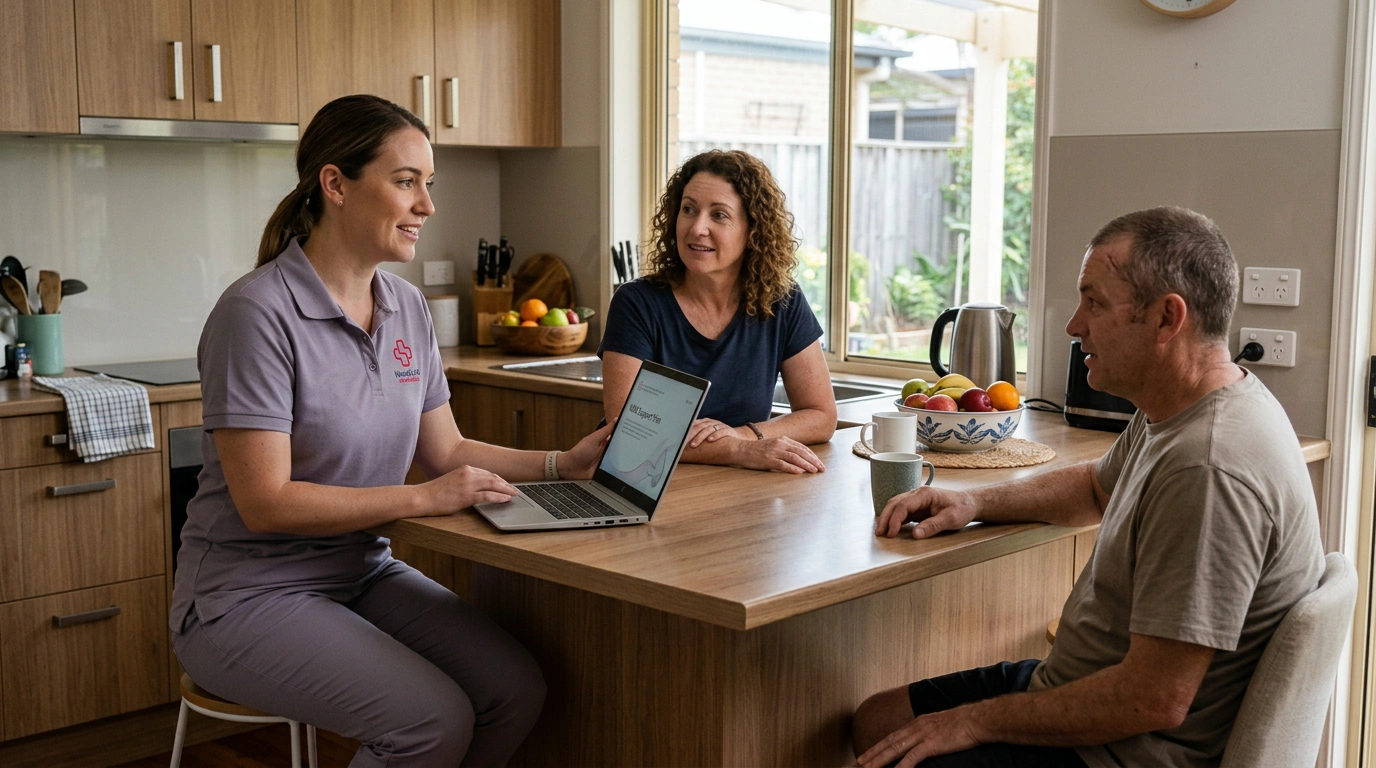
Sitting at her own kitchen table, the NurseLink team gently explored:
- What does independence look like for her now, in real, everyday terms?
- Which activities matter most to who she is, not just to her routine?
- What currently feels unsafe, and what simply feels off-limits because of fear?
- Where does she want hands-on support, and where does she want space to try, fail and try again?
- What are her hopes and fears about the future as her vision changes?
When she answered the second question, she didn’t hesitate. The kitchen. She wanted her kitchen back.
For the first time since her diagnosis had accelerated, someone was planning around her goals instead of her limitations. She later said that meeting felt less like an assessment and more like being handed a key.
The Support Strategy Implemented
Understanding Her World Before Changing It
NurseLink Healthcare began by matching the participant with a small, consistent team of support workers experienced in working alongside people with vision impairment.
Before anything else, they learned her world. The layout of her home. Her routines, her habits, her pace. And one rule above all: nothing was ever moved without her knowledge, because in the home of someone losing their sight, a chair shifted ten centimetres can mean a fall, and a pantry rearranged with good intentions can undo months of confidence.
Support was built around her memory of her own home, protecting the independence she still had while gently expanding it.
Reclaiming The Kitchen, One Recipe At A Time
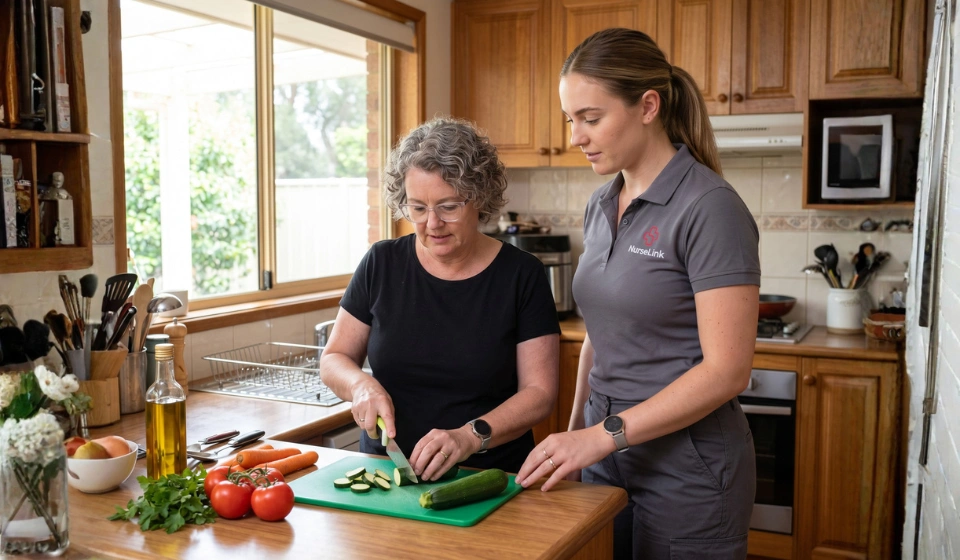
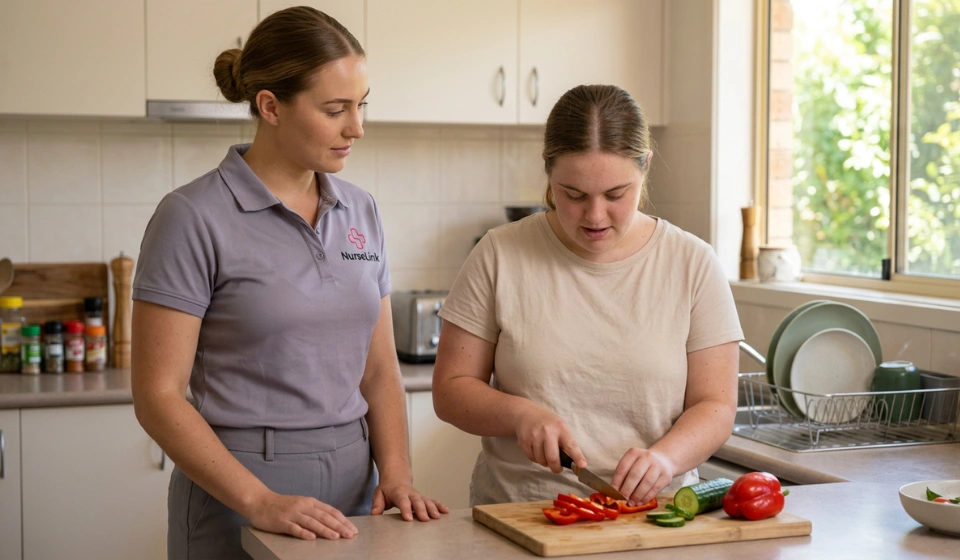
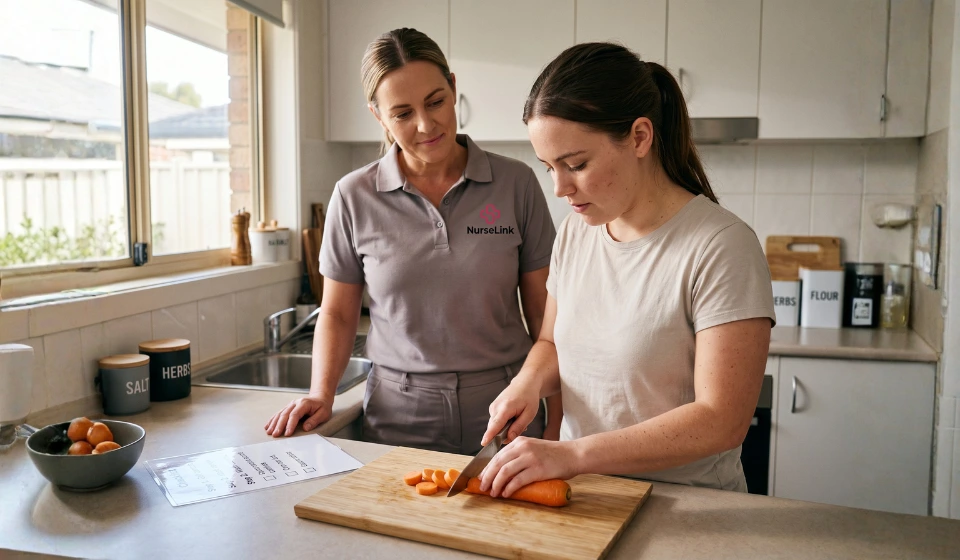
Working alongside her occupational therapist’s recommendations, the team helped transform her kitchen from a place of fear back into her domain.
Tactile bump dots marked the oven dials and microwave buttons. Talking scales and timers took the guesswork out of measuring. High-contrast chopping boards, a consistent and clearly organised pantry, and safe knife techniques were introduced step by step, always with her hands doing the work.
They started with her signature dish, the one she could almost cook blindfolded anyway, because she had made it a thousand times. Muscle memory, it turned out, doesn’t need eyesight.
Then came the most beautiful part. Her teenage daughter began reading the handwritten recipes from her grandmother’s cookbook aloud while her mum cooked, and together, week by week, they recorded them as audio recipes in the daughter’s voice.
A cookbook that had gone dark became a conversation between three generations of women.
Confidence Beyond The Front Door
With the kitchen underway, attention turned to the world outside.
Building on the training provided by her orientation and mobility specialist, her support workers walked her regular routes with her again and again. The local shops. The market. The pharmacy. First side by side, then a step behind, then waiting at the destination while she made the journey herself.
And somewhere along those footpaths, her relationship with the white cane changed. It came out of the drawer. It stopped feeling like a symbol of what she had lost and started feeling like the key to everywhere she could still go.
The first time she caught the bus to the market and came home alone, bags in hand, she stood in the hallway and laughed out loud in the empty house.
Helping The Family Learn To Step Back With Love
The final piece of the puzzle was the people who loved her most.
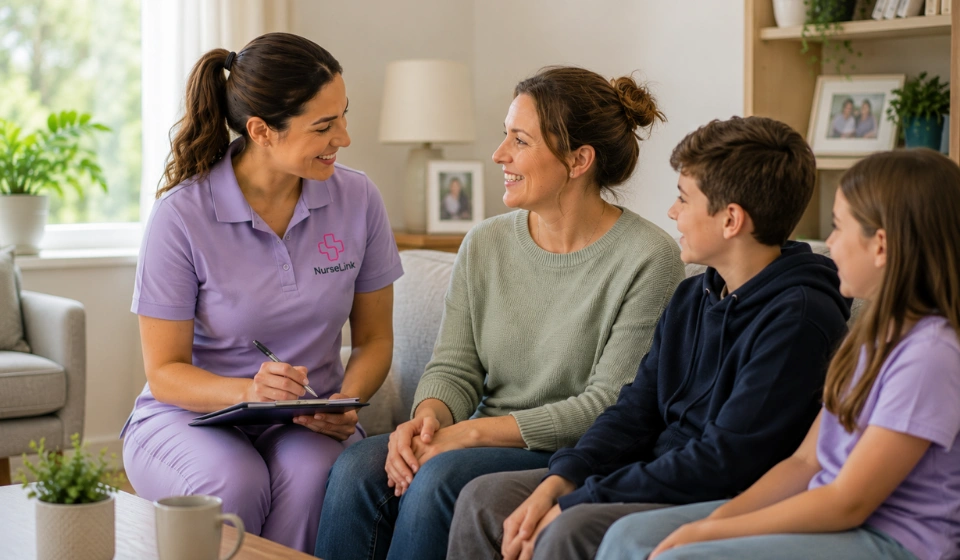
Her husband and children had spent two years wrapping her in cotton wool, and letting go was genuinely hard for them. The NurseLink team supported the whole family, showing them sighted-guide basics for the moments help was truly needed, and coaching them through the far harder skill of standing back and letting her try.
Slowly, the household rebalanced. Her husband stopped being a full-time chauffeur and carer, and went back to being her husband. Her children stopped tiptoeing.
And the kitchen, once again, was hers.
Outcomes Achieved
Head Chef Again
Twelve months on, the participant cooks most of the family’s dinners independently, in a kitchen adapted around her rather than closed off to her.
Last Christmas, she hosted lunch for fourteen people. She planned the menu, cooked for two days, and served it at her own table. Her only concession was letting the teenagers do the dishes, which, she points out, has nothing to do with her eyesight.
Independent In Her Community
The participant now travels her regular routes confidently with her cane, shops for her own ingredients at the local market, and attends most appointments on her own.
Her world, which had shrunk to a couch and a quiet house, has opened back up street by street.
A Family Back In Balance
The change at home has been just as profound.
Dinner tables that had gone quiet are loud again. Her husband describes the difference simply: the worry has made room for the laughter. Her children have watched their mum face something enormous and refuse to be defined by it, a lesson no school could ever teach them.
Facing The Future With Confidence
The participant’s condition remains degenerative, and her vision may continue to change. That truth has not gone away.
What has changed is her relationship with it. With her support team, she is now learning tomorrow’s skills today, building the strategies and confidence for the road ahead before she needs them, so the future feels less like a fear and more like a plan.
Reflection From The Participant & Her Family
Reflecting on the journey, the participant shared:
“Losing my sight felt like losing myself, piece by piece. Everyone around me kept taking things off my plate to protect me. NurseLink was the first to ask what I wanted to put back on it.”
“The night I put a roast on the table again and heard my kids arguing over seconds, I stood in the pantry and cried. Happy tears, for the first time in years.”
Her husband added:
“I thought loving her meant doing everything for her. I’ve learned that loving her means trusting her. She got her independence back, and honestly, I got my wife back.”
Key Takeaways From This Case Study
Vision Loss Does Not Have To Mean Losing Independence
With the right skills, adaptations and support, people living with blindness and low vision can continue doing the things that matter most to them, from cooking family dinners to travelling their community with confidence.
Over-Helping Can Quietly Take More Than It Gives
Families almost always take over out of love, but doing everything for a person can disable them further. The most empowering support enables people to do things themselves, safely.
Support Should Protect Identity, Not Just Safety
For this participant, the kitchen was never just a room. Meaningful NDIS support is built around what makes each person who they are, not just around risk assessments and task lists.
Families Need Guidance And Support Too
Learning when to help and when to step back is one of the hardest things a family can do. Supporting the whole household creates the confidence and balance that lasting independence is built on.
Conclusion
A degenerative eye condition slowly changed what this participant could see. It did not have to change who she was.
Her journey was never about getting her sight back. It was about getting herself back: the cook, the mum, the woman who walks to the market on a Saturday morning and fills her own kitchen with the smell of dinner.
Through personalised core supports, practical capacity building and genuine partnership with her family, NurseLink Healthcare helped her move from the couch back to the heart of her home, and from fear of the future to confidence in it.
Every participant’s journey is different, which is why meaningful care begins with understanding the individual behind the support plan.
If you or your loved one are living with vision impairment or any sensory disability and looking for compassionate, empowering NDIS support, NurseLink Healthcare is here to help.