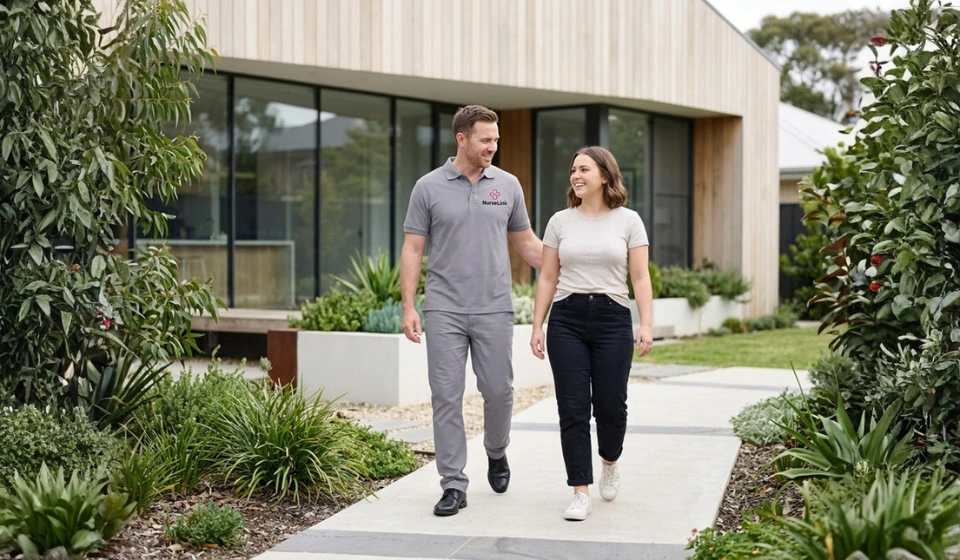
Returning To Community Life
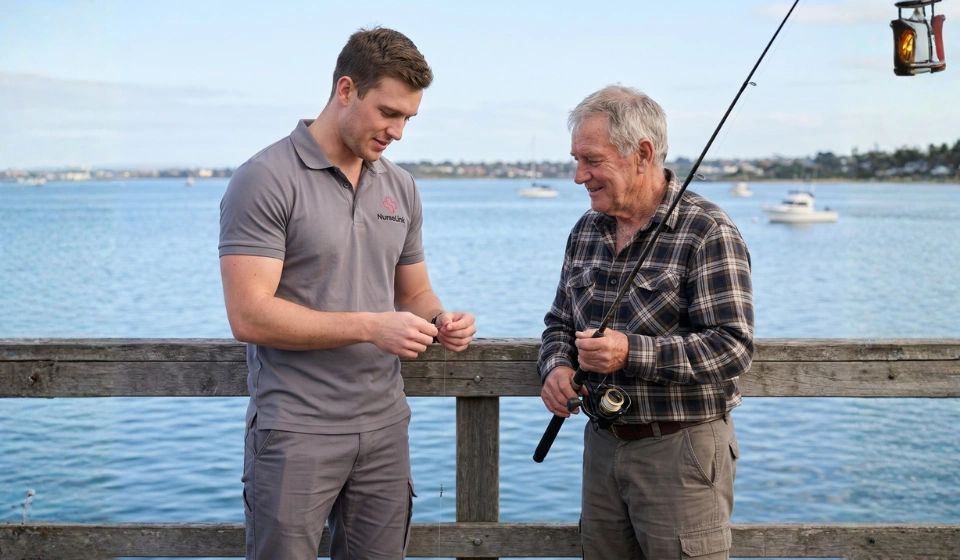
How NurseLink Supported An Older NDIS Participant In Geelong
A Story Of Pride, Mateship And Person-Centred Community Support
Introduction
Some injuries are easy to see. A cast. A scar.
An acquired brain injury is different. It hides behind a familiar face, in missing words, lost hours, a shorter fuse and a battery that runs flat by lunchtime. To the outside world, the person “looks fine.” Inside their own home, everything has changed.
This case study follows a Geelong man in his early sixties, a lifelong fixer, fisherman and mate to half the town, whose fall from a ladder left him with an invisible injury that slowly took away his confidence, his social life and very nearly his marriage’s happiest years.
It is also the story of his wife, an ageing carer whose own health was quietly failing under the load, and of the hardest thing a proud, capable man ever had to learn: how to accept help.
To protect privacy and confidentiality, the participant’s name and all identifying details have been kept anonymous throughout this case study.
About The Participant
The participant was a sixty-three-year-old man living in Geelong with his wife of more than forty years.
He had spent thirty-five years working at one of Geelong’s big manufacturing plants, and retirement had suited him perfectly. His weeks ran to a rhythm the whole street could set a watch by: fishing on the bay, footy with his mates at the local club, and long afternoons in his shed, where half the neighbourhood brought things that needed fixing.
He was the capable one. The helper. The bloke you called.
Then, at sixty-two, while cleaning the gutters, he fell from a ladder.
He survived, and after weeks in hospital and rehabilitation, he walked back through his own front door looking, to everyone’s relief, almost like himself.
But an acquired brain injury had come home with him.
His memory had gaps now. He repeated questions, lost the thread of jobs halfway through, and forgot names he had known for decades. A crushing fatigue drained him by early afternoon. And hardest of all, his easygoing nature had changed. The patient man his wife had married could now snap over nothing, then sit in silent shame about it for hours.
His driver’s licence was suspended after the injury. For a man who had driven himself everywhere for forty-five years, handing over the keys hurt almost as much as the fall.
The Challenges The Family Was Facing
An Invisible Injury In A Town Full Of Mates
Because he looked fine, nobody quite understood.
At the footy club, conversations moved too fast, and he lost track of them mid-sentence. The noise of the crowd left his head ringing and his battery empty. One afternoon, exhausted and overwhelmed, he snapped at one of his oldest mates over nothing at all.
He was mortified. And rather than risk it happening again, he simply stopped going.
First the club. Then the fishing trips. Then the shed visitors were turned away. Within a year of the fall, a man who had spent his whole life surrounded by people spent his days in a quiet house, watching the world he loved carry on without him.
A Wife Ageing Faster Under The Load
His wife, sixty-seven, had become his memory, his driver, his diary and his shield, all on knees and hands that were failing her.
Her arthritis was worsening from doing every physical job around the house. She managed his appointments and quietly cancelled her own. A heart flutter her doctor wanted to investigate kept being put off, because who would look after him?
She also carried the invisible grief that so many ABI families know: the man beside her was her husband, and yet on the hard days, he felt like a stranger wearing his face. She never said it aloud. She just got smaller and more tired, one week at a time.
A Proud Man Who Would Not Be Helped
When the NDIS plan was approved and support workers were suggested, the participant’s answer was short and final.
“I’m not having strangers in my house. I don’t need a babysitter.”
He had been the helper his entire life. In his mind, accepting help meant the fall had won, and his pride, one of the only things the injury hadn’t touched, would not allow it.
The turning point came on an ordinary evening, when he overheard his wife on the phone to their daughter, crying quietly in the kitchen. “I can’t keep doing it all,” she said. “But you know your father. He won’t have anyone.”
He stood in the hallway for a long time.
The next morning, he told her he’d agree to one meeting. One.
Why The Family Reached Out To NurseLink Healthcare
The family’s NDIS support coordinator recommended NurseLink Healthcare, whose support workers are experienced with acquired brain injury and, just as importantly, with proud participants who have never accepted help in their lives.
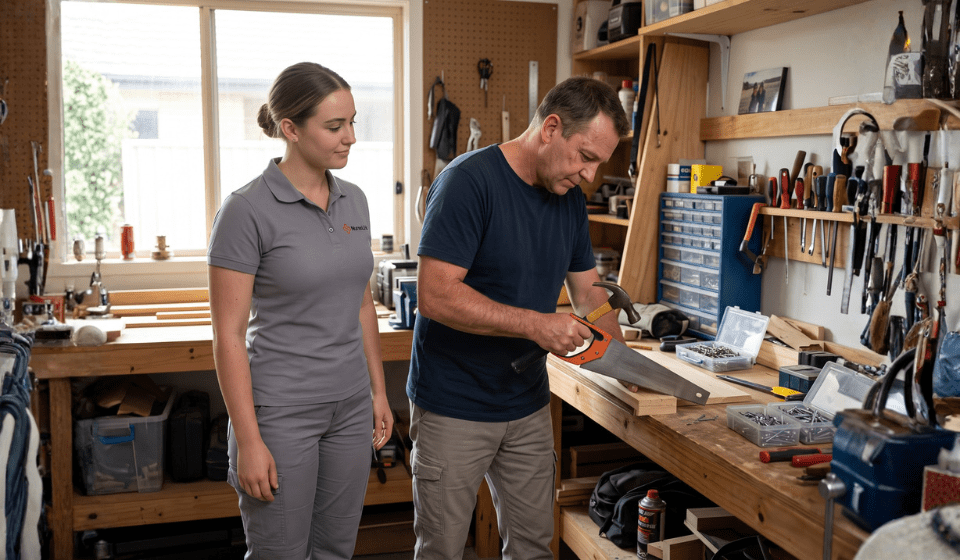
The first meeting happened on his territory: out in the shed, with the good chairs and the bad instant coffee.
There was no clipboard. The conversation started with fishing, drifted through footy, and only then, gently, came around to life since the fall. He was spoken to directly, man to man, never over his head to his wife.
Together, they explored:
- What did his weeks look like before the fall, and what does he miss the most?
- What does he want back first?
- How should support look and feel so it’s a hand, not a takeover?
- What helps on the foggy, flat-battery days, and what makes them worse?
- And what does his wife need so she can finally look after her own health too?
At the end, he asked the question his pride had been circling all along: “So this bloke you’d send. Does he fish?”
He did.
The Support Strategy Implemented
Support On His Terms, Or Not At All
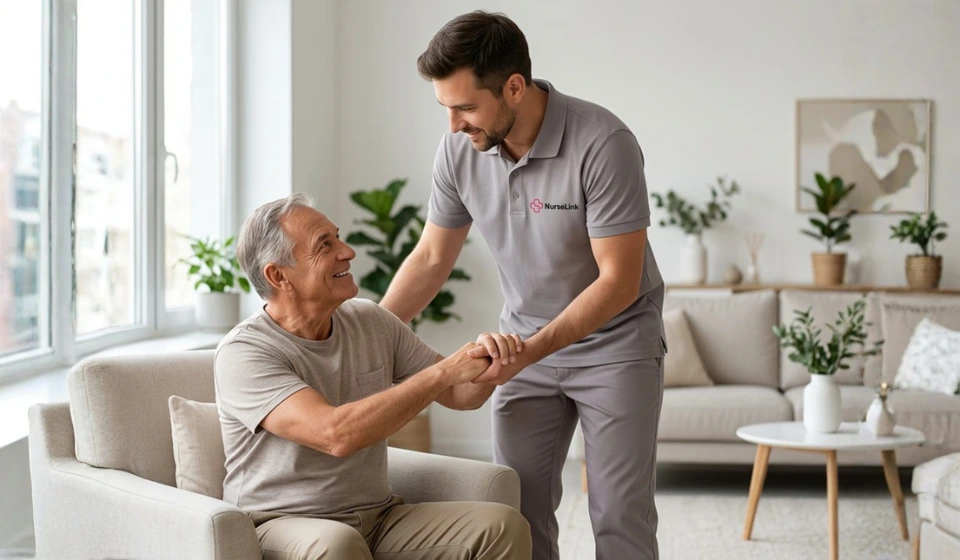
NurseLink Healthcare matched the participant with a male support worker of similar vintage, an experienced hand with acquired brain injury and a genuine love of fishing.
The early sessions had no agenda beyond the shed and the tackle box. Trust came first, and it was earned, not assumed. The word “carer” was never used. Within a month, the participant was introducing him around as “my offsider.”
The same worker came every time, at the same times, because for a man whose memory was unreliable, familiarity wasn’t a luxury. It was the foundation everything else was built on.
Back Out Into The World, One Familiar Place At A Time
With trust in place, the real work began: reopening his world at a pace his injured brain could manage.
Outings were planned for his best hours, mornings, before the fatigue rolled in. Quiet venues came before noisy ones. And the first big milestone was chosen by him: a morning back on the pier, line in the water, bay stretched out in front of him. He caught nothing. He called it the best day he’d had in two years.
The footy club came next, one quarter at a time, at first, sitting where the noise was thinner, with his offsider alongside to quietly catch the threads of conversation he dropped. Nobody watching would have noticed a thing. That was the whole point.
They finished every outing the same way, with the golden rule they’d agreed on together: leave while it’s still good.
Working With The Brain He Has Now
Alongside the outings, his support worker helped him build strategies for daily life with an ABI, framed always as tools, never as aids.
Phone reminders became “the foreman.” A simple weekly routine took the load off his memory. His energy was budgeted like money, spent on the things that mattered most, so the afternoon crashes stopped ambushing him. When frustration spiked, his worker knew the early signs and knew how to steer around them without a word.
In time, the participant even found somewhere new: the local men’s shed, where being handy still counts for everything and being quick counts for nothing. He fits right in. Half the blokes there have a story of their own.
Letting His Wife Finally Look After Herself
While the participant was out fishing, at the footy or at the men’s shed, his wife got something she hadn’t had in two years: time.
She saw her own doctor and finally had her heart checked. Her arthritis treatment got back on track. She returned to her Thursday craft group, rested in the afternoons, and stopped carrying the diary, the car keys and the constant vigilance all at once.
And the couple got something back too. Sunday drives along the waterfront. Fish and chips looking out over the bay. Time together that wasn’t about managing anything at all.
Outcomes Achieved
Back On The Pier, Back At The Club
Eighteen months on, the participant fishes most weeks, holds his regular seat at the footy club, and spends two mornings a week at the men’s shed, where he has quietly become the bloke the newer members bring things to fix.
The world he thought he’d lost has him back, and it saved his seat.
Hard Days Managed, Not Feared
The fatigue and memory gaps haven’t gone away. Acquired brain injury is permanent, and no one pretended otherwise.
What has changed is everything around it. His days are paced, his strategies are habits, the blow-ups are rare, and when a foggy day comes, he and everyone around him know exactly what it is and exactly what to do. He has stopped being ashamed of his injury and started managing it.
A Wife With Her Health, And Her Husband, Back
The participant’s wife had her heart concern investigated and treated early, and her arthritis is now properly managed.
But ask her what changed most and she won’t mention her health. She’ll tell you about the sound of her husband laughing with his mates again, and about being, at last, his wife rather than his full-time everything.
Pride Intact, Just Redefined
The proudest outcome belongs to the participant himself.
The man who swore he’d never accept help now tells the blokes at the men’s shed, straight-faced over the bench grinder, that asking for it was the strongest thing he ever did. Coming from him, they listen.
Reflection From The Family
Reflecting on the journey, the participant shared:
“I spent my whole life being the bloke who helped everyone else. Letting someone help me felt like giving up. Turns out it was the opposite. It’s the thing that got me my life back.”
“He never treats me like I’m broken. We just go fishing. The rest sort of happens along the way.”
His wife added:
“For two years I was his memory, his driver and his shield, and my own health was quietly falling apart behind him. Now I’ve got my husband back and he’s got his mates back. Some nights I just sit and listen to him laughing on the phone, and I could cry.”
Key Takeaways From This Case Study
An Invisible Injury Is Still A Real Injury
Memory loss, crushing fatigue and personality changes after a brain injury are genuine, permanent disabilities, even when the person “looks fine.” Recognising them is the first step to supporting them properly.
Pride Isn't The Barrier. The Wrong Approach Is.
Proud, capable people don’t refuse help because they’re stubborn. They refuse help that threatens their identity. Support built on respect, the right worker match and their own terms turns resistance into genuine partnership.
Community Participation Is Not A Luxury. It Is Recovery.
Getting back among mates, routines and purpose does what no amount of time at home alone can do. Connection is one of the most powerful supports there is, especially after a brain injury.
When The Carer Is Ageing Too, Good Support Protects Two People
Behind many older participants stands an elderly husband or wife in quiet decline. Supporting the participant is also healthcare for the carer, and sometimes it arrives just in time.
Conclusion
A fall from a ladder took a great deal from this participant: his sharp memory, his easy energy, his licence and, for a while, his place in the world.
It could not take who he was. It just took the right support to prove it.
His journey was never about becoming the man he was before the fall. It was about discovering that the fisherman, the fixer and the mate were all still there, and that accepting a hand is not the end of a capable man’s pride. It might just be the making of it.
Through patient, respectful community participation support built on genuine mateship, NurseLink Healthcare helped one Geelong couple find their way back to the bay, the footy and each other.
Every participant’s journey is different, which is why meaningful care begins with understanding the individual behind the support plan.
If you or your loved one are living with an acquired brain injury and looking for compassionate NDIS support to get back out into the world, NurseLink Healthcare is here to help.
Latest Post
When Parents Learned to Trust NDIS Support
The Life He Thought The Accident Had Collapsed
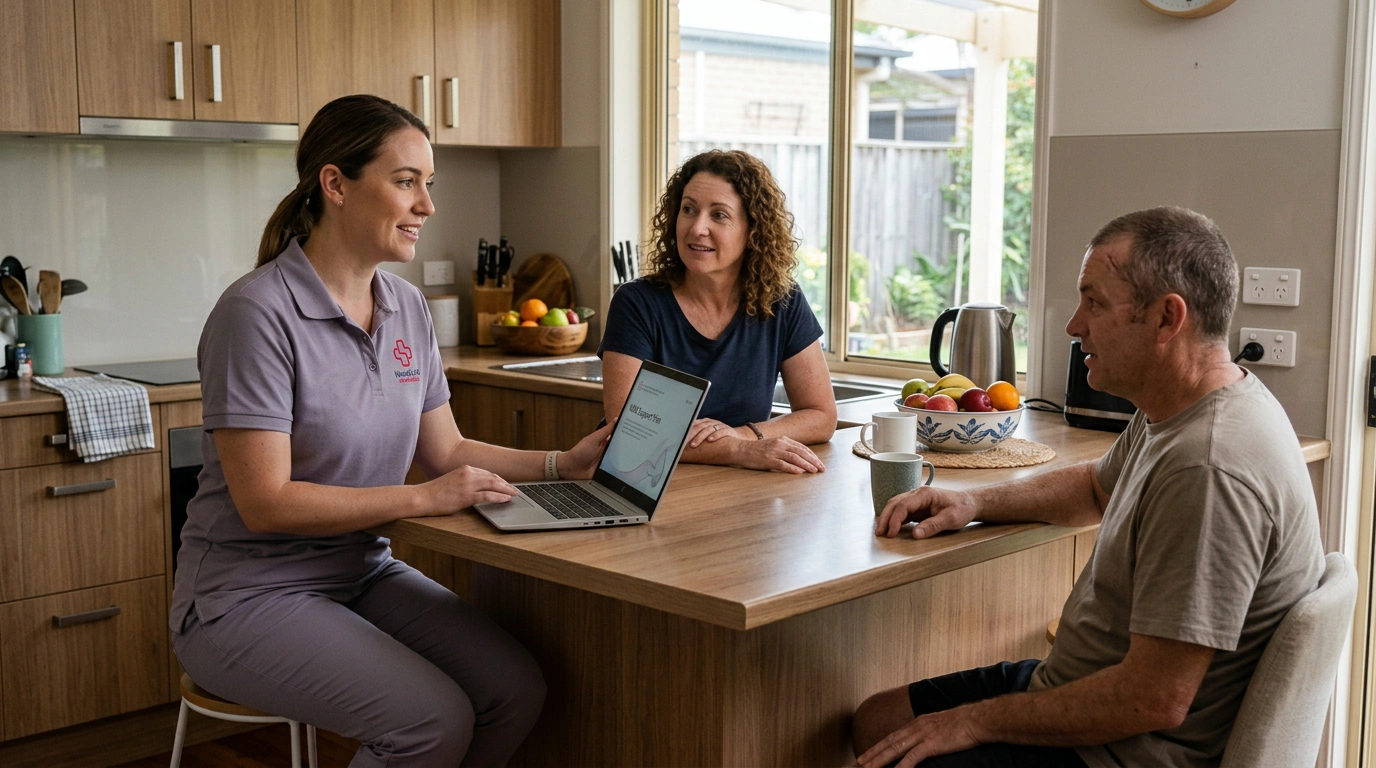
Someone Finally Holding The Whole Picture
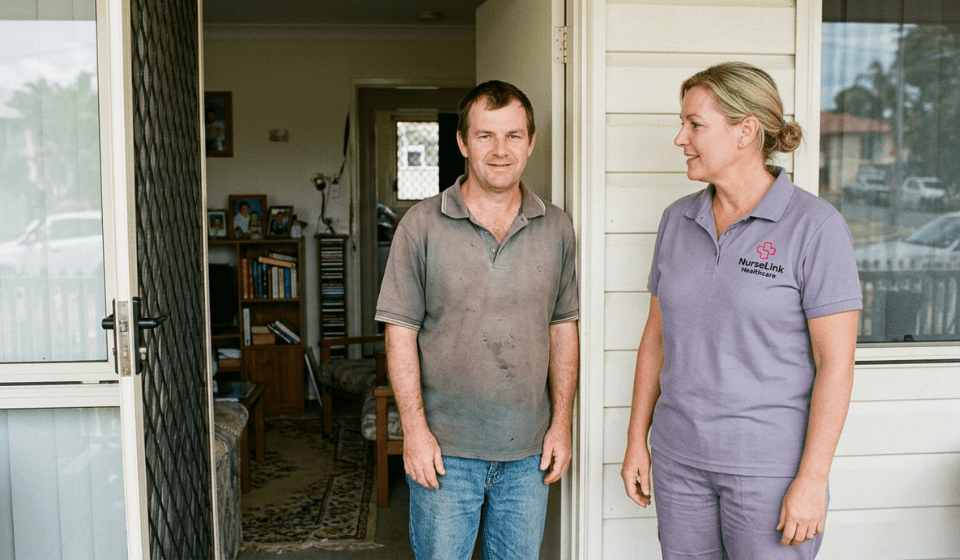
A Home That Was Finally His Own
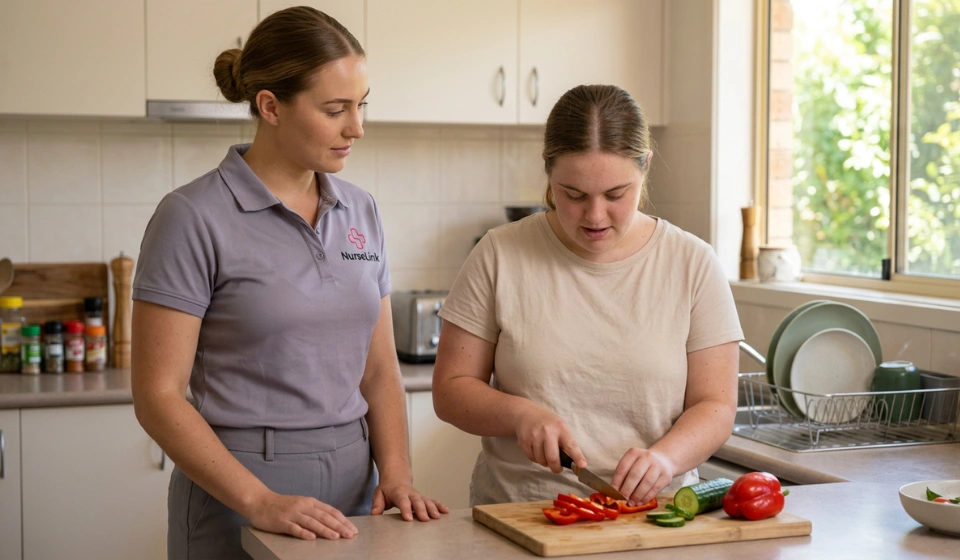
Learning To Do It Herself, With Someone Beside Her
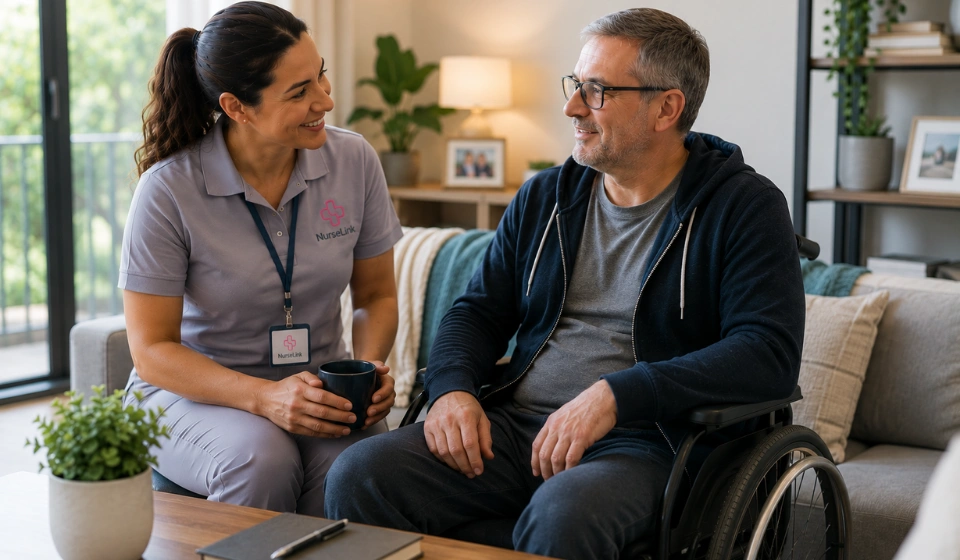
What Was Still Possible
Finding Her Way Back To Her Own Kitchen Table
From Aged Care To Her Own Front Door
She Was Ready. We Helped Her Get There.
Room To Breathe
The Man He Was Getting Back To
They Did Not Give Up On Him
Returning To Community Life
Rebuilding Independence After A Diabetes-Related Amputation
Cooking By Heart
The World Beyond The Front Door
Finding Home Again After A Stroke
Relearning Independence After A Life-Changing Accident
Beyond The Diagnosis
Two Years In Care. One Giant Step Toward Home.
When Transport Barriers Disrupted NDIS Care
Supported Independent Living Success
A Journey Towards Independence With NDIS Support
Daniel’s Journey