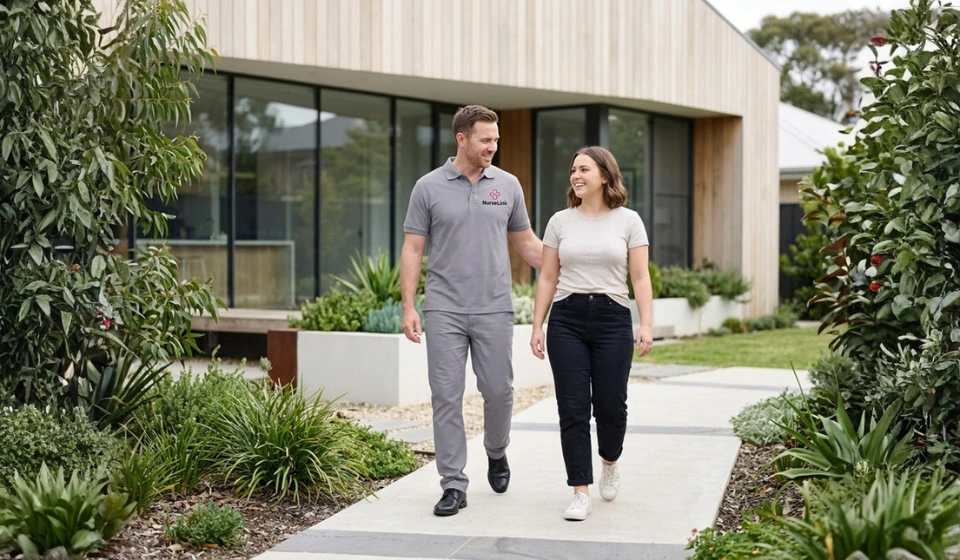
Rebuilding Independence After A Diabetes-Related Amputation
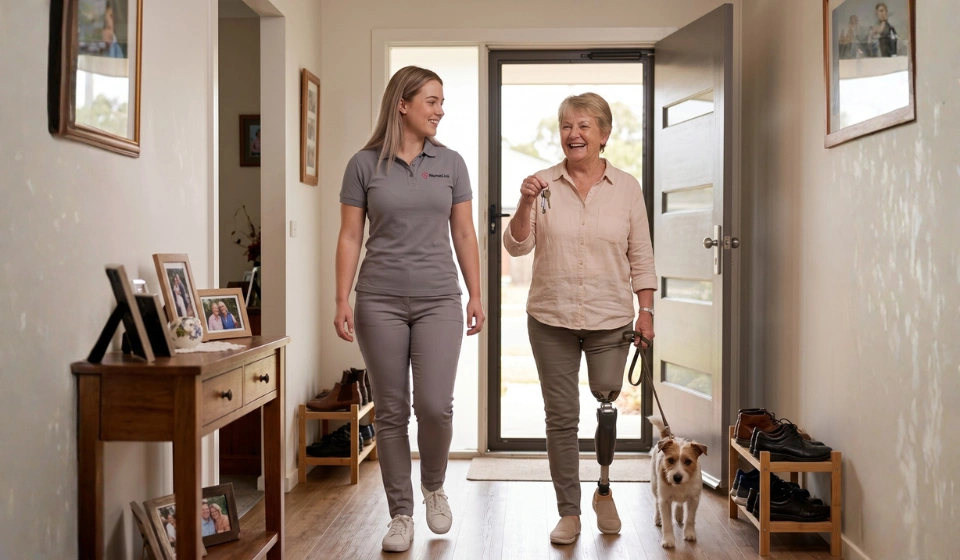
How NurseLink Supported An Older NDIS Participant Living Alone
A Story Of Dignity, Courage And Compassionate In-Home Support
Introduction
Some losses happen in an instant. Others arrive slowly, one closed blind and one unanswered knock at a time.
For older Australians who undergo a limb amputation, the surgery is often only the beginning. The harder battle frequently happens afterwards, at home, alone, in the quiet space between what life used to be and what it might still become.
This case study follows a woman in her early sixties from Melbourne’s northern suburbs, who lost her lower leg to complications of diabetes, and very nearly lost something even more precious: her connection to the world around her.
It is the story of how consistent, respectful in-home support from NurseLink Healthcare helped her reclaim her home, her routine and her spark, and how it gave her son, watching helplessly from interstate, the first good night’s sleep he’d had in a year.
To protect privacy and confidentiality, the participant’s name and all identifying details have been kept anonymous throughout this case study.
About The Participant
The participant was a sixty-three-year-old woman living alone in Melbourne’s northern suburbs, in the house she and her late husband had bought thirty-five years earlier.
For four decades, she had been a hairdresser, and not just any hairdresser. She was the kind who knew three generations of every family in the neighbourhood, who heard everyone’s troubles over the basin, and who spent forty years on her feet making other people feel like themselves again.
Retirement had been busy and social. Her days revolved around her garden, her famous lamingtons, her little terrier, and a steady stream of visitors who still called her for advice about far more than hair.
She had also lived with type 2 diabetes for more than twenty years. And at sixty-two, a small ulcer on her foot, the kind she had been warned about for decades, refused to heal. Months of treatment followed. Then infection. Then the conversation no one ever expects to have.
She underwent a below-knee amputation, spent weeks in hospital and rehabilitation, and came home to a house full of memories, stairs, and silence.
Her only child, a son with a young family in Queensland, flew down for the surgery and stayed as long as he could. Then he had to go home, a thousand kilometres away, and begin the hardest chapter of his life: worrying about his mum from the other end of a phone line.
The Challenges She Was Facing
A Home That Suddenly Felt Like An Obstacle Course
The house she loved had quietly turned against her.
The shower she could no longer step into. The back steps between her and the washing line. The kitchen where cooking now meant balancing, reaching and risking. The long, frightening journey from bed to bathroom in the middle of the night.
Early on, she had a fall in the kitchen and lay on the floor for the better part of an hour before she could reach the phone. She told no one, not even her son. But something changed that day.
She stopped showering properly, making do instead. Dinner became toast. The washing piled up. And a fiercely capable woman began shrinking her life down to the few square metres that felt safe.
The Blinds Came Down
For a woman whose entire life had been people, the isolation cut deepest of all.
She was embarrassed by the wheelchair. Embarrassed by what she couldn’t do. Embarrassed, though she would never say it aloud, by the leg itself. So when friends knocked, she called out that she was resting. When her old clients rang, she kept it short and cheerful and got off the phone.
A neighbour took over walking her little terrier, and she watched them go from behind the curtains, the small dog trotting off happily without her.
The baking stopped. The garden went untended. The days blurred together. Her GP, one of the few people who still saw her regularly, grew increasingly concerned about her low mood and how far she had withdrawn from the world.
The woman who had spent forty years filling a salon with laughter now spent whole days without speaking to a single soul.
A Son Worried Sick, A Thousand Kilometres Away
Every evening at six o’clock, her son called from Queensland. And every evening, she performed.
“I’m fine, love. Don’t you worry about me.”
But he heard it, the flatness where his mum used to be. He lay awake at night imagining falls, infections, an empty fridge. He flew down when he could, and what he found frightened him: closed blinds, an untouched kitchen, a mother who had become a smaller, quieter version of herself.
He begged her to move to Queensland, or to consider residential care near him. The conversation ended in tears on both ends. She would not leave the house where she had raised him and buried his father. He could not keep living with the fear.
They were at an impasse, and both of them were breaking under it.
Why She Reached Out To NurseLink Healthcare
After the difficult visit, her son contacted her NDIS support coordinator, and the support coordinator recommended NurseLink Healthcare, whose in-home support teams work extensively with older participants across Melbourne’s north.
The participant agreed to a meeting reluctantly. She was expecting to be assessed, managed and told what she could no longer do.
Instead, sitting at her own kitchen table with her terrier on her lap, she was asked a very different set of questions:
- What matters most to her about staying in her own home?
- Which daily tasks currently feel unsafe, exhausting or impossible?
- What has she stopped doing that she misses the most?
- How does she want support delivered, so it feels like help rather than takeover?
- And what would give her son, so far away, genuine peace of mind?
Her answers came slowly at first, then all at once. A proper shower. A real dinner. Walking her dog to the corner. Getting her hair done, because heaven knows, she laughed for the first time in months, she had standards.
And above all: to stop being a worry to her boy.
For the first time since the amputation, someone was planning her life around what she wanted back, not what she had lost.
The Support Strategy Implemented
Support That Respected Her Pride
NurseLink Healthcare knew that for this participant, the greatest barrier was not the missing limb. It was accepting help after a lifetime of being the helper.
She was matched with a small, consistent team of experienced support workers, chosen deliberately for warmth, humour and life experience. The same familiar faces came at the same times, and the ground rules were hers: this was her home, her routine, her way of doing things. They were there to work with her, never to take over.
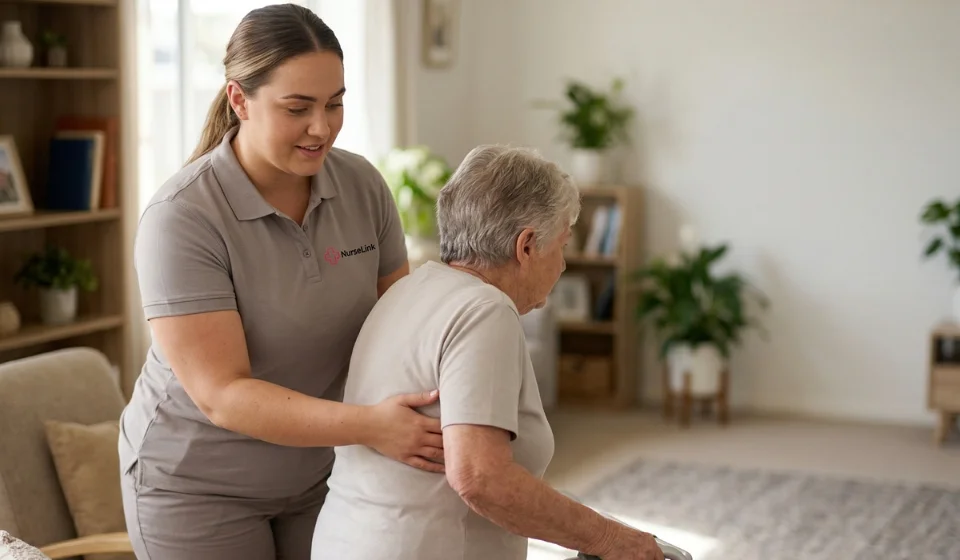
Personal care was handled with particular sensitivity. The same trusted support worker assisted with showering, and what the participant had dreaded as an indignity quickly became one of the easiest, most human parts of her day.
Making Every Day Safe & Doable Again
With equipment recommendations from her occupational therapist in place, the team rebuilt her daily routine from the ground up.
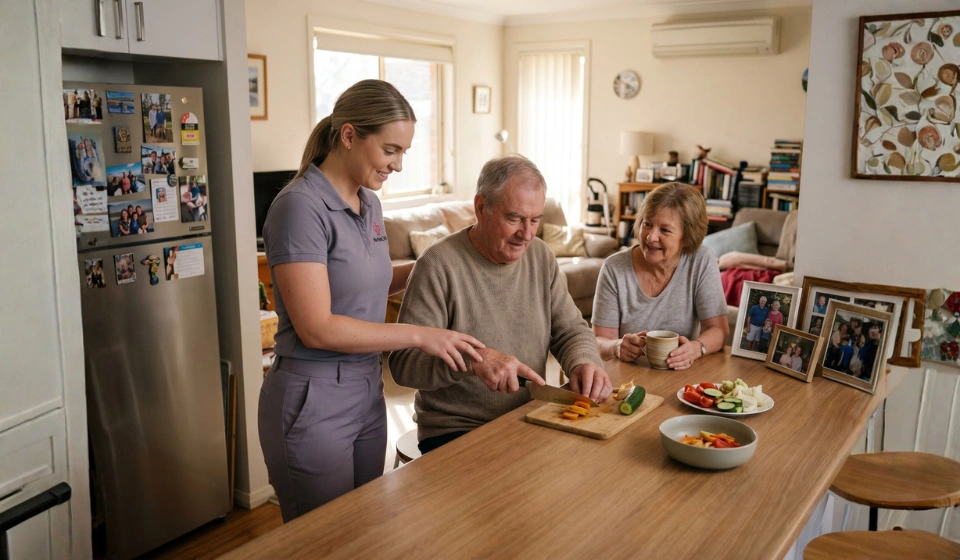
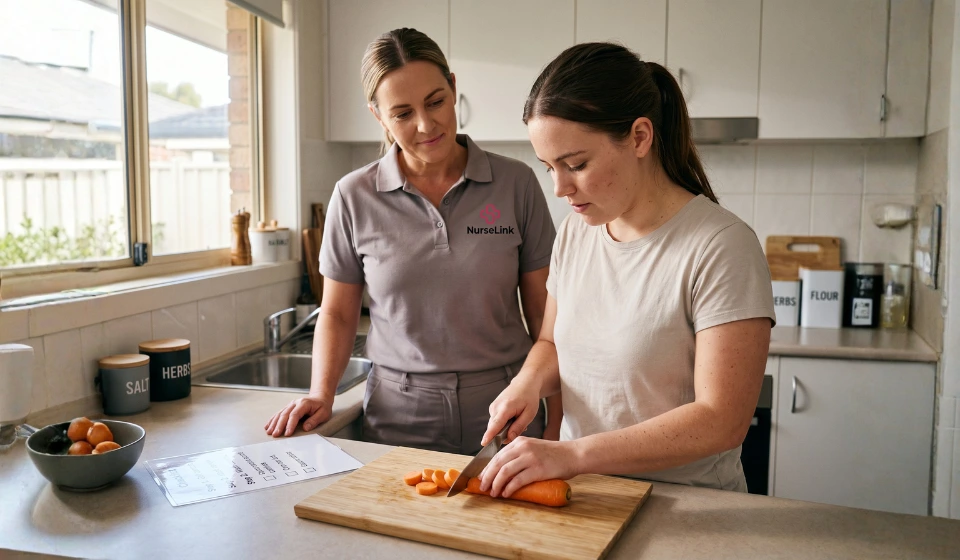
Mornings began with safe, supported showering and dressing, and practice with her transfers until they became second nature. Meals were cooked together, with her directing operations from her stool like the head chef she had always been, while her support worker did the carrying, bending and balancing.
Laundry made it back from the line. The garden got its first proper weeding in a year. And because she lived with diabetes, her support workers were trained to keep a quiet, careful eye on her remaining foot and skin, working in step with her GP and podiatrist to protect it fiercely.
Piece by piece, the obstacle course became her home again.
One Outing At A Time: Reopening Her World
Then came the part that changed everything: going back out into it.
The first outing was chosen by her, and it could only ever have been one place, her old salon. She had her hair done for the first time since the surgery, and half the suburb seemed to appear at the door within the hour. There were tears, laughter and at least three requests for her lamington recipe.
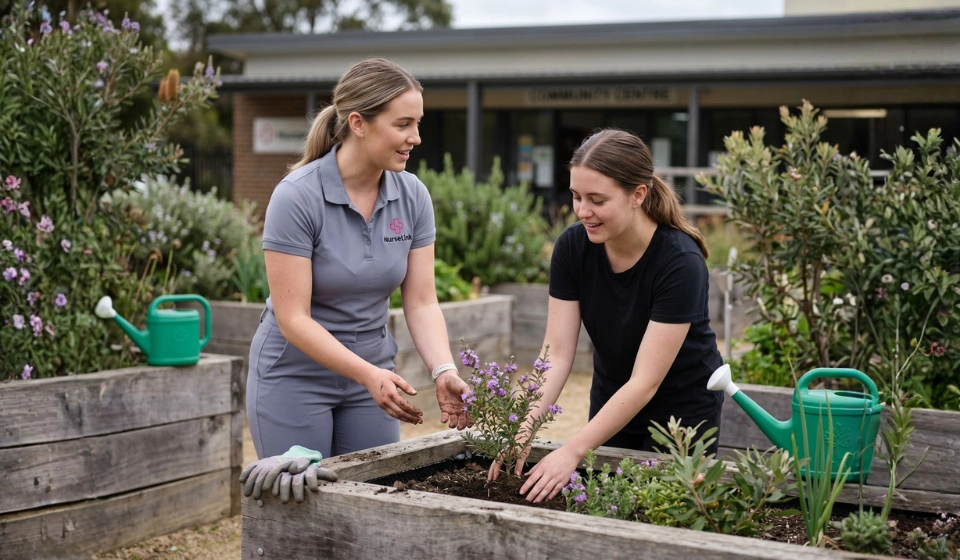
From there, her world reopened one step at a time. The local shops. Friday coffee with old friends. Sunday drives. And, in a moment that meant more than she could say, short walks to the corner with her terrier’s lead in her hand and her support worker steadying beside her.
Every outing was celebrated for exactly what it was: a victory.
Keeping Her Son In The Loop, Interstate
With the participant’s blessing, NurseLink Healthcare built her son into the circle of care.
He knew her support schedule and could reach the team when he needed reassurance. Instead of six o’clock performances, his calls filled up with real news: what she’d cooked, who she’d seen, what the dog had destroyed this week.
His visits stopped being anxious inspections and became what they should always have been, a son and his kids spending time with a grandmother who was busy, bossy and entirely herself.
The aged care brochures went in the recycling.
Outcomes Achieved
Safe, Confident & Capable At Home
Twelve months on, the participant showers daily, transfers confidently, and manages her days with support built around her routine rather than replacing it.
She has not had a single fall since her supports began. Her remaining foot is closely protected. And she is doing it all in the home she refused to leave, on her own terms.
The Spark Came Back
The blinds are open. The oven is on. The lamingtons are back, and the support team, the neighbours and the postman can all confirm it.
Her GP describes the change in her mood and outlook as remarkable. She laughs on the phone, plans her weeks, and fills her home with visitors again. The low, grey months behind closed curtains have given way to a life that looks, sounds and feels like hers.
Back In Her Community
The participant now has a standing weekly hair appointment, a busy social calendar, and a terrier who once again answers to her.
The woman who knew everyone is back among everyone, greeted by name at the shops, holding court at Friday coffee, and dispensing advice about far more than hair.
A Son Who Finally Sleeps At Night
In Queensland, the six o’clock calls have transformed.
Her son no longer braces himself before dialling. He gets told off for calling during her baking, interrogated about the grandkids, and reminded, in detail, that she is perfectly fine, and this time, it’s true.
He describes the change simply: the fear is gone, and his mum is back.
Reflection From The Family
Reflecting on the journey, the participant shared:
“I thought losing my leg meant losing my life as I knew it. The truth is, I was losing it behind closed blinds. The girls didn’t just help me shower and cook. They helped me find myself again.”
“I spent forty years looking after everybody else. Letting someone look after me was the hardest thing I’ve ever done, and the best.”
Her son added:
“For a year, every phone call terrified me. Now Mum’s too busy to talk because the lamingtons are in the oven. I cannot describe what it means to hear her laugh again. NurseLink didn’t just support my mother. They gave me back my peace of mind from a thousand kilometres away.”
Key Takeaways From This Case Study
An Amputation Does Not Have To Mean Losing Home Or Independence
With well-planned in-home core supports, older participants can continue living safely and confidently in the homes and communities they love, even after major, life-changing surgery.
Isolation Can Be As Dangerous As Any Physical Risk
Withdrawal and low mood after limb loss are common and serious. Meaningful support looks beyond the task list to the whole person, and treats reconnection as a goal every bit as important as safety.
Dignity Lives In The How
The difference between help that empowers and help that diminishes is respect. Consistent workers, the participant’s own routines, and doing things with her rather than for her protected the pride of a woman who had spent her life caring for others.
Supporting A Participant Supports The Whole Family, Even Interstate
Behind many older participants living alone is a son or daughter lying awake in another city. Reliable, communicative support brings peace of mind across any distance.
Conclusion
Diabetes took this participant’s lower leg. It was the isolation that nearly took everything else.
Her journey was never about pretending the amputation hadn’t happened. It was about proving that life on one leg, in her sixties, in her own beloved home, could still be full: full of visitors, lamingtons, salon appointments, dog walks and laughter down the phone line to Queensland.
Through respectful personal care, practical daily living support and the patient reopening of her world, NurseLink Healthcare helped one woman step back into her community, and helped her son finally exhale.
Every participant’s journey is different, which is why meaningful care begins with understanding the individual behind the support plan.
If you or your loved one are adjusting to life after an amputation or living with diabetes-related complications, and you are looking for compassionate, empowering NDIS support at home, NurseLink Healthcare is here to help.
Latest Post
When Parents Learned to Trust NDIS Support
The Life He Thought The Accident Had Collapsed
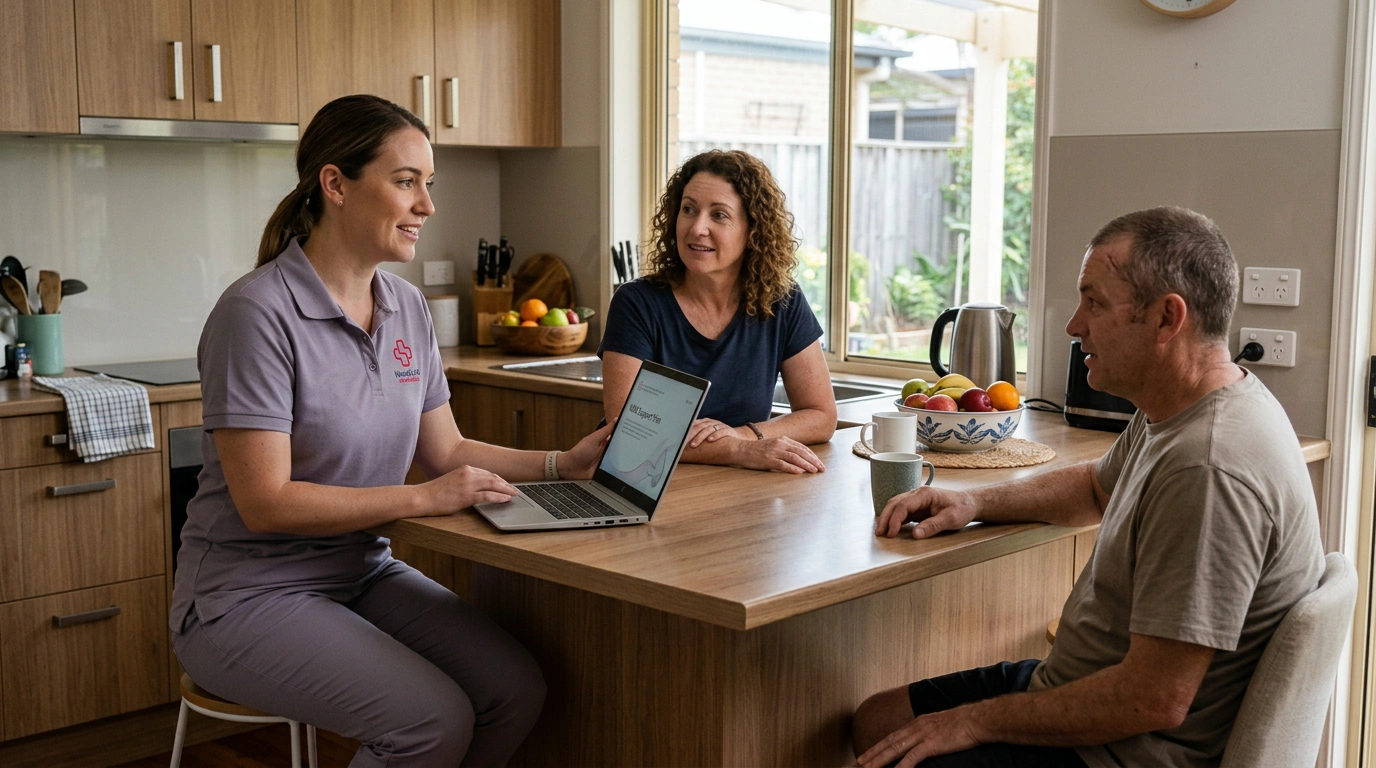
Someone Finally Holding The Whole Picture
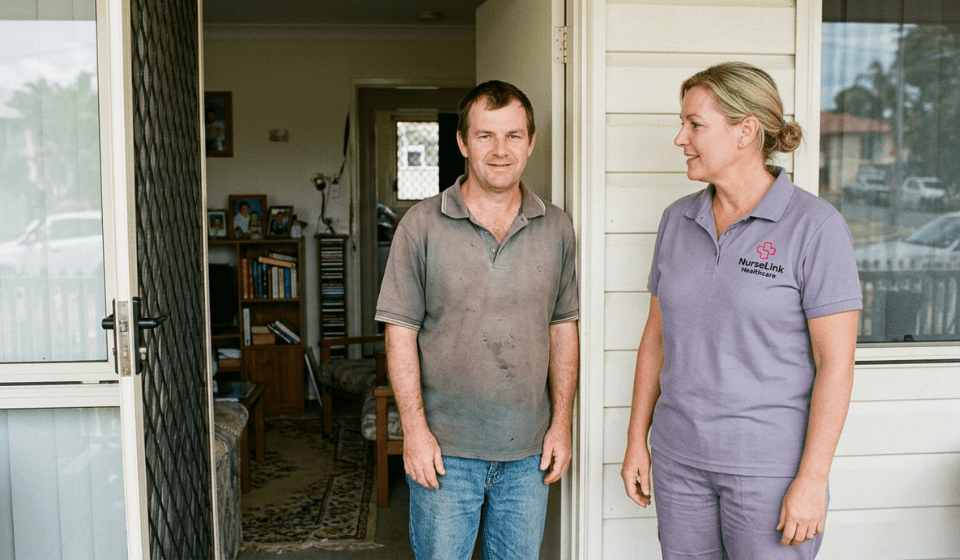
A Home That Was Finally His Own
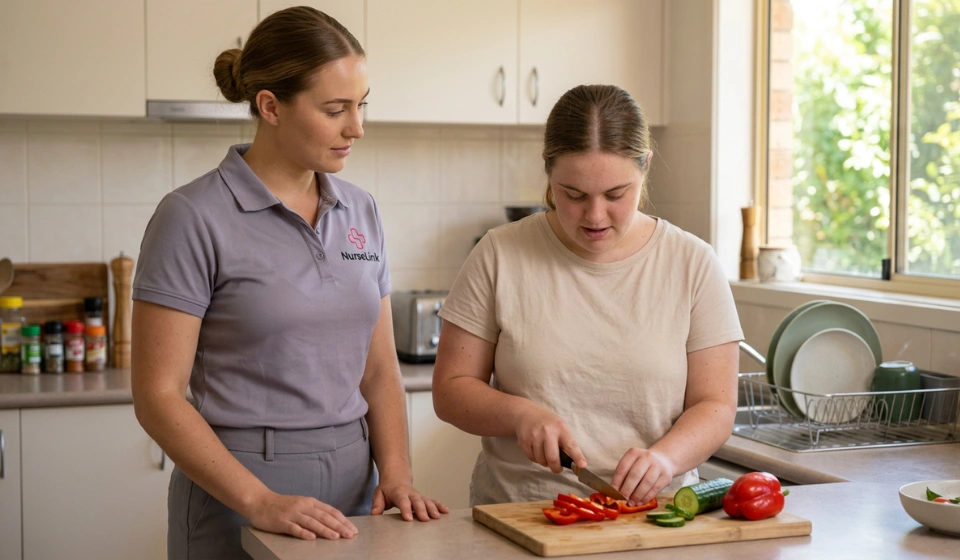
Learning To Do It Herself, With Someone Beside Her
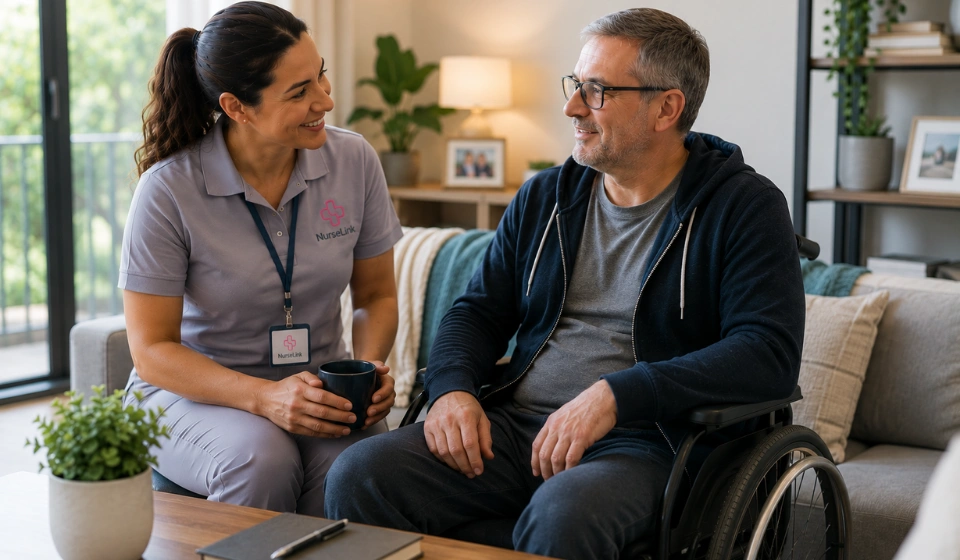
What Was Still Possible
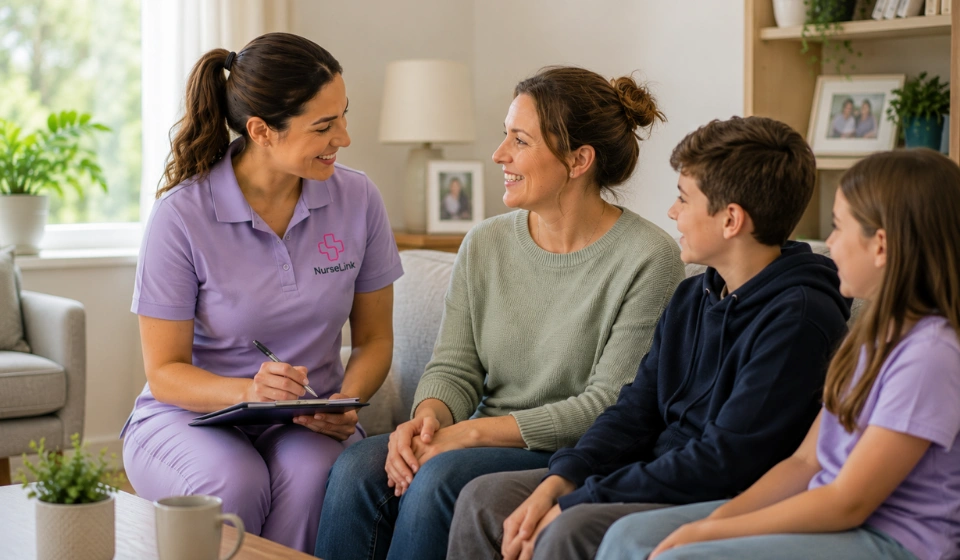
Finding Her Way Back To Her Own Kitchen Table
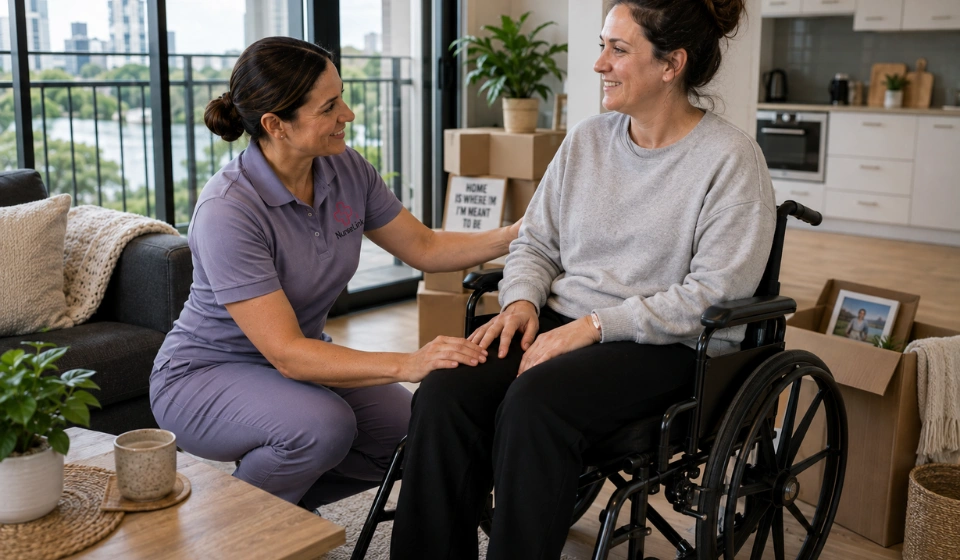
From Aged Care To Her Own Front Door
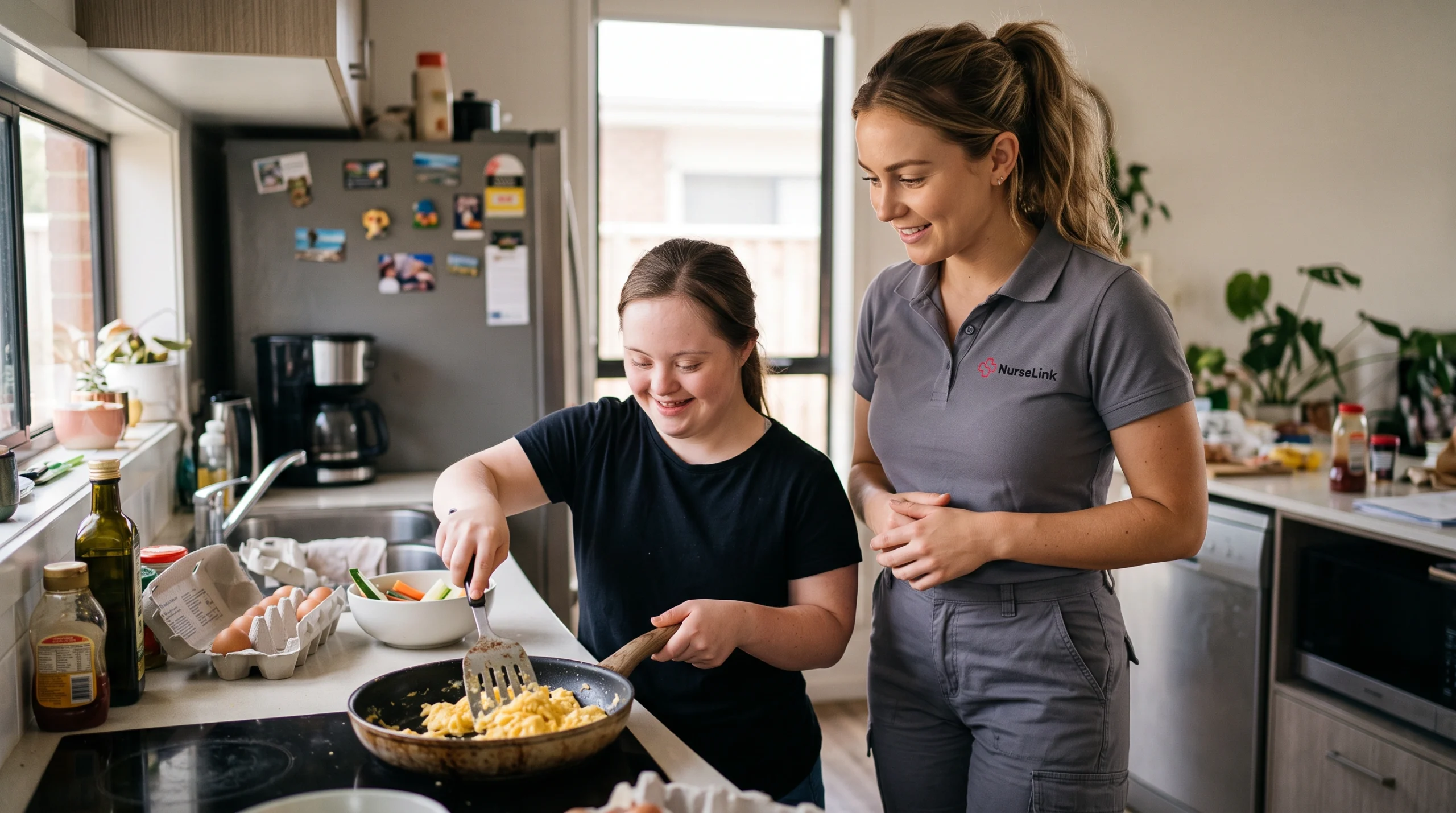
She Was Ready. We Helped Her Get There.
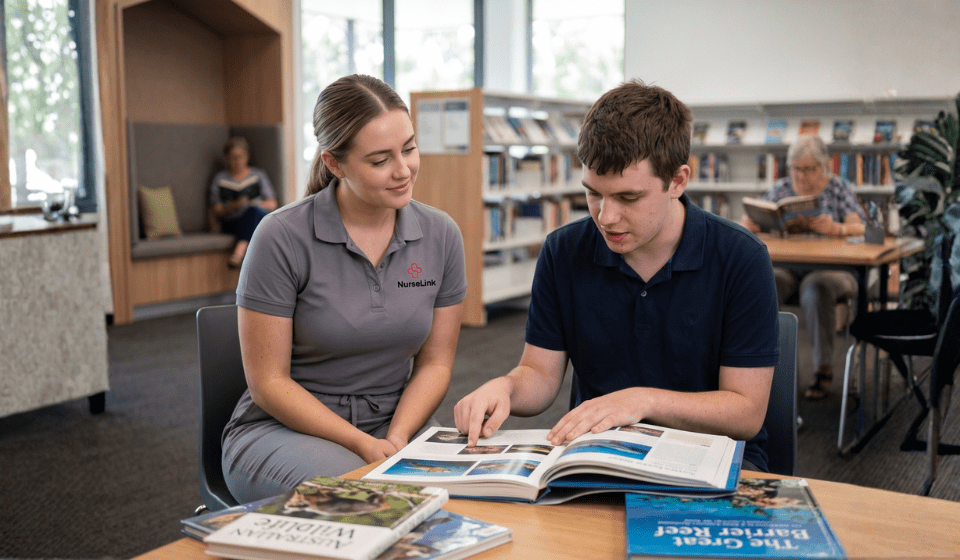
Room To Breathe
The Man He Was Getting Back To
They Did Not Give Up On Him
Returning To Community Life
Rebuilding Independence After A Diabetes-Related Amputation
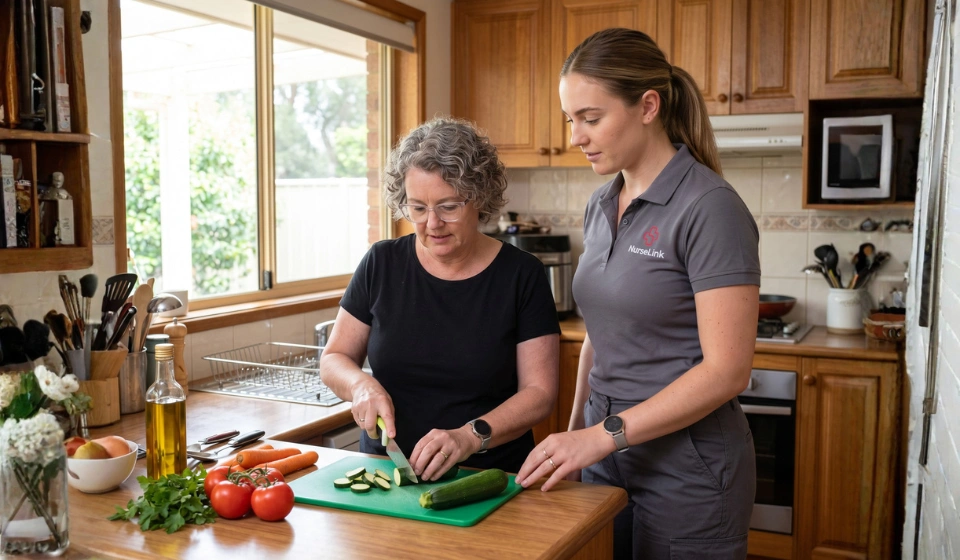
Cooking By Heart
The World Beyond The Front Door
Finding Home Again After A Stroke
Relearning Independence After A Life-Changing Accident
Beyond The Diagnosis
Two Years In Care. One Giant Step Toward Home.
When Transport Barriers Disrupted NDIS Care
Supported Independent Living Success
A Journey Towards Independence With NDIS Support
Daniel’s Journey