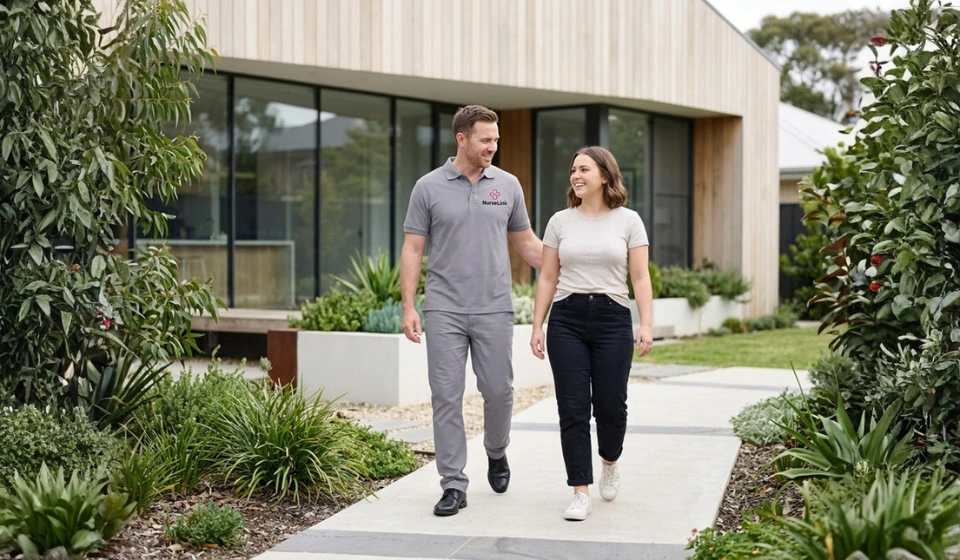
A Home That Was Finally His Own
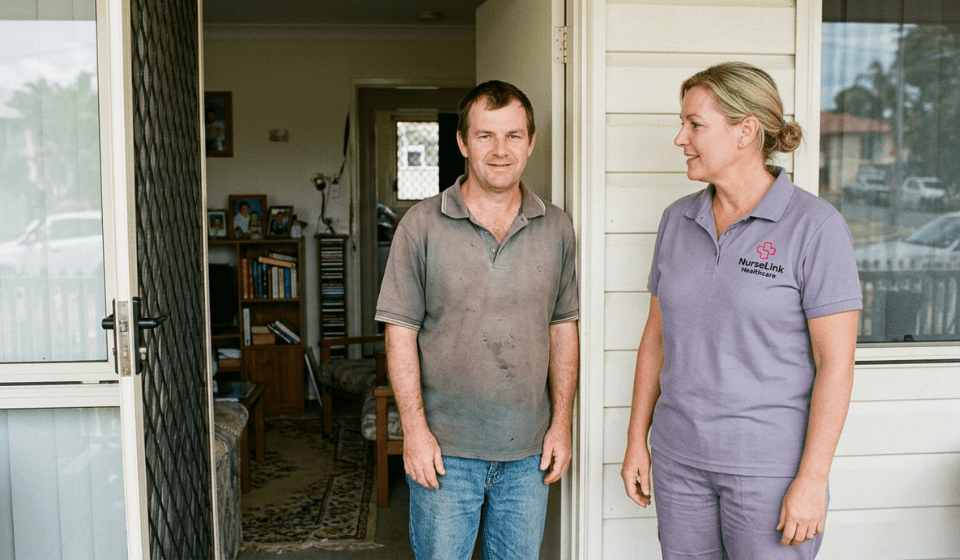
How NurseLink Supported A Male Patient's Move From Twenty Years Of Group Homes Into A Place He Could Truly Call Home
A Case Study In NDIS Transition Support That Turned Fear Of Change Into A Life He Chose Himself
Introduction
For many people with intellectual disabilities who have spent years, sometimes decades, living in shared supported accommodation, the idea of moving into their own place carries a complicated weight. It represents, on one hand, a genuine and long-held aspiration toward greater independence and choice. On the other hand, it represents the loss of a routine, a set of familiar faces and a form of safety, however limited, that has structured daily life for a very long time. The fear of losing that safety, even when the person genuinely wants more independence, is real and needs to be taken seriously rather than dismissed as simple resistance to a change that is objectively good for him.
Supporting a successful transition out of a group home requires holding both of these truths at once: genuine respect for the person’s own pace and anxieties, and genuine, sustained belief in his capability to build a life of his own, given the right support at the right pace. Done poorly, this kind of transition can fail, sending a person back to shared accommodation feeling that independent living simply was not for him. Done well, it can open up a life considerably larger and more genuinely his own than the one that came before it.
This case study documents how NurseLink Healthcare supported a man in his mid-forties in Brisbane, who had lived in a series of group homes for over two decades, to make a successful and sustained transition into his own unit, moving from initial fear and resistance to a genuine and settled sense of home.
To protect the privacy of the participant, all names and identifying details have been kept confidential throughout this case study.
The Participant & His Situation
The participant is a man in his mid-forties with a moderate intellectual disability, who had lived in a succession of group homes since his early twenties, following a period living with his ageing parents that had ended when their own health made ongoing care no longer possible. He had, over the more than two decades that followed, moved through three different group home placements as circumstances and provider arrangements changed, each move bringing a period of disruption before a new, if familiar, routine settled back into place.
His most recent group home, where he had lived for close to eight years, was, by all accounts, a reasonably comfortable and stable placement, staffed by people he knew well and shared with housemates he had grown genuinely fond of over the years. It was within this stability, somewhat unexpectedly to the staff who knew him, that he began raising, with increasing frequency over about a year, the idea that he wanted to try living on his own.
His NDIS support coordinator, taking the request seriously rather than assuming it was a passing thought, began exploring what a transition to independent living might look like for him, a planning process that eventually identified a small, accessible unit not far from his current group home, close enough that he could remain within a familiar neighbourhood and maintain the community connections he had built over his years there.
The idea, once it moved from conversation to genuine planning, brought a considerable amount of anxiety alongside the excitement he had originally expressed. He told his support coordinator, in one of the early planning conversations, that he wanted this, had wanted it for a long time, but was also frightened of it in a way he found difficult to fully explain, beyond saying that the group home was the only kind of home he had really known as an adult, and that living entirely alone felt like a much bigger step than he had perhaps understood when he first started talking about it.
Understanding What He Actually Needed
The initial assessment conducted by NurseLink Healthcare, once engaged to provide transition and independent living support, took his mixed feelings seriously as a central part of the planning rather than something to be managed around. The care coordinator spent considerable time in the early conversations simply letting him talk through what he wanted his life to look like, what specifically frightened him about the move, and what, if anything, might make the transition feel less overwhelming.
He was clear that he wanted his own front door, his own space to arrange exactly as he liked, and the ability to make his own decisions about his day without the shared negotiations that group living, even a comfortable one, inevitably required. He was equally clear that he was frightened of being alone in a way he had never really experienced as an adult, frightened of managing an emergency without staff nearby, and frightened, in a way he articulated more hesitantly, of the move simply not working and having to go back to a group home having failed at something he had wanted badly enough to ask for repeatedly.
Practically, he needed support learning and practising the daily living skills that independent living would require, skills that a structured group home environment, for all its benefits, had not required him to build independently over the years. He needed help setting up his new home in a way that felt genuinely his, help establishing a daily and weekly routine that gave his days the same kind of structure he had relied on in the group home, and support that would remain closely available in the early period of the transition without making him feel that independence was, in practice, just a differently staffed version of what he had left.
His mother, still alive and closely involved despite no longer being able to provide his day to day care, was part of several of the planning conversations and was candid about her own anxiety regarding the move, an anxiety the care coordinator addressed directly by involving her appropriately in the planning process while making clear that the pace and shape of the transition would ultimately be led by her son’s own readiness.
The NurseLink Healthcare Solution
A Gradual, Staged Transition Rather Than A Single Move
Rather than a single discrete move from group home to independent unit, NurseLink Healthcare worked with the participant and his support coordinator to design a staged transition, beginning with regular overnight stays in his new unit while he retained his place at the group home, gradually increasing in frequency over several months before the full move was made. This staged approach let him build genuine, lived experience of his new home incrementally, with the group home remaining available as a familiar safety net for as long as he genuinely needed it, rather than removing that safety net all at once.
A Consistent Support Worker Who Became A Genuine Anchor
A single support worker, chosen for her calm, patient manner and specific experience supporting transitions of this kind, was assigned to work with him consistently throughout the staged transition and the following months, becoming a familiar, trusted presence that remained constant even as almost everything else in his daily environment was changing. Before the transition began, she spent considerable time simply getting to know him, his preferences, his sense of humour and his specific worries, so that the support she provided during the harder early stages of the transition came from someone he already genuinely trusted.
Building Daily Living Skills Through Real Practice, Not Just Instruction
The support worker worked with him, in the lead-up to and following the move, on the practical skills independent living would require, cooking simple meals, managing his own laundry, budgeting for groceries and bills, building each skill through repeated, genuine practice rather than one-off instruction. Progress was staged deliberately, with each skill reasonably secure before the next was introduced, an approach that mirrored, at a practical level, the same staged confidence-building the overall transition itself was designed around.
Making The New Unit Genuinely His Own
Ahead of the full move, the support worker helped him think through and choose how he wanted his new unit set up, understanding that a space that felt genuinely chosen and personalised, rather than simply allocated to him, would matter considerably to how quickly it started to feel like home rather than a placement. They shopped together for a few pieces he particularly wanted, arranged his belongings according to his own preferences, and set up a small collection of photographs and items from his group home years that he wanted to bring with him, a detail the support worker recognised as important in helping the new space feel like a continuation of his life rather than a rupture from it.
Establishing A Routine That Preserved What Had Worked Before
Recognising how much he had relied on the group home’s structured routine, the support worker helped him establish a comparable, self-directed weekly routine in his own home, regular days for particular tasks, planned activities and social contact built into his week, so that independent living did not mean an absence of structure but rather a version of it he had genuinely chosen and controlled himself.
Closely Available Support In The Early Weeks, Stepping Back Gradually
In the weeks immediately following the full move, support was scheduled more frequently and the support worker remained closely available for check-ins beyond the formally scheduled visits, addressing directly his fear of managing alone without the reassurance close support could provide. As his confidence and genuine competence grew, visits were gradually reduced in frequency, always in step with his own demonstrated readiness rather than a predetermined schedule, ensuring the pace of the step-back matched his actual experience rather than an assumption about how quickly it should happen.
Outcomes & Impact
A Successful, Sustained Move Into Independent Living
He completed the full transition into his own unit and remained living there successfully throughout the following months, without the kind of crisis or breakdown that can sometimes send a transition like this back to shared accommodation. His support coordinator, reviewing his plan at a subsequent review meeting, noted this sustained success as a genuinely positive outcome given the significant life change involved.
Real, Demonstrated Independent Living Skills
By the later stage of the engagement, he was managing his own cooking, laundry and basic budgeting independently and competently, skills that had not existed in any practised form before the transition began and that represented a genuine and durable expansion of his own capability.
A Home That Felt Authentically His Own
The care and attention given to making his unit genuinely reflect his own choices and preferences paid off in a way that mattered enormously to him. He described, at a later review conversation, feeling for the first time in his adult life that he had a home that was entirely his own to arrange and manage exactly as he wanted, rather than a place he shared according to rules and routines set collectively or by others.
His Fear Gave Way To Genuine Confidence
Perhaps the most significant outcome, and the one that had been least certain at the outset, was the shift in how he related to his own capability. The man who had spoken, in early planning conversations, of his fear of failing and having to return to a group home, spoke, by the later stage of the engagement, with visible pride about managing his own home and his own days, a shift his mother described as one of the most meaningful developments she had witnessed in her son’s adult life.
Maintained Community Connection Through The Transition
By choosing a unit close to his previous group home and structuring the transition gradually, he maintained his existing friendships and community connections from his years there, avoiding the isolation that a transition to an unfamiliar area might otherwise have risked, and giving him a settled social foundation from which to build further independent life.
A Reflection From The Participant
Several months after his full move, he shared the following with the NurseLink Healthcare care coordinator:
“I wanted my own place for a long time before I actually said it out loud enough for anyone to properly hear me. Then when it was actually happening I got scared, because the group home was the only kind of home I really knew as a grown up. My support worker helped me practise living here before I fully moved in, which made it feel less like jumping off something high. Now I cook my own dinner most nights. I do my own washing. I have my own front door and I get to decide who comes through it. I was scared I would fail and have to go back. I did not fail. I built a life here that is properly mine.”
Key Takeaways From This Case Study
A staged transition, rather than a single abrupt move, significantly reduces the risk of a placement breaking down. Building genuine, lived experience of a new home gradually, with familiar support still available, allows a participant to develop real confidence before the safety net of previous accommodation is fully removed.
A consistent support worker across the transition provides essential continuity through a period of significant change. When almost everything else in a person’s daily environment is shifting, one familiar, trusted relationship can anchor the process and make the change feel survivable rather than overwhelming.
Making a new home genuinely reflect the participant’s own choices accelerates the sense that it is truly his. Involvement in setting up and personalising a new space, rather than simply moving into an allocated placement, meaningfully shapes how quickly and genuinely it comes to feel like home.
Fear of failure needs to be acknowledged directly, not talked around. This participant’s explicit fear of having to return to a group home was a legitimate and significant part of the planning conversation, and addressing it directly, through a staged and closely supported transition, was central to the eventual outcome.
Preserving existing community connections protects against the isolation a transition can otherwise cause. Choosing a location close to his previous group home allowed this participant to carry his existing friendships and support network into his new, independent life rather than starting entirely from scratch.
Conclusion
Moving from decades of shared supported accommodation into a home of one’s own is a genuinely significant life transition, carrying real risk alongside real opportunity, and the difference between a transition that succeeds and one that does not often comes down to the pace, the consistency and the respect with which it is supported. For the man at the centre of this case study, NurseLink Healthcare provided exactly that, a staged, patiently supported move that turned genuine fear into genuine confidence, and gave him a life, and a front door, that were finally and entirely his own.
He cooks his own dinner most nights. He manages his own home. And he decides, for the first time in his adult life, exactly who gets to walk through his front door.
If you or someone you support is considering a move toward greater independence and needs a transition built around genuine trust and pacing, we encourage you to reach out to the NurseLink Healthcare team. We are here to help build a life that is genuinely yours, one confident step at a time.
Latest Post
Room To Breathe
The Man He Was Getting Back To
They Did Not Give Up On Him
Finding Home Again After A Stroke
Relearning Independence After A Life-Changing Accident
Beyond The Diagnosis
Two Years In Care. One Giant Step Toward Home.
When Transport Barriers Disrupted NDIS Care
Supported Independent Living Success
A Journey Towards Independence With NDIS Support
Daniel’s Journey