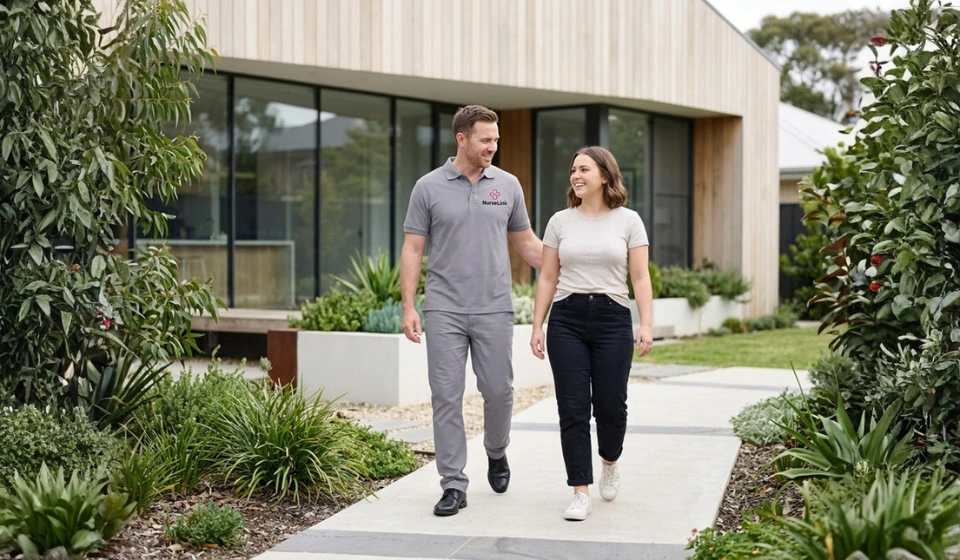
What Was Still Possible
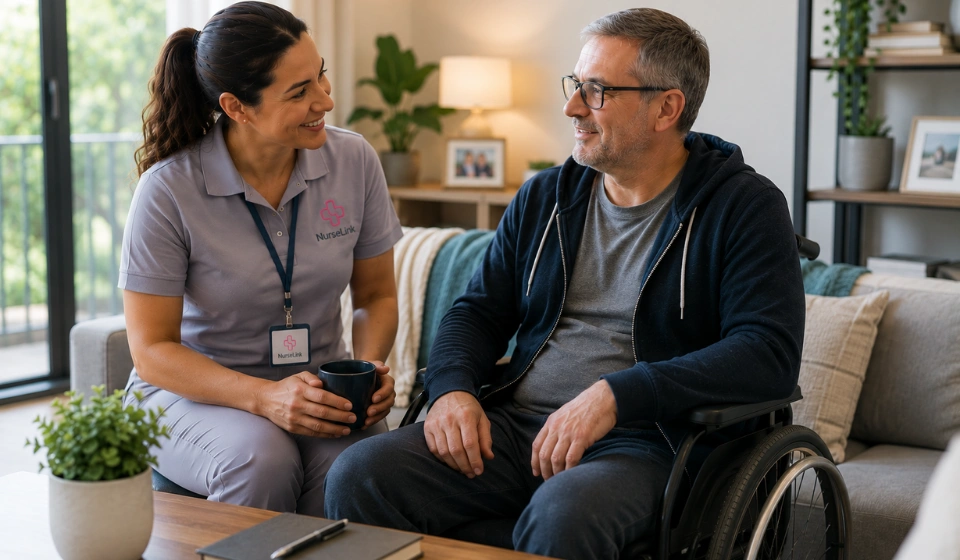
How NurseLink Helped A Sydney Man With MS Regain His Independence When His NDIS Plan Fell Behind
NDIS Support That Adapted To His Needs
Introduction
Multiple sclerosis progresses. Not for everyone, not in the same way and not at the same pace, but for many people who live with it, the condition moves, taking things incrementally and sometimes suddenly, leaving the person managing it in the particular position of adapting to a present that keeps changing before the adaptation is complete.
The NDIS plan that is written at one point in the progression of MS is a plan that reflects what the participant needed at the time it was written. If the condition has moved since then, the plan may no longer reflect what the participant actually needs now. The funding may be insufficient. The goals may be oriented toward a level of function that is no longer realistic. And the participant, who is managing a condition that is progressing, is also managing the frustration of a support system that is running behind the condition it is supposed to be supporting.
For a man in his fifties who has spent his adult life being capable, independent and professionally active, the convergence of a progressing MS and an inadequate NDIS plan is not simply a logistical problem. It is an identity challenge. The question of what is still possible, when the condition keeps narrowing the answer and the support system keeps failing to ask the question properly, can feel like a question moving in only one direction.
At NurseLink Healthcare, we believe that the right support, provided in response to where a participant actually is rather than where a plan assumes they should be, can change the direction of that question. This case study documents how our team supported a man in his fifties in Sydney, New South Wales, through exactly this situation, and how the right support at the right moment gave him back more than he had expected to still have.
To protect the privacy of the client and his family, all names and identifying details have been kept confidential throughout this case study.
The Client & His Situation
The client is a man in his mid-fifties living in Sydney’s inner west with his wife. He had worked as an architect for most of his career, running his own small practice for fifteen years before his MS progressed to the point where maintaining it had become unsustainable. Closing the practice had been both practically necessary and personally significant, leaving a gap in his daily life that the NDIS plan he was operating under had not adequately addressed.
He had been diagnosed with relapsing-remitting MS in his early forties and had managed it well for over a decade, maintaining his professional identity and his independence through disease-modifying therapy, rehabilitation and the practical adaptations that a person with MS learns to make. The transition to secondary progressive MS had changed the picture. His mobility had declined, requiring a wheelchair for distances beyond the home. His upper limb function had been affected. His fatigue was more pervasive and less responsive to rest.
His NDIS plan had been written at an earlier stage of his condition, and the progression since the last review had outpaced the plan’s capacity to respond. The funding was insufficient for the daily support his current functional status required. The goals no longer reflected his reality. And the gap between what the plan described and what his life actually required had been growing, producing a situation where he was managing with less than he needed and managing it, by his own account, increasingly poorly.
His neurologist raised the inadequacy of his plan at a clinical review and recommended he engage a new provider who could both address the immediate support gap and assist with the plan review that was overdue. She recommended NurseLink Healthcare.
What He Had Been Living With
The months before the engagement had been a period of quiet contraction. The things he had been able to do had been becoming the things he could no longer quite manage, and the support available through his existing plan had not been sufficient to hold the line.
He had been falling more often than he had told his wife. Not serious falls, but the kind that left him shaken and required recovery time. His morning personal care was taking longer and costing more energy than the day could afford. He had stopped cooking the meals he had always been proud of, because the physical management of the kitchen without support had become more demanding than the outcome justified. He had stopped attending the professional events that had kept him connected to the architectural community he had belonged to for thirty years.
His wife had been absorbing what the insufficient plan left uncovered, and the absorption was showing in ways he was aware of and that added a layer of guilt to an already difficult situation. He had not told his plan coordinator how bad it had gotten, partly because he was not sure she would understand and partly because saying it out loud felt like admitting something he was not ready to fully admit. He was managing. He was not sure he was managing well.
Understanding What He Actually Needed
The initial assessment required patience. He was not immediately forthcoming about the full picture of his daily life, approaching the conversation with the caution of a man who had spent his career making things work and was not entirely sure what would happen if he acknowledged how much was not working.
The care coordinator did not push. She asked specific questions and gave him time to answer them. Gradually the full picture emerged. He needed daily personal care support that reflected his current functional status, not the status his plan assumed. He needed kitchen support that made cooking possible rather than taking it over. He needed support to attend the professional and social events that remained important to him, because his connection to those things was not incidental to his wellbeing. It was central to it.
His wife, present for part of the assessment, added what he had not said. The falls were more frequent than he had indicated. The fatigue was more pervasive. And the contraction of his daily life had been happening faster than she had felt she could raise with him, because he was already managing something hard and she did not want to add to it.
The care plan NurseLink Healthcare developed was built around everything that had been said and the things that had taken time to surface.
The NurseLink Healthcare Solution
Support That Reflected His Current Reality
NurseLink Healthcare assigned support workers with specific MS experience whose first task was providing daily living support at the level his current functional status actually required. Personal care was managed efficiently and with the dignity a man of his professional background expected. The morning routine that had been consuming his energy was restructured with clinical support that left him with more in reserve for the hours that followed. Kitchen support was incorporated in a way that allowed him to cook again, with the assistance that made it possible rather than the kind that took it over.
The support workers worked with him rather than for him, which was the distinction that mattered most to him and that the care coordinator had understood from the assessment was the line between support he could accept and support he could not.
Fall Prevention As A Clinical Priority
The falls that had been occurring more frequently than he had disclosed were addressed immediately. Every visit incorporated structured fall risk assessment, environmental review and the specific management of activities that carried elevated risk for a person at his stage of MS. His wife, who had been frightened by the falls in a way she had not told him, found the presence of clinical oversight for this dimension of his condition to be one of the most immediately meaningful features of the arrangement.
Reconnecting Him With His Professional Life
The professional events he had stopped attending were addressed explicitly in the care plan as goals, not as optional extras. NurseLink Healthcare’s support workers provided the practical support for outings that had made those outings unmanageable without assistance, accompanying him to events and managing the logistics of navigating those environments in a wheelchair with his fatigue profile.
He attended an architectural industry event in the second month of the engagement that he had not been to in over a year. His support worker managed the practical aspects with the unobtrusive efficiency that allowed him to focus on being there rather than on managing how he was there. He came home, by his wife’s account, more like himself than he had been in some time. She told the care coordinator she had not realised how much the withdrawal from those events had been affecting him until she saw the difference that attending one made.
NDIS Plan Review
NurseLink Healthcare’s care coordinator worked alongside his plan coordinator to build the evidence base for the plan review his neurologist had identified as overdue. Clinical documentation from NurseLink Healthcare’s visits, combined with the neurologist’s assessment and an occupational therapist’s review of his functional status, provided the comprehensive picture that the review required. The outcome was increased funding that reflected his current reality and closed the gap that had been widening for months.
He described the result as the first time the system had caught up with where he actually was. He said it without elaboration, in the straightforward tone of a man who did not waste words on things that did not need more than a sentence.
Outcomes & Impact
His Daily Life Became More Manageable
He was falling less. He was beginning his days with more energy. He was cooking again. He was attending the professional events that had been contracting from his life. His neurologist, reviewing his status several months into the engagement, noted that his overall presentation was better than at the previous review and attributed this partly to the improved quality of his daily support.
His Wife Stopped Absorbing The Gap
With formal support at the right level, she was no longer absorbing what the insufficient plan had been leaving uncovered. She described the change to the care coordinator as feeling less like they were always behind and more like they were keeping pace. For a couple managing a progressive condition, keeping pace was not a small thing.
He Discovered What Was Still Possible
He came into the engagement in a period of progressive contraction, with the question of what was still possible pointing in a direction that felt increasingly limited. Across the months of the engagement, the direction shifted. Not because the MS had stopped progressing, but because the right support had expanded the practical range of what was possible within his condition. He said, at a review meeting toward the end of the first year, that he had been surprised by what was still possible. He said it in the way of a man who had not been expecting to be surprised.
A Reflection From The Client
“I had been managing with a plan written for an earlier version of my condition. What NurseLink did was meet me where I was, not where the plan assumed I would be. My days work again. The plan review sorted the funding. And I went back to an industry event I had not attended in over a year. That sounds like a small thing. It was not a small thing. It was a reminder that there is still quite a bit that is possible.”
Key Takeaways From This Case Study
NDIS plans for progressive conditions must be reviewed in response to progression. A plan written at one stage of MS is not adequate for a later stage. The gap falls on the participant and the people around him.
The right level of support changes what is possible, not just what is managed. Sufficient support expands what a participant can do, not just how they cope with what they cannot.
Professional and social connection is a clinical priority, not a lifestyle addition. For a man whose identity was built around professional engagement, losing access to that community was a clinical deterioration in wellbeing. NDIS support that addressed it as a goal reflected a genuine understanding of what support is for.
Spouses absorb what insufficient support leaves uncovered. The right level of formal support protects the participant and the people who love him simultaneously.
Conclusion
MS progresses. What the right support can change is how much of what matters remains possible within that progression, and how much of the gap falls on the participant and the people around him.
For the man at the centre of this case study, NurseLink Healthcare provided support that met him where he was. His daily life became more manageable. His wife stopped absorbing the gap. His plan was brought into alignment with his current reality. And he went back to an industry event and came home more like himself than he had been in some time.
That is what the right NDIS support, at the right level and at the right moment, can make possible.
If you or someone you love is living with a progressive condition and the NDIS plan has not kept pace, we encourage you to reach out to the NurseLink Healthcare team. We are here to meet you where you are.
Latest Post
When Parents Learned to Trust NDIS Support
The Life He Thought The Accident Had Collapsed
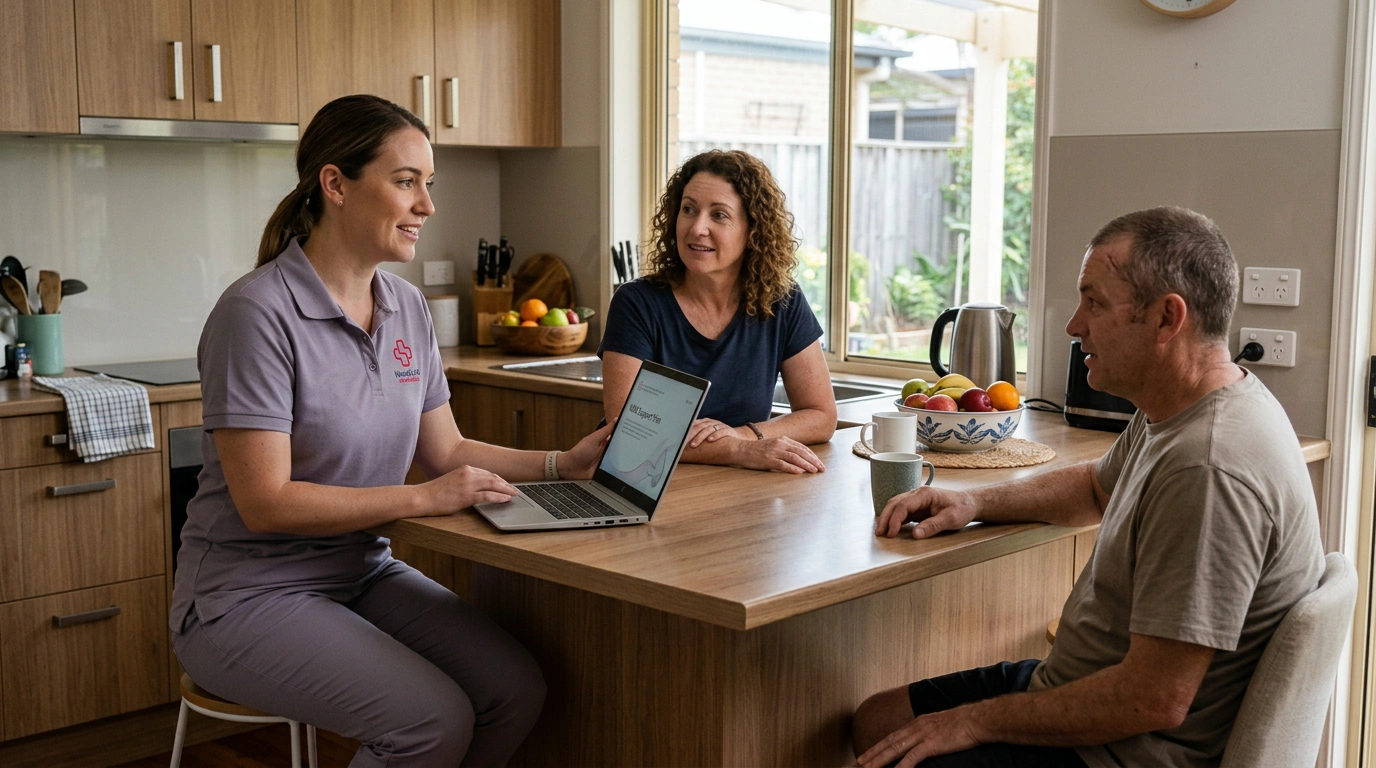
Someone Finally Holding The Whole Picture
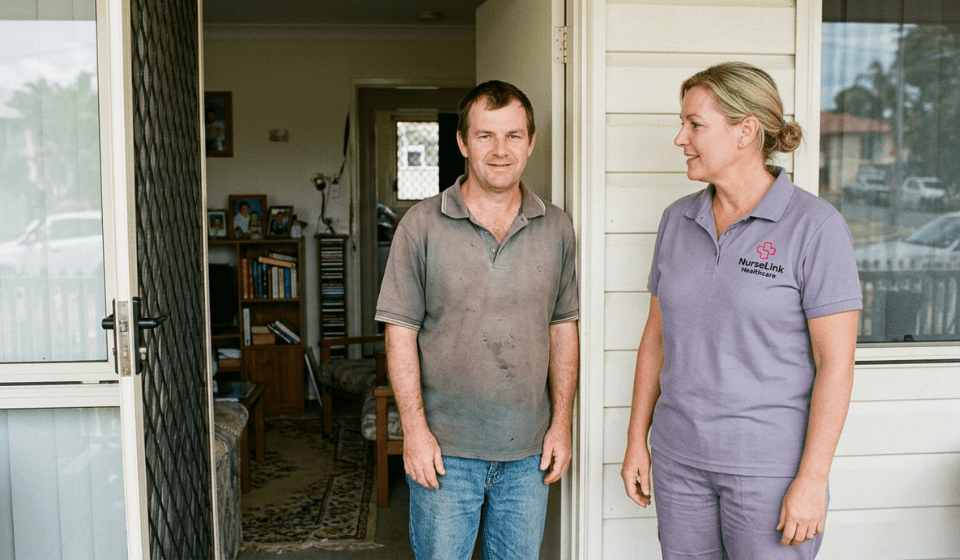
A Home That Was Finally His Own
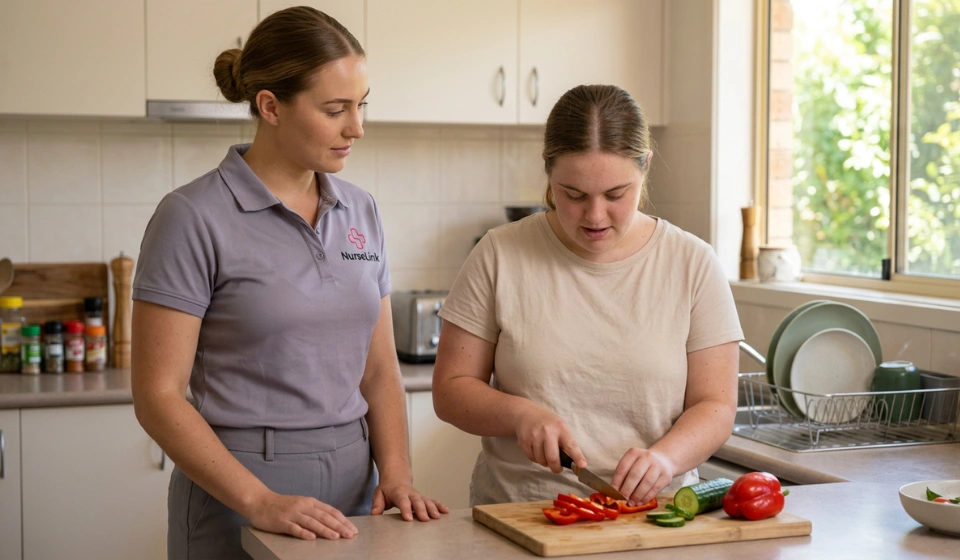
Learning To Do It Herself, With Someone Beside Her
What Was Still Possible

Finding Her Way Back To Her Own Kitchen Table
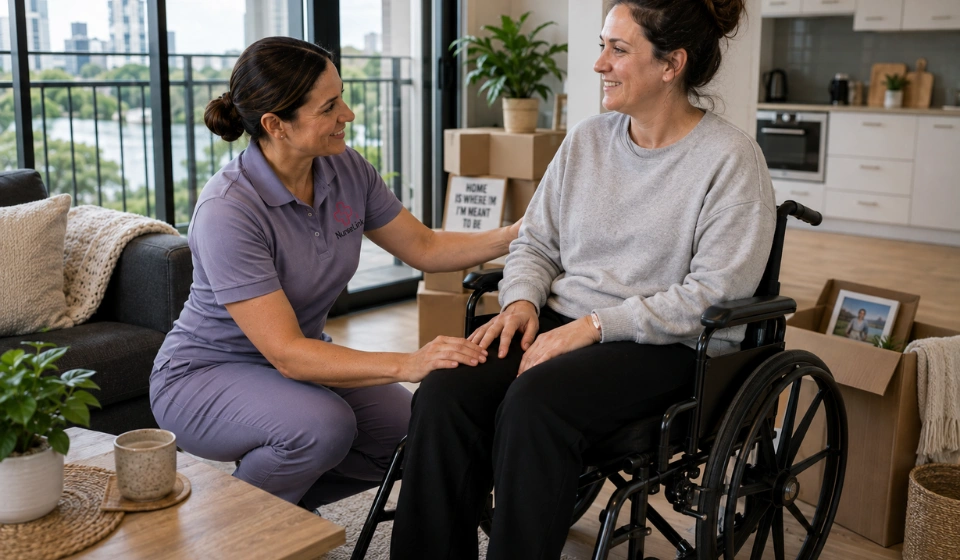
From Aged Care To Her Own Front Door
She Was Ready. We Helped Her Get There.
Room To Breathe

The Man He Was Getting Back To
They Did Not Give Up On Him
Returning To Community Life
Rebuilding Independence After A Diabetes-Related Amputation
Cooking By Heart

The World Beyond The Front Door
Finding Home Again After A Stroke
Relearning Independence After A Life-Changing Accident

Beyond The Diagnosis
Two Years In Care. One Giant Step Toward Home.
When Transport Barriers Disrupted NDIS Care

Supported Independent Living Success
A Journey Towards Independence With NDIS Support

Daniel’s Journey