When Parents Learned to Trust NDIS Support
How NurseLink's Coordinated NDIS Support Helped A Family Trust Their Daughter's First Steps Toward Independence
A Case Study In Complex Care That Earned A Family's Trust One Careful Step At A Time
Introduction
For families supporting a person with complex, multiple disabilities, the idea of that person eventually living apart from them is often approached with a particular kind of fear, one built not from doubt about their loved one’s capability, but from an accumulated, hard-won understanding of exactly how much coordinated care that person’s daily safety actually depends on. Years of managing multiple therapists, complex communication needs, seizure protocols, feeding routines and physical support requirements can leave a family with a level of vigilance that is very difficult to hand over to anyone else, however qualified, without genuine dread about what might be missed.
This dread is not overprotection. It is, in most cases, an entirely reasonable response to genuinely complex support needs, where a single missed detail, a misunderstood communication cue, an overlooked seizure warning sign, an incorrectly prepared meal, can carry real consequences. Supported independent living, for a person with this level of complexity, succeeds or fails largely on whether the support team can demonstrate, consistently and in granular detail, that they have absorbed every piece of the family’s accumulated knowledge, not just the version written down in a formal care plan.
This case study documents how NurseLink Healthcare provided coordinated, high-support NDIS care to a young woman in her early twenties in Wangaratta, living with cerebral palsy, an intellectual disability and a seizure disorder, through her transition from her family home into supported independent living, and how a deliberately thorough, trust-building approach to care coordination allowed her parents to genuinely believe, for the first time, that she would be safe without them there every day.
To protect the privacy of the client and her family, all names and identifying details have been kept confidential throughout this case study.
The Client & Her Situation
The client is a woman in her early twenties living in Wangaratta with her parents, managing cerebral palsy affecting her mobility and fine motor control, a mild to moderate intellectual disability, and a seizure disorder requiring careful monitoring and a specific emergency response protocol her parents had refined, through years of experience, into an almost instinctive routine.
She communicated primarily through a combination of limited speech, a communication device and gestures well understood by her family but requiring genuine familiarity to interpret accurately, particularly regarding pain, discomfort or the subtle early signs that often preceded a seizure. Her parents, now in their late fifties, had spent over two decades building a system of care so detailed and interconnected, medication timing linked to meal preparation, specific positioning requirements to reduce aspiration risk, a precise sequence of steps during seizure onset, that they had genuine, well-founded difficulty imagining any external support team absorbing it thoroughly enough to keep her safe.
Her NDIS plan had, for several years, included a stated long-term goal of supported independent living, a goal she herself had expressed clearly and consistently through her communication device, telling her support coordinator on more than one occasion that she wanted her own home, her own bedroom, the chance to make her own daily choices the way her older siblings had. But her parents, while wanting this for her too, had quietly delayed pursuing it, telling her support coordinator honestly that they simply did not trust that any provider could learn what they knew well enough to keep her safe.
Understanding What The Family Actually Needed
The initial engagement, led by a NurseLink Healthcare complex care coordinator working closely with the client, her parents and her existing allied health team, made clear within the first meeting that the central obstacle to progressing her stated goal was not a lack of appropriate housing or funding, both of which were largely in place, but her parents’ entirely reasonable fear that no external team could replicate the depth of knowledge they had built over two decades without her paying the price for whatever got missed in the handover.
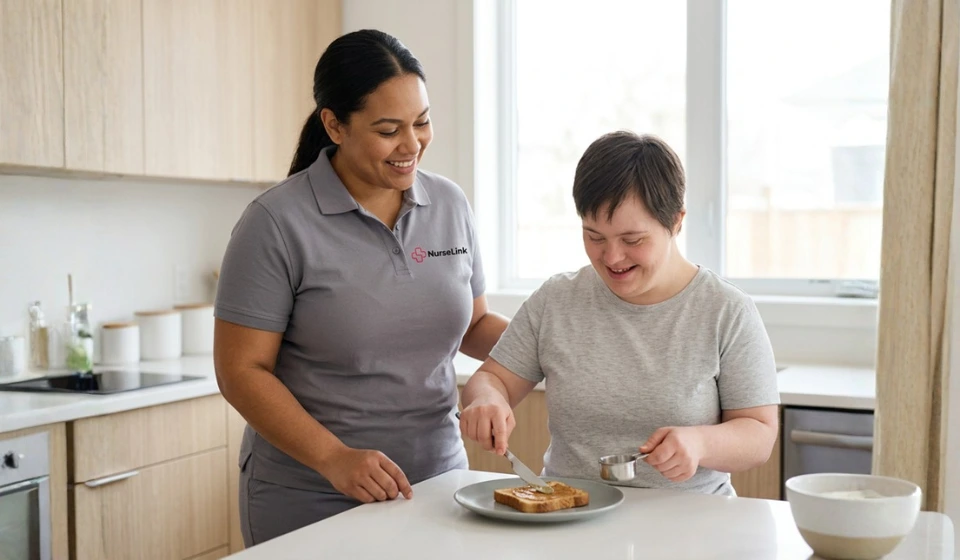
The client needed a support team capable of managing her complex physical care, communication needs and seizure protocol competently and consistently, delivered in a way that respected her clearly stated desire for genuine independence and daily choice, rather than a supported living arrangement that simply relocated her parents’ level of control to paid staff instead.
Her parents needed something considerably harder to provide than a written care plan: demonstrable, granular evidence, built gradually and with genuine patience for their scepticism, that the team supporting their daughter had absorbed not just the clinical facts of her care but the accumulated, instinctive knowledge that made the difference between a plan that looked adequate on paper and one that actually kept her safe day to day.
Her coordinator recognised explicitly that rushing this transition, however strong the underlying support plan, would likely fail regardless of its clinical quality, because her parents’ trust, not the paperwork, was the genuine precondition for the move succeeding at all.
The NurseLink Healthcare Solution
An Extended Learning Period Before Any Transition Began
Rather than proceeding directly to a transition timeline, NurseLink Healthcare proposed, and her parents accepted, an extended period of support delivery within the family home first, support workers learning her routines, communication style and seizure protocol under her parents’ direct observation, months before any move toward independent living was formally scheduled.
Support Workers Selected & Trained With Unusual Specificity
The support workers assigned to her care were selected specifically for prior experience with complex communication needs and seizure management, and underwent training that went well beyond her formal care plan, direct, detailed sessions with her parents covering the specific, instinctive cues they had learned to recognise over twenty years, the kind of knowledge rarely captured adequately in standard documentation.
Her Parents' Expertise Treated As Genuine Clinical Knowledge
Throughout this extended learning period, the care coordinator consistently framed her parents’ accumulated experience as expert knowledge to be formally incorporated into her support plan, rather than informal preference to be politely noted and worked around, a shift her parents later described as the first time a provider had treated what they knew as seriously as they felt it deserved.
A Transition Built In Deliberately Small, Reversible Steps
Once her parents’ confidence in the support team had genuinely developed, the transition itself was structured incrementally, beginning with short trial stays in her new supported living arrangement while support workers and protocols remained consistent throughout, allowing both the client and her parents to build trust gradually rather than facing a single, irreversible move.
Communication That Kept Her Parents Genuinely Informed, Not Just Reassured
Throughout the transition period, the coordinator maintained detailed, honest communication with her parents about how each stage was progressing, including any minor issues that arose, on the basis that selective reassurance would ultimately undermine trust far more than transparent, accurate updates, even when those updates included small problems rather than only successes.
Keeping The Client's Own Voice Central Throughout
At every stage, the client’s own communicated preferences, about her daily routine, her home environment and the pace of the transition itself, were treated as the primary guide for decisions, with her support coordinator making a deliberate point of ensuring that her parents’ legitimate caution did not inadvertently override her own clearly expressed wishes for independence.
Outcomes & Impact
She Successfully Transitioned Into Her Own Home
After approximately eight months of gradual trust-building and incremental transition, the client moved fully into her supported independent living arrangement, supported by a consistent team thoroughly familiar with her complex needs, a genuinely significant milestone given the scale of caution her family had begun the process with.
Her Seizure Management Remained Fully Consistent
Across the transition and in the months following, her seizure protocol was managed with the same consistency and accuracy her parents had maintained at home, with no incidents attributable to a gap in staff knowledge or preparedness, directly validating the depth of the training approach taken.
Her Parents Genuinely Let Go, Rather Than Simply Tolerating The Arrangement
In a follow-up conversation with her coordinator, her parents described a shift they had not expected to feel this fully, from anxious monitoring of every report to genuine relaxation, trusting the team not because they had run out of things to worry about, but because the team had demonstrably earned that trust across the extended process.
She Reported Genuine Fulfilment Of Her Stated Goal
The client herself, through her communication device, told her coordinator that having her own space and making her own daily decisions felt exactly like what she had been hoping for, a direct affirmation that the goal her NDIS plan had stated for years had finally, genuinely, been achieved on her own terms.
The Family Relationship Changed For The Better
Her parents reported that visits to her new home had become genuinely enjoyable rather than anxious, describing a relationship with their daughter that felt, for the first time in years, more like parents visiting an independent adult than carers checking on a dependent, a shift that mattered to all three of them.
A Reflection From Her Parents
Some months after the transition was completed, her parents shared the following with the NurseLink Healthcare care coordinator:
They said that for years, every conversation about independent living had ended the same way, with them agreeing in principle and then quietly finding reasons to delay, because handing over twenty years of accumulated vigilance to strangers felt less like progress and more like risk. What changed things for them was a team willing to spend months learning what they knew before ever proposing a transition date, and a coordinator who treated their knowledge as something worth formally capturing rather than politely working around. They said watching their daughter settle into her own home, make her own choices about her day, and genuinely thrive in a way that surprised even them, was worth every bit of the caution they had held onto for so long. They added that they finally understand what she had been trying to tell them, through her device, for years: that this was never about them trusting her less. It was about her needing the chance to become who she already was.
Key Takeaways From This Case Study
For families supporting a person with complex, multiple disabilities, trust is often the genuine barrier to independence, not clinical capability or available funding. Addressing that trust directly and patiently is frequently the real work required before any transition can succeed.
Family caregivers’ accumulated knowledge deserves formal recognition as expertise. Treating decades of instinctive understanding as genuine clinical information, rather than informal preference, both improved the quality of care and built the trust needed to progress the transition.
An extended learning period before transition, rather than a fixed rollout timeline, allows genuine confidence to develop rather than being rushed past legitimate concern. Months spent building competence under direct family observation proved essential to the eventual outcome.
Incremental, reversible steps reduce the fear associated with major transitions for complex-needs clients and their families. Trial stays allowed both the client and her parents to build trust gradually, rather than facing a single high-stakes move.
A person’s own stated goals should remain central, even when family caution is entirely reasonable. Keeping the client’s communicated preferences at the centre of every decision ensured the transition ultimately served her independence, not just her family’s comfort.
Conclusion
A young woman who had spent years clearly expressing what she wanted, and a family whose caution came from genuine expertise rather than reluctance to let go, found, through patient and thoroughly coordinated NDIS support, that both could be honoured at once. For the client and family at the centre of this case study, NurseLink Healthcare provided not only clinically consistent, high-support care, but the sustained, demonstrated trustworthiness that made her family’s letting go possible.
She lives in her own home now, making her own daily choices. Her parents visit as parents, not as carers keeping watch. And a goal she had been stating clearly for years, in the only way she could, has finally, genuinely become her life.
If your family is navigating the transition toward independent living for a loved one with complex support needs, we encourage you to reach out to the NurseLink Healthcare team. We take the time to earn the trust that transition genuinely requires.
Latest Post
When Parents Learned to Trust NDIS Support
The Life He Thought The Accident Had Collapsed
Someone Finally Holding The Whole Picture
A Home That Was Finally His Own
Learning To Do It Herself, With Someone Beside Her
What Was Still Possible
Finding Her Way Back To Her Own Kitchen Table
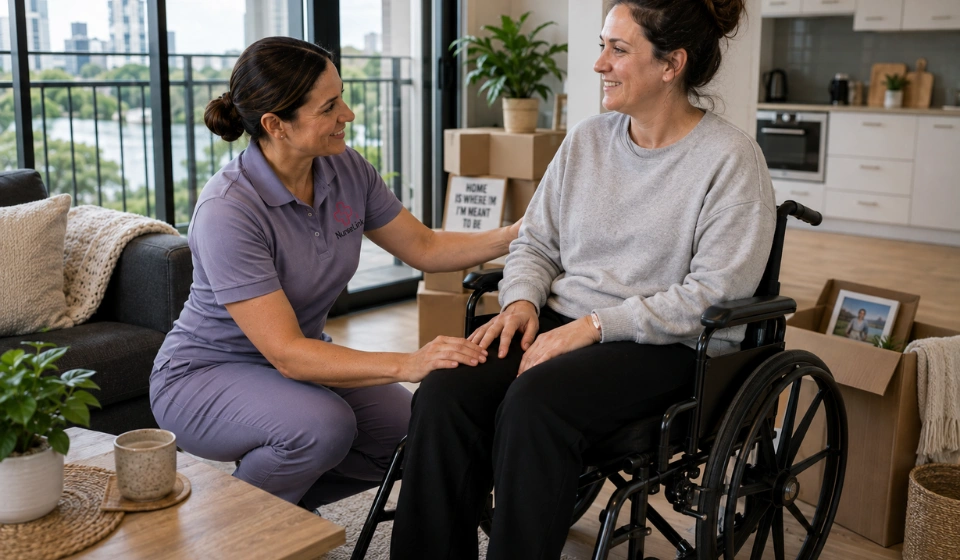
From Aged Care To Her Own Front Door
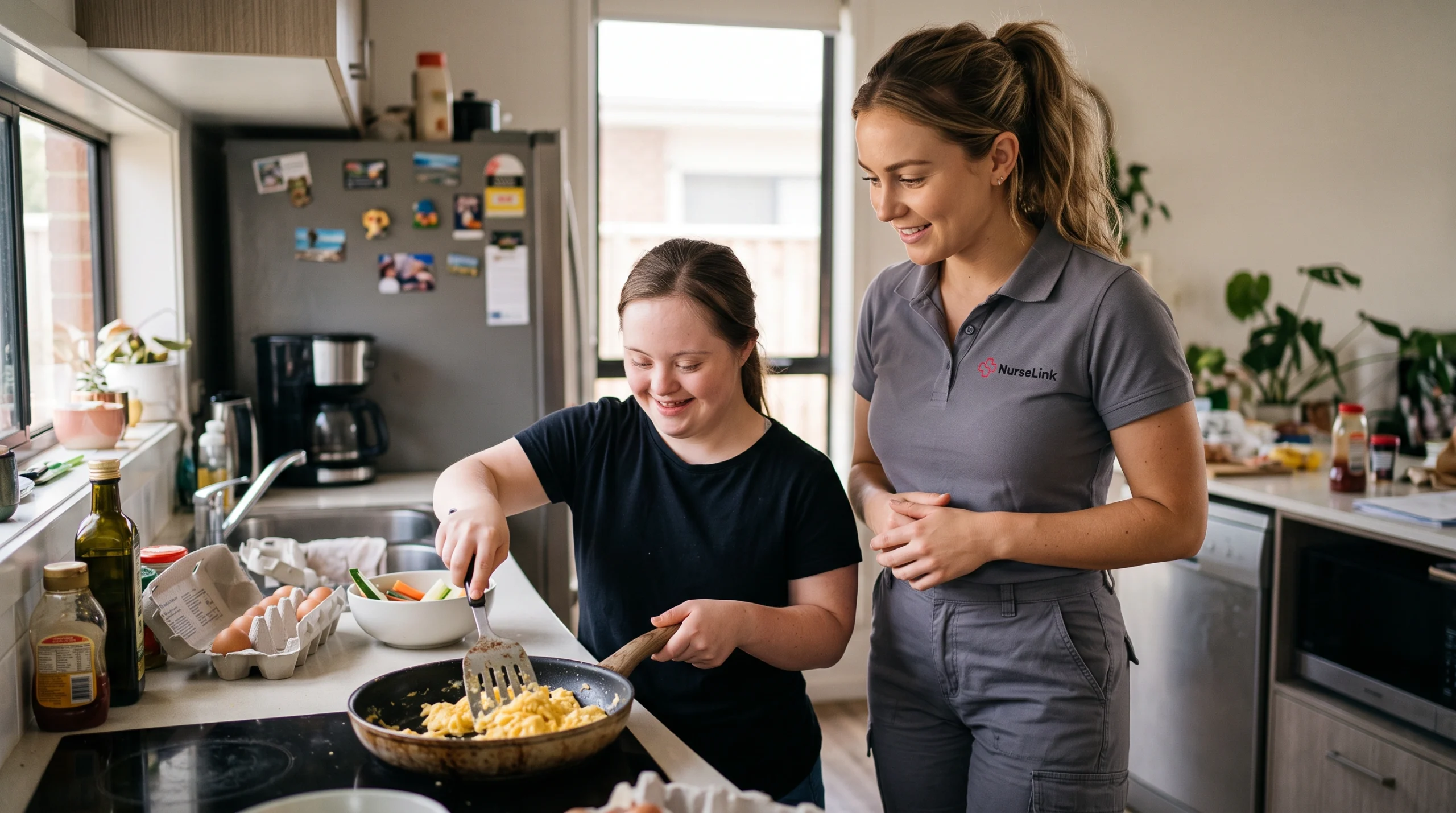
She Was Ready. We Helped Her Get There.
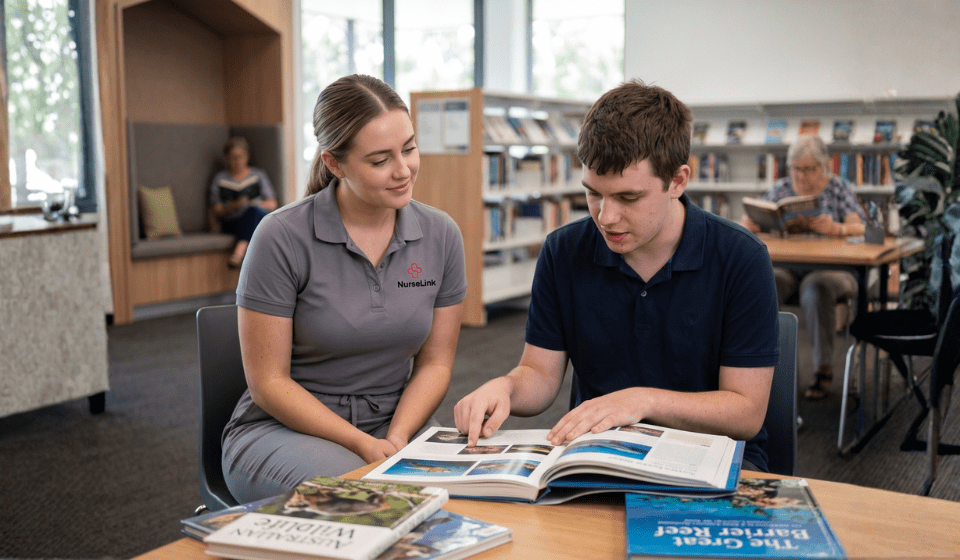
Room To Breathe

The Man He Was Getting Back To
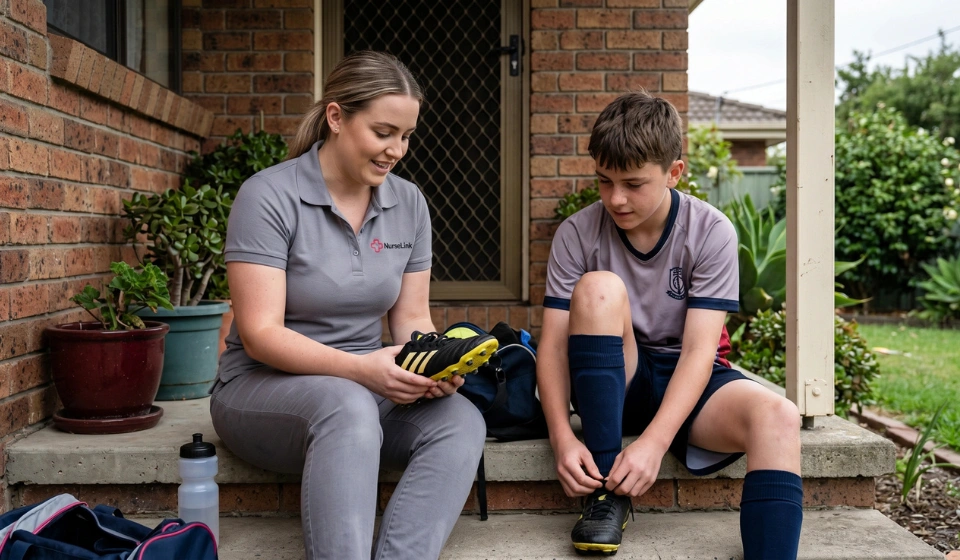
They Did Not Give Up On Him
Returning To Community Life
Rebuilding Independence After A Diabetes-Related Amputation
Cooking By Heart

The World Beyond The Front Door
Finding Home Again After A Stroke
Relearning Independence After A Life-Changing Accident
Beyond The Diagnosis
Two Years In Care. One Giant Step Toward Home.
When Transport Barriers Disrupted NDIS Care

Supported Independent Living Success
A Journey Towards Independence With NDIS Support

Daniel’s Journey