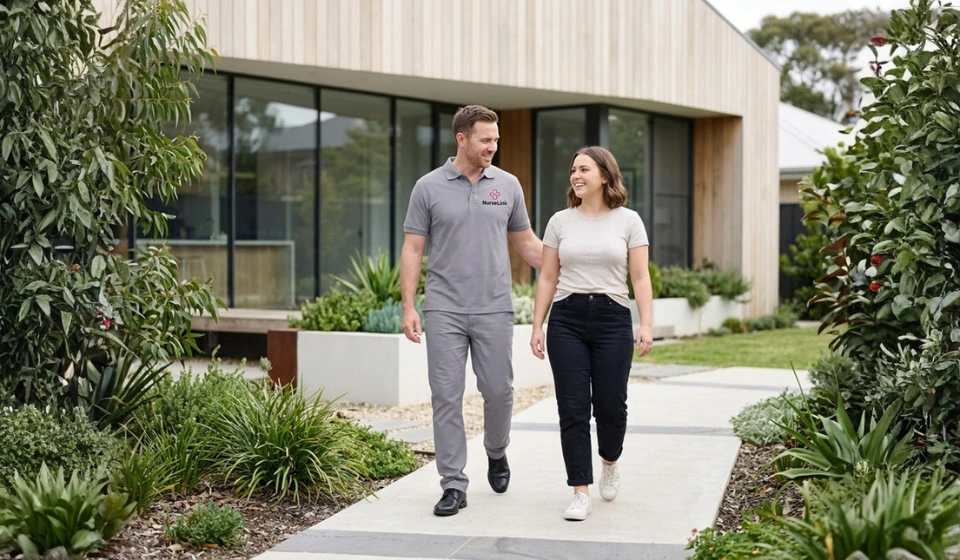
The Man He Was Getting Back To
How NurseLink Supported A Melbourne Man With A Traumatic Brain Injury To Rebuild His Independence.
A Case Study In NDIS Support Built Around Identity, Not Just Disability
Introduction
A traumatic brain injury does not only injure the brain. It injures the person. The version of someone that existed before the accident, the way they moved through the world, the work they did, the relationships they held, the quiet confidence of a person who knew who they were and what they were capable of, all of this is disrupted in ways that do not show up on a scan and cannot be measured by a clinical assessment. The injury is visible. The loss of self is harder to name and harder still to recover.
For a man who has spent his working life with his hands, who has built his identity around physical competence and practical capability and the satisfaction of making things that work, a brain injury that affects his processing, his memory, his emotional regulation and his ability to manage the tasks that once came without thought is not just a medical event. It is a grief. A grief for the person he was and the life he was living and the future he had assumed would continue along the lines it had always followed.
NDIS support for a person with a traumatic brain injury, when it is built with genuine understanding of what that person has lost and what they are trying to find their way back to, can be the thing that makes recovery not just a clinical outcome but a human one. Support that sees the person before it sees the disability. Support that works toward what is possible rather than managing what has been lost. Support that, in the right circumstances and with the right people, becomes the relationship that changes the trajectory of a recovery.
At NurseLink Healthcare, we believe that NDIS support is as much about who provides it as what it provides. This case study documents how our team supported a man in his early forties in Melbourne, Victoria, through the rebuilding of his independence and his sense of self following a traumatic brain injury sustained in a workplace accident, and how a single support worker relationship became the foundation on which his recovery was built.
To protect the privacy of the client and his family, all names and identifying details have been kept confidential throughout this case study.
The Client & His Situation
The client is a man in his early forties who had worked for most of his adult life as a plumber, running his own small business in Melbourne’s outer eastern suburbs. He had built the business from nothing, starting as an apprentice in his late teens and taking on his first employees in his early thirties. By the time of his accident, he employed three other tradespeople and had a reputation in his area for reliable, quality work that had kept him consistently busy without needing to advertise.
He was also, by every account of the people who knew him, a person who was defined by his capability. He fixed things. He built things. He turned up when he said he would and he did what he said he would do. He was not a person who asked for help, not because he was proud in a difficult way but because he had rarely needed to, and the idea of needing to had simply never been part of how he understood himself.
The workplace accident that caused his traumatic brain injury occurred on a construction site where he was completing a subcontracting job. The details of the accident itself are his own. What followed was a period of acute hospitalisation, several weeks of inpatient rehabilitation and a discharge home to a life that looked the same from the outside and felt entirely different from the inside.
The TBI had affected his cognitive processing speed, his short-term memory, his capacity to manage complex tasks that he had previously executed without effort and his emotional regulation, which produced responses to frustration and difficulty that were unfamiliar and distressing to both him and the people around him. He could not return to work. He could not safely manage the tools and the physical demands and the organisational complexity of running a plumbing business when his brain was still learning to do the things it had always done without being asked.
He was living with his partner and their two teenage children, in the house he had owned for twelve years, in a life that he no longer felt he was the right shape for. His partner had absorbed as much of the practical and emotional weight of the situation as she could manage, which was considerable, and had reached a point where the additional support that the NDIS could provide was not just helpful but necessary.
What The Family Was Living With
The man who had come home from rehabilitation was, to his family’s eyes, the same person in all the ways that mattered most and a different person in all the ways that mattered most as well. He looked like himself. He spoke like himself, mostly. But the processing difficulties meant that conversations sometimes went in directions he had not intended. The memory gaps meant that he forgot things he had been told and grew frustrated with himself for forgetting. The emotional dysregulation meant that the frustration, when it arrived, was more intense and less manageable than it had been before, and that the aftermath of a difficult moment was harder for everyone than it had been in the life before the accident.
His teenage children had adapted in the way that teenagers adapt to family upheaval, which is to say imperfectly and with a mixture of love and confusion and the particular helplessness of young people who want their parent to be okay and do not fully understand why he is not. His partner had taken on more than she had signed up for, not with resentment but with the quiet exhaustion of someone who loves a person and is doing everything she can and is not sure it is enough.
And he was living with something that none of the clinical assessments had a category for. He was grieving himself. The person he had been before the accident, capable and self-sufficient and defined by what he could do, was gone in ways that he could not fully articulate and could not stop noticing. He did not know who he was without the version of himself that the accident had taken, and the not-knowing was its own kind of injury.
The NDIS plan that had been established following his discharge covered support coordination, daily living support and capacity building. The previous provider engaged under the plan had provided support that was, by the family’s account, adequate in its clinical coverage and insufficient in almost every other way. The support workers had been competent and interchangeable and had treated him as a person with a brain injury rather than as a person. He had tolerated the arrangement without engaging with it, which his partner recognised as a warning sign and which led, eventually, to the decision to find a different provider.
NurseLink Healthcare was contacted through a recommendation from his support coordinator.
Understanding What He Actually Needed
The initial conversation NurseLink Healthcare had with him was one that required more patience than most assessment conversations, not because he was difficult but because the nature of his injury meant that he needed more time to find the words he was looking for and more space to finish his thoughts without being hurried. The care coordinator who conducted the assessment had been briefed on his cognitive profile and understood that the pace of the conversation was part of what the assessment needed to accommodate.
What he communicated, with the directness of a man who had always been direct and had not lost that quality, was specific and entirely understandable. He needed support workers who would treat him like a man, not a patient. He had been a business owner. He had employed people and managed jobs and made decisions. He did not want to be talked to as though the injury had also taken his judgment. He wanted support that helped him do things, not support that did things for him, because the doing was what he needed to find his way back to.
He was specific about what he wanted to work toward. He wanted to be able to cook a proper meal again, because cooking had been something he had done well before and the inability to manage the sequencing of a complex recipe was a daily reminder of what had changed. He wanted to be able to manage the household finances, which his partner had taken over and which he wanted to take back, at least in part. He wanted to be able to drive again, which was a longer term goal dependent on his medical clearance but which was the thing he mentioned as the goal above all goals, because driving had been both practical and a symbol of the independence he was trying to recover.
His partner, sitting beside him during the assessment, added what he had not said. He needed to be seen. The previous support workers had looked at his plan and had provided what his plan described. None of them had looked at him. She needed someone to come into their home and treat her husband as a person worth knowing, because that was what he had always been and because the accident had not changed it and she needed someone other than her to reflect that back to him.
The NurseLink Healthcare Solution
A Support Worker Chosen For The Relationship, Not Just The Role
NurseLink Healthcare’s approach to finding the right support worker for this engagement was driven by everything that had been said in the assessment conversation and the clear understanding that the previous arrangement had failed not clinically but personally. The right support worker for this particular man needed to be someone he would respond to, someone whose manner would not trigger the frustration that being treated as less than capable produced in him and someone who was genuinely interested in who he was rather than what his plan said he needed.
NurseLink Healthcare identified a support worker whose background included TBI rehabilitation support and whose personal manner, in the assessment of the care coordinator, was well matched to what was required. He was a practical, direct person who had worked in trades himself before transitioning to disability support, and who brought to the role a working knowledge of the culture and identity of a man who had spent his life doing physical work. He was not intimidated by the emotional dysregulation that TBI could produce, had experience recognising and de-escalating it and understood it as a feature of the injury rather than a feature of the person.
The first meeting between the two of them had been arranged as an informal conversation rather than a support visit, at a café near the client’s home, on the grounds that meeting someone for the first time in a clinical context reinforced a dynamic that was exactly what they were trying to avoid. They talked for over an hour. They talked about plumbing and about the building industry and about what it was like to run a small business, and somewhere in that conversation something shifted that the care coordinator could see in the client’s face when she checked in with him afterward.
He had liked him. That was all, and it was everything.
Support Built Around What He Was Working Toward
The support plan NurseLink Healthcare developed was oriented explicitly toward the goals he had named in the assessment, with each support activity connected to a specific capability he was working to recover rather than to a functional deficit that needed to be managed.
Cooking was the first goal they worked on together. His support worker approached it not as a compensatory strategy for a cognitive impairment but as a skill they were rebuilding together, starting with simple meals and working toward the complexity that had been part of his cooking before the accident. They used written sequences for recipes not as a crutch but as a tool, the same way a tradie uses a checklist on a complex job, which was a framing that made sense to him and that his support worker offered without fanfare as simply the practical approach.
The financial management goal was worked toward through a structured, gradual process of reintroducing him to the household accounts with his partner’s involvement, building the cognitive strategies that compensated for his processing and memory difficulties in a way that gave him increasing responsibility over time. By the fourth month of the engagement, he was managing a portion of the household bills independently, which was a smaller version of what he had always done and a larger version of what he had been able to do six months earlier.
The driving goal remained on the horizon, a long-term target that his medical team was monitoring and that his support worker kept visible in their conversations as a point on the map that the current work was moving toward. Having it there mattered to him. It gave the daily work of recovery a direction that reached beyond the immediate task.
Managing Emotional Dysregulation With Respect & Skill
The emotional dysregulation that his TBI produced was one of the most significant challenges of his daily life and one of the most sensitive aspects of his support. His support worker managed it with a combination of clinical skill and personal respect that distinguished it from how previous providers had approached similar moments.
When frustration arrived, his support worker did not treat it as a behavioural event to be managed. He treated it as a reasonable response to an unreasonable situation, which it was, and he responded to it as a person rather than as a clinician, which made the difference between a moment that escalated and one that resolved. He knew when to give space and when to stay present. He knew the difference between the frustration that needed acknowledgment and the frustration that needed distraction. And he knew, because he had taken the time to know the man he was supporting, what the specific triggers were and how to reduce their frequency without making it feel like the management of a problem.
His partner noticed the change in the household on support days. The emotional temperature was lower. Her husband was more settled after his support worker had been. She attributed this not to technique but to the fact that her husband felt, in the company of his support worker, that he was with someone who respected him. That respect was more regulating than any clinical strategy.
Rebuilding His Identity Alongside His Capability
The dimension of the engagement that the care coordinator considered its most significant clinical and human contribution was the way in which his support worker worked not just on his functional capabilities but on his sense of himself as a capable person. The two were not separate, because a man who does not believe he is capable will not engage with the work of becoming more capable, and the previous arrangement had done nothing to address the identity loss that sat at the centre of his experience.
His support worker found ways, consistently and without making a performance of it, to reflect back to him the evidence of his capability that the work of each session produced. A meal completed from scratch. A bill paid online without assistance. A complex task broken down and managed correctly. Each of these was not just a functional achievement but a piece of the person he had been before the accident, recovered and returned to him, and his support worker understood that and treated it accordingly.
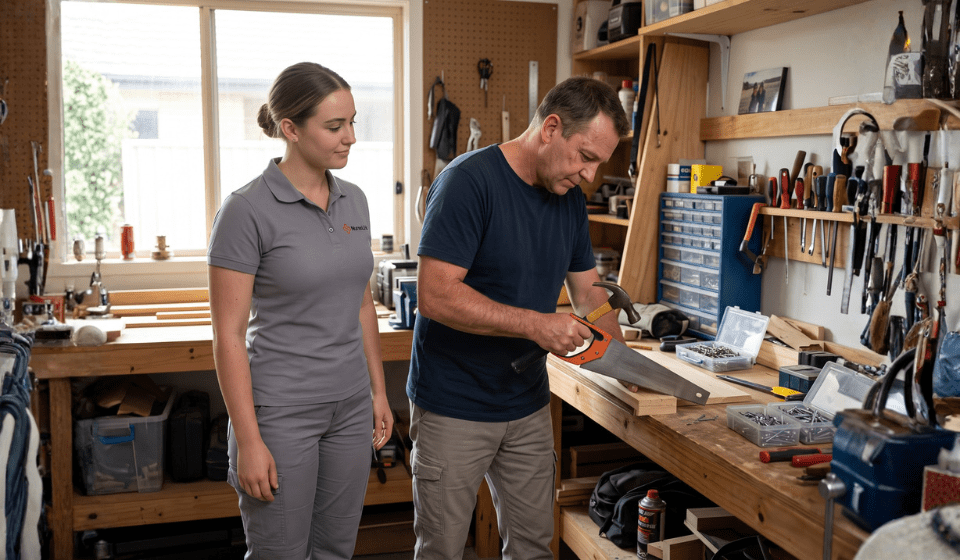
There were sessions where they did not work on goals at all, where they sat in the garage and his support worker helped him with the small mechanical projects he had started attempting at home, not as therapy but as the thing he had always done, the work of hands that made him feel most like himself. These sessions were not incidental to his recovery. They were central to it, because recovery that does not reach the person is not the recovery that matters.
Outcomes & Impact
His Functional Independence Grew Measurably
Across the engagement period, his functional independence in the areas he had prioritised grew in ways that were specific and measurable. He was cooking independently at a level of complexity he had not managed since before the accident. He had resumed responsibility for a meaningful portion of the household finances. His cognitive fatigue, which had been a significant limiting factor in the early weeks of the engagement, had reduced as the strategies he and his support worker had developed became habitual and therefore less cognitively demanding to apply.
His treating neuropsychologist, reviewing his progress at a six month mark, noted improvements in his functional cognition that she attributed to the consistency and the quality of the capacity building support he had been receiving. She noted specifically that his engagement with the support had been qualitatively different from what she had observed during his previous provider arrangement, and that the difference in engagement had produced a difference in outcome.
His Relationship With His Own Recovery Changed
The shift that his partner observed across the months of the engagement was one she found difficult to fully describe but returned to repeatedly when she reflected on what had changed. He had, for a long time after the accident, been going through the motions of recovery without believing in it, participating in the clinical processes that his management required without connecting them to a future he could see himself in.
Somewhere in the engagement, that had changed. He had started talking about the driving assessment the way he had talked about business goals before the accident, as something he was working toward rather than something he was waiting to see about. He had started making plans, small ones, a weekend away when he was well enough, a project in the garage, the kind of forward-looking that had been absent from how he talked about himself for a long time.
His partner said it was like watching him remember who he was. Not all at once, and not completely, because the injury was still there and some things it had taken were not coming back. But enough. Enough for her to see him in a way she had been afraid she might not see him again.
The Family Breathed Differently
The effect on the household of a support arrangement that was genuinely working was felt by everyone in it. His partner had space to be his partner rather than his primary support person on the days his support worker came. His teenage children had a father who was more present and more himself in the evenings after support days, because the work of the day had built him up rather than depleted him. The household that had been organised around managing a crisis began, gradually, to feel like a household organised around living a life.
A Reflection From His Partner
Several months into the engagement, his partner shared the following with the NurseLink Healthcare care coordinator:
“The other providers did what the plan said and went home. What NurseLink did was send someone who actually saw my husband. Not his injury, not his plan, him. He came home from their first meeting and said the bloke gets it. That was all he said. But I knew what he meant because I had not heard him say anything like that since before the accident. Whatever that connection was, it changed everything. He is working toward things again. He is making plans. He is getting back to himself, slowly, but genuinely. I did not know if that was going to be possible. I am so glad it is.”
Key Takeaways From This Case Study
TBI support must address identity loss as well as functional deficit. A man who has lost his sense of himself alongside his functional capabilities will not engage fully with the work of recovering those capabilities until the identity dimension of his loss is also being held. NDIS support that attends only to functional goals and not to the person working toward them has missed the most important part of what recovery from TBI requires.
The right support worker relationship is a clinical outcome in itself. A support arrangement that a participant tolerates rather than engages with will produce significantly inferior outcomes to one in which the relationship between the participant and their support worker is genuine and respectful. NurseLink Healthcare’s investment in finding the right person for this specific individual was not peripheral to the clinical goals of the engagement. It was the foundation on which those goals were achieved.
Capacity building must be connected to the life the participant is trying to recover. Goals that are defined by functional assessment alone, without reference to who the person was before the injury and what they are working toward, produce compliance rather than engagement. The goals NurseLink Healthcare built this engagement around were the participant’s own goals, connected to the identity he was working to reclaim, and the engagement they produced was qualitatively different from what a clinically defined goal set would have achieved.
Emotional dysregulation in TBI is communication, not behaviour. A support worker who responds to the emotional dysregulation produced by TBI as a behavioural management challenge will escalate rather than resolve it. NurseLink Healthcare’s support worker understood the dysregulation as a feature of the injury and responded to it with the respect and the clinical skill that understanding requires.
Conclusion
A traumatic brain injury takes things that are not on any scan. The confidence of a person who knew what they were capable of. The identity of a man who understood himself through his work and his competence and the practical intelligence of someone who has built things with his hands for twenty years. The quiet assumption of a future that would continue along the lines it had always followed.
NurseLink Healthcare provided NDIS support that understood this and worked toward more than the functional goals in the plan. The support worker who was placed with this man in Melbourne brought to the engagement the right clinical skills, the right personal manner and the right genuine interest in who the man in front of him actually was. What grew from that was a relationship that changed how the participant engaged with his own recovery, and a recovery that reached further than anyone had initially dared to plan for.
He is getting back to himself. Slowly, genuinely and on his own terms.
If your family is navigating the NDIS following a traumatic brain injury and you are looking for support that understands what has been lost as well as what needs to be rebuilt, we encourage you to reach out to the NurseLink Healthcare team. We are here to help find the right person, and we know how much that matters.
Latest Post
When Parents Learned to Trust NDIS Support
The Life He Thought The Accident Had Collapsed
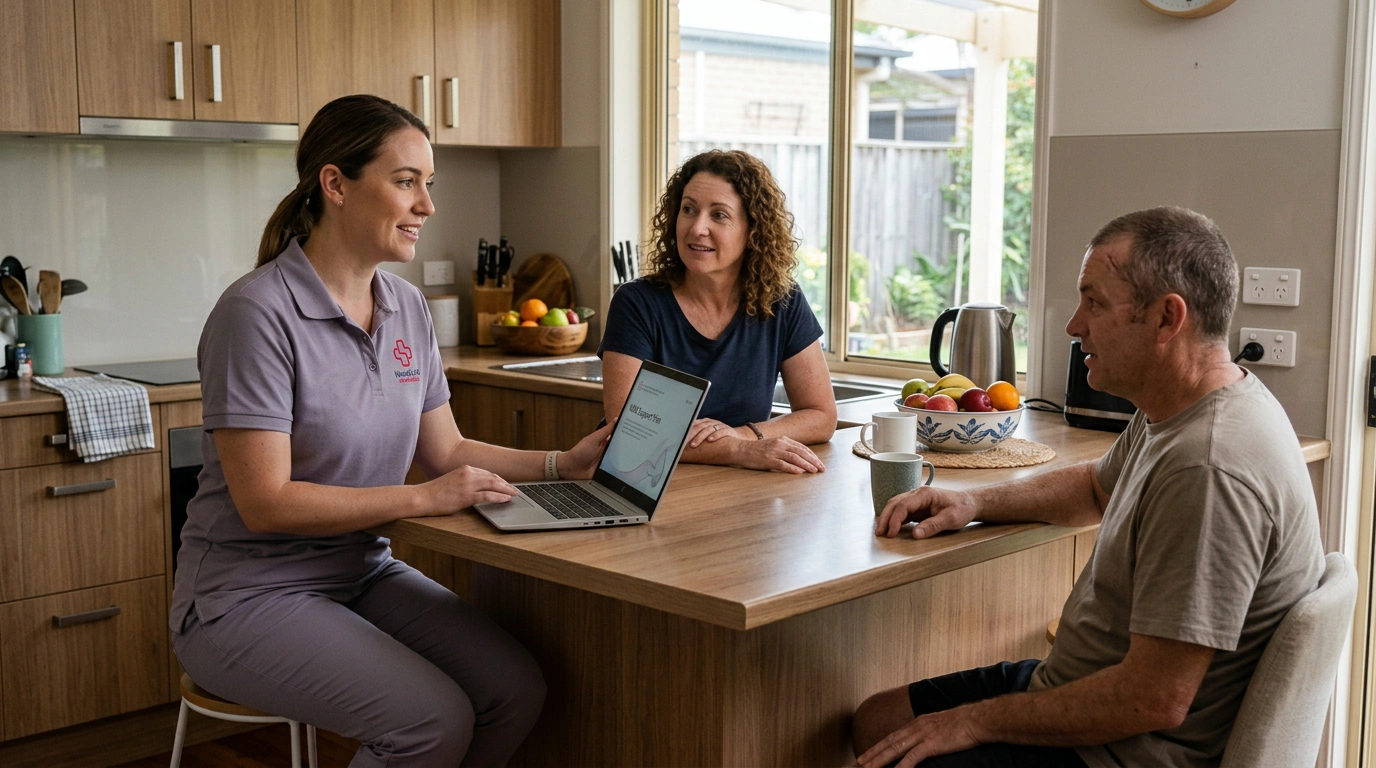
Someone Finally Holding The Whole Picture
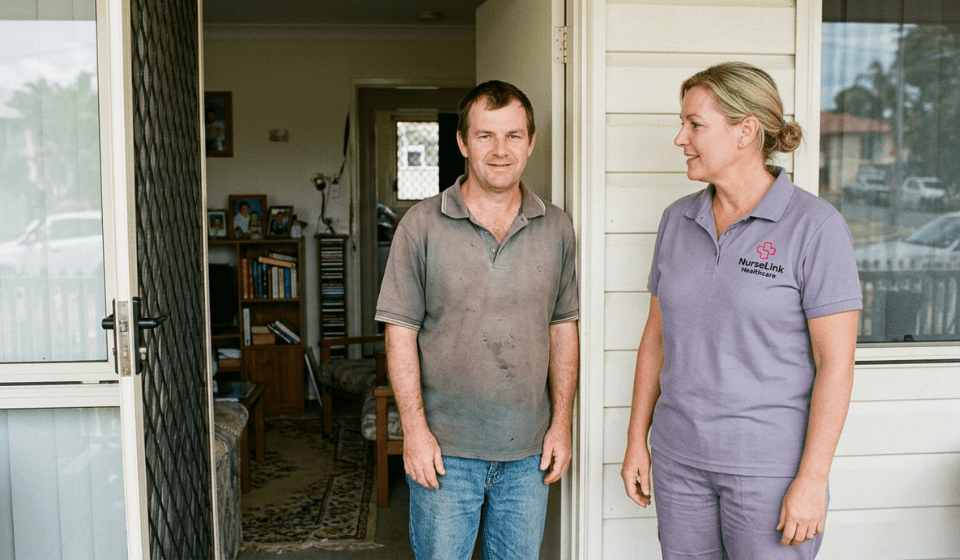
A Home That Was Finally His Own
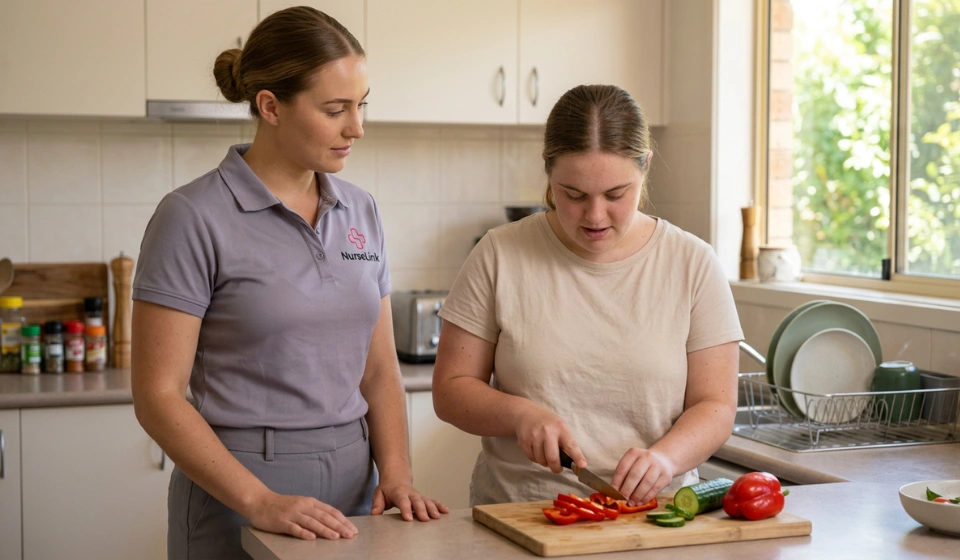
Learning To Do It Herself, With Someone Beside Her
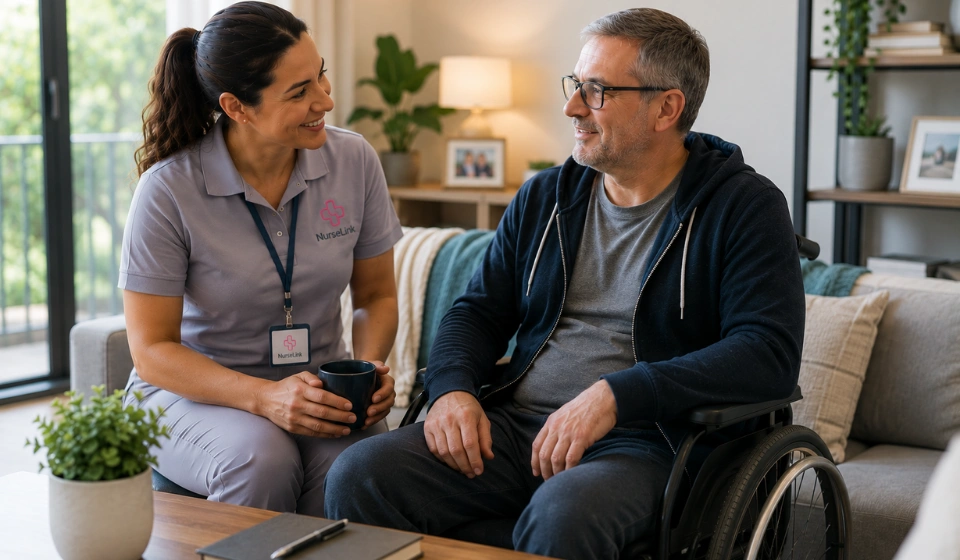
What Was Still Possible

Finding Her Way Back To Her Own Kitchen Table
From Aged Care To Her Own Front Door
She Was Ready. We Helped Her Get There.
Room To Breathe
The Man He Was Getting Back To
They Did Not Give Up On Him
Returning To Community Life
Rebuilding Independence After A Diabetes-Related Amputation
Cooking By Heart
The World Beyond The Front Door
Finding Home Again After A Stroke
Relearning Independence After A Life-Changing Accident
Beyond The Diagnosis
Two Years In Care. One Giant Step Toward Home.
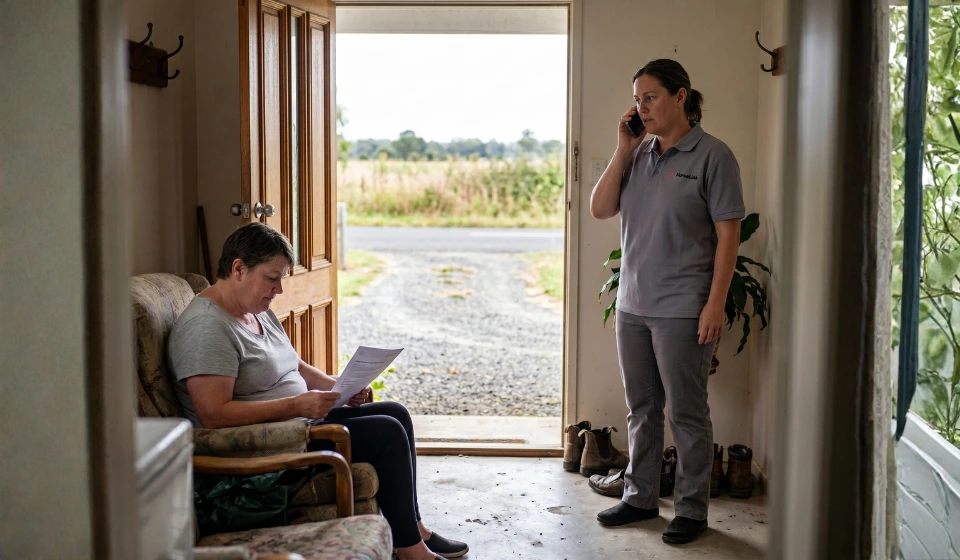
When Transport Barriers Disrupted NDIS Care

Supported Independent Living Success
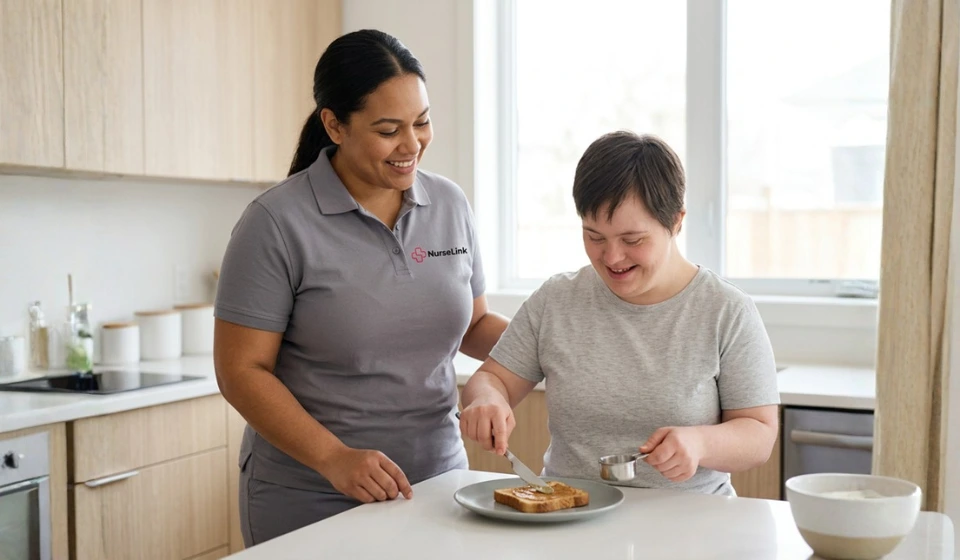
A Journey Towards Independence With NDIS Support

Daniel’s Journey