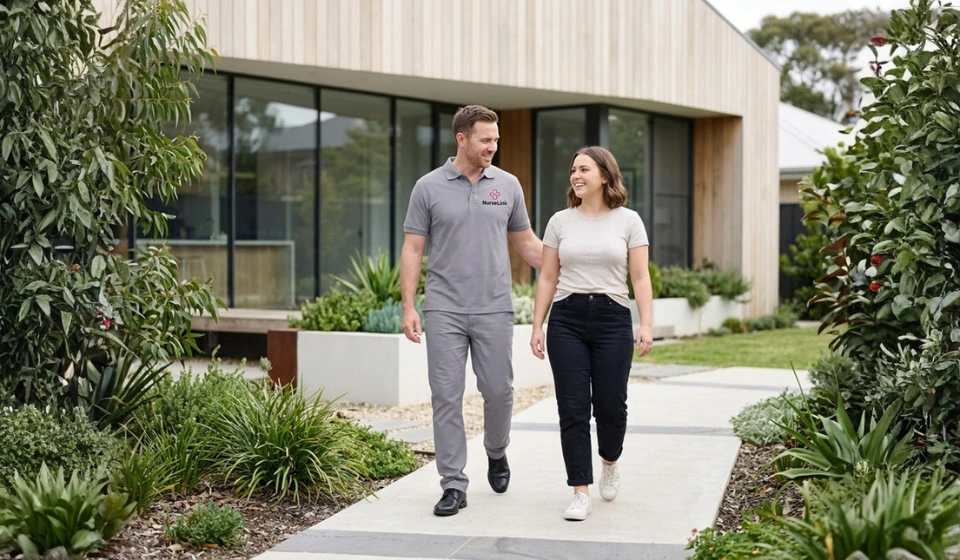
Learning To Do It Herself, With Someone Beside Her
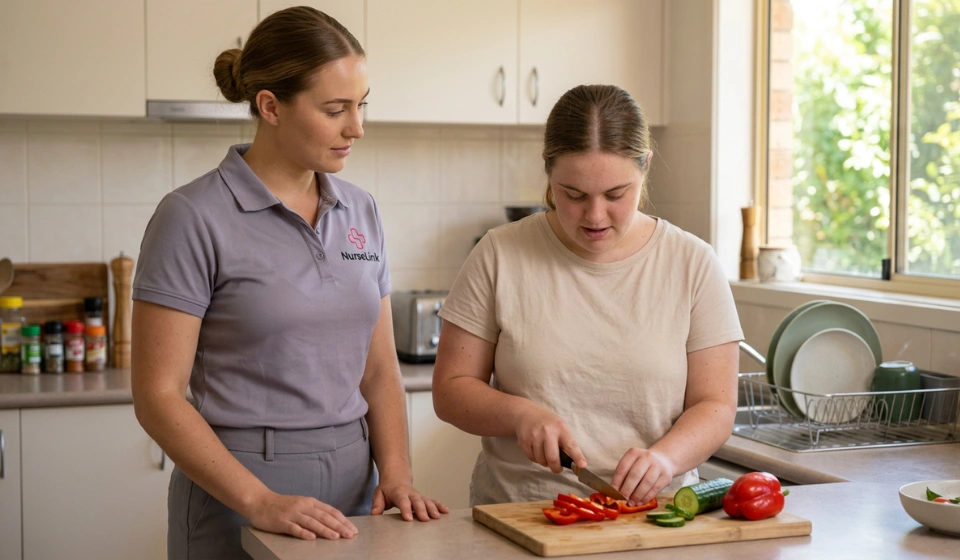
How NurseLink Healthcare Helped A Woman With An Intellectual Disability
A Case Study In NDIS Support That Balanced Genuine Skill-Building With Her Family's Trust
Introduction
For a young adult with an intellectual disability, the transition toward greater independence looks different than it does for most twenty-somethings, but the underlying want is often exactly the same. It is the want to make more of your own decisions, to manage more of your own day, to have a life that includes more than the routines your family has, out of love and necessity, built and maintained around you for years.
For families, this transition can bring a particular and understandable tension. They want their adult child to have every opportunity for genuine independence, and they carry, often quietly, real concern about safety, capability and what independence should actually look like in practice. Getting this balance right, building real skills at a genuinely appropriate pace while keeping a family’s trust intact throughout, is one of the more delicate pieces of work that NDIS support can do.
This case study documents how NurseLink Healthcare supported a woman in her early twenties in Melbourne, living with an intellectual disability, to build daily living skills and community participation over the course of an NDIS-funded engagement, moving her steadily toward a more independent life while keeping her family genuinely confident in the process the whole way through.
To protect the privacy of the participant and her family, all names and identifying details have been kept confidential throughout this case study.
The Participant & Her Family
The participant is a woman in her early twenties living with her parents and a younger brother in Melbourne’s outer north. She has a mild to moderate intellectual disability, diagnosed in early childhood, and had, throughout school and the years immediately after, lived a life that was warm, stable and closely supported by her family, but also, as she and her parents both increasingly recognised, more limited in scope than she wanted it to be as she moved further into adulthood.
She had finished a supported education program a couple of years before NurseLink Healthcare became involved and had, since then, spent most of her time at home or accompanied closely by her parents on the occasions she went out. She held part-time casual work at a local cafe two mornings a week, arranged and supported by her mother, which she enjoyed considerably, but beyond this her week had relatively little independent structure or activity of her own.
Her parents, who had spent over two decades as her primary carers and advocates, had begun, in the period before engaging NurseLink Healthcare, to think seriously about what her life might look like as she moved further into adulthood and as they themselves grew older. Her mother was candid, in the initial conversation, that she recognised her own instinct to manage every part of her daughter’s day had, with the best of intentions, left comparatively little room for her daughter to build and practise skills of her own, and that this was something she genuinely wanted to change, even though the idea of stepping back also made her anxious.
The participant herself, when asked directly what she wanted, was clear in a way that both moved and slightly unsettled her parents when she first said it plainly in a family conversation before the engagement began. She said she loved her family and loved her life at home, but she wanted to be able to do more things by herself, catch a bus somewhere on her own, cook a proper meal without her mother standing beside her, have friends of her own that she saw without a parent organising it. She was not asking to move out or to dramatically restructure her life. She was asking for more of it to belong to her.
Understanding What The Family Actually Needed
The initial NDIS planning conversation, and the subsequent assessment conducted by NurseLink Healthcare, involved the participant herself as the primary voice in the conversation, with her parents present and contributing, an approach the care coordinator was deliberate about from the outset, given how important it was that the plan reflect the participant’s own goals rather than only her family’s concerns.
The participant was clear about what she wanted to work on. She wanted to learn to use public transport independently, at least for a couple of familiar and manageable routes. She wanted to build her cooking skills to the point where she could prepare simple meals herself without supervision. She wanted help finding activities and social opportunities that were her own, rather than ones organised entirely by her parents, and she specifically mentioned wanting to make friends outside her family who she saw regularly and independently.
Her parents’ needs, which the care coordinator drew out carefully alongside the participant’s own goals, centred on trust and pacing. Her mother needed to see, concretely and incrementally, that each new piece of independence was being built safely and appropriately before the next one was introduced, rather than experiencing the process as a series of unplanned leaps that outpaced her comfort. Her father, quieter in the conversation but clear when he spoke, said he wanted his daughter to have a genuinely fuller life, and that his primary condition for supporting that was simply seeing, step by step, that the people helping her build it were doing so carefully and competently.
The care coordinator was direct with the family about how the engagement would be structured to address this. Progress would be incremental, each new skill introduced only once the previous one was genuinely secure, and the family would be kept closely informed at every stage, not as a formality but as a genuine part of how trust would be built and maintained across the engagement.
The NurseLink Healthcare Solution
A Support Worker Matched For Patience And Genuine Rapport
NurseLink Healthcare assigned a support worker with substantial experience supporting young adults with intellectual disabilities toward greater independence, chosen for a warm, patient manner and a demonstrated ability to build genuine rapport with clients, understanding that the participant’s engagement and confidence would depend heavily on trusting and genuinely liking the person supporting her. Before the engagement began, the support worker met the family for an informal introductory visit, understanding that her own relationship with the parents, not only with the participant, would matter to how comfortably the family settled into the arrangement.
Building Public Transport Confidence, One Route At A Time
The daily living skills component of the engagement began with public transport, identified early as one of the participant’s strongest personal priorities. The support worker and participant practised a single, familiar bus route together repeatedly, with the support worker gradually stepping back from active guidance across successive trips, first riding beside her, then a seat away, then waiting at the destination rather than riding the full route, building the participant’s independent confidence incrementally rather than all at once.
Once this first route was genuinely secure, demonstrated over several independent trips with the support worker’s confirmation, a second, slightly more complex route was introduced using the same gradual, staged approach. By the later stage of the engagement, the participant was independently using both routes for regular purposes of her own, including travelling to a community activity she had chosen herself.
Cooking Skills Built Toward Genuine Independence
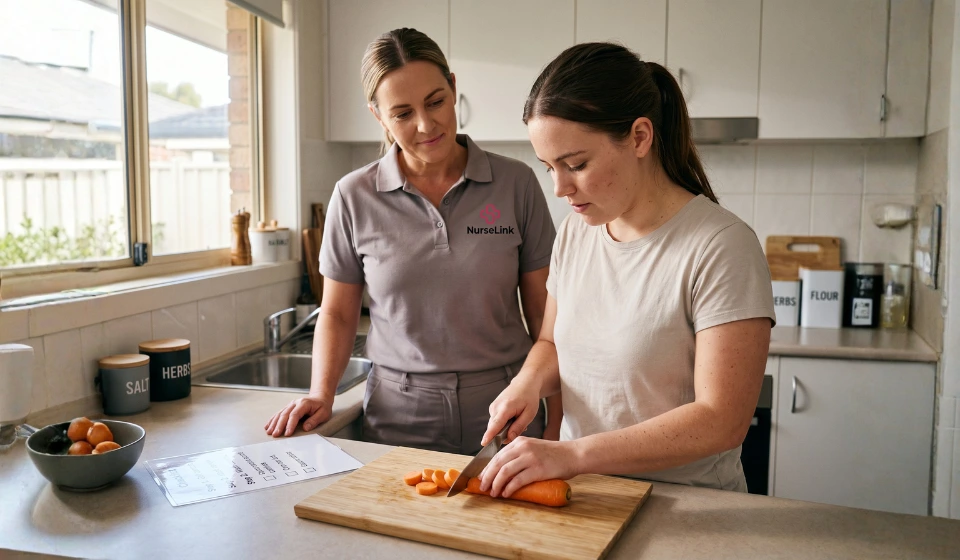
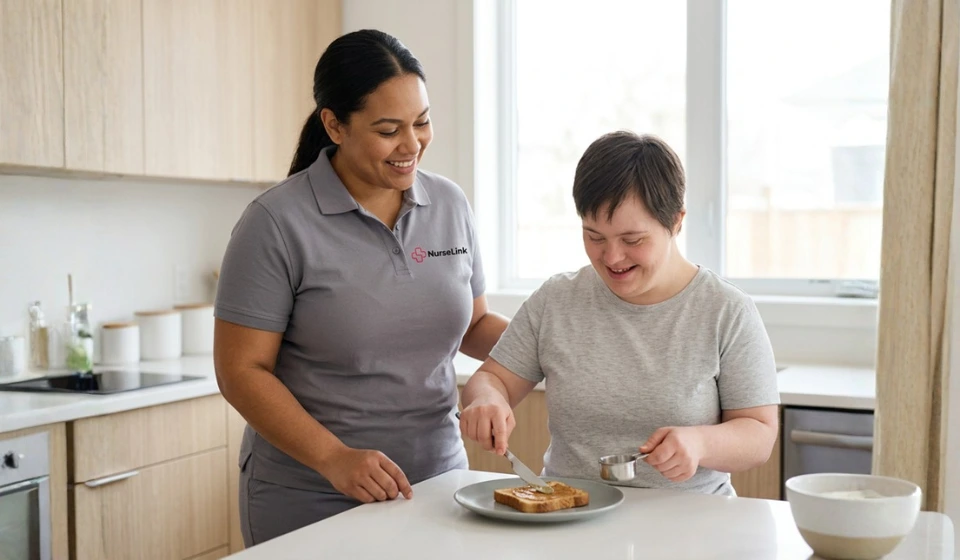
In parallel, the support worker worked with the participant on cooking skills, starting with simple, familiar meals and building steadily toward a small, reliable repertoire she could prepare herself with genuine confidence. Sessions were structured so the participant did as much of the actual preparation as she was capable of at each stage, with the support worker’s role shifting deliberately from active involvement to supervision to, eventually, simply being present in the house while the participant cooked independently.
Her mother, initially anxious about stepping back from a task she had managed closely for years, was invited to observe several of the later sessions, which the care coordinator identified as an important part of building her own trust in the process alongside her daughter’s growing skill.
Finding Community & Friendship That Belonged To Her
The community participation component of the engagement focused on helping the participant find activities and social connections genuinely her own, rather than ones organised around her by her family. Working from her stated interests, she and the support worker explored a couple of local community groups before she settled on a weekly social and recreation group specifically for young adults, which she began attending regularly, initially with the support worker present and gradually, as her comfort in the group grew, with reduced and then no direct support required during the sessions themselves.
Within this group, she began forming genuine friendships of her own, including a friendship with another young woman in the group that developed, over several months, into a connection the participant maintained independently, arranging to see her outside the group’s scheduled sessions, a piece of genuinely self-directed social life that had not existed before the engagement began.
Keeping Her Parents Genuinely Informed & Reassured
Throughout the engagement, the support worker maintained regular, substantive contact with the participant’s parents, not simply confirming that sessions had occurred but sharing concrete detail about the specific progress being made at each stage, so the family’s growing comfort with each new piece of independence was built on genuine visibility into the process rather than blind trust. This approach, the care coordinator noted, was central to why the family remained supportive and engaged throughout, even as the scope of the participant’s independent activity expanded considerably over the course of the engagement.
Outcomes & Impact
Genuine, Demonstrated Independent Travel Skills
By the later stage of the engagement, the participant was independently and reliably using two familiar public transport routes for her own purposes, a skill that had not existed at the outset and that materially expanded the scope of what she could do without requiring a family member’s direct involvement.
A Real, Growing Cooking Repertoire
She had built a small but genuine repertoire of meals she could prepare independently and confidently, a skill her mother described, at a family review call, as one of the changes she had least expected to see so clearly demonstrated, having previously assumed her daughter would always need close supervision in the kitchen.
A Social Life That Belonged To Her
The friendship formed through her weekly community group, and her own independent efforts to maintain it, represented an outcome that mattered enormously to the participant personally. She described, at a later review conversation, having a friend she saw because she wanted to and had arranged herself, rather than a friendship organised by her parents, as one of the things she was proudest of from the entire engagement.
Her Parents' Trust In Her Growing Independence
Perhaps the most significant outcome from her family’s perspective was the shift in her parents’ own confidence, built incrementally and genuinely across the engagement rather than assumed from the outset. Her mother, reflecting at a later review call, said she had begun the engagement anxious about stepping back and had ended it with a level of trust in her daughter’s growing capability that she had not expected to feel so fully or so soon.
A Foundation For Continued Growth
By the end of the documented engagement period, the family and the participant, together with her support worker, had begun discussing further goals building on the foundation established, including a possible increase in her hours at the cafe and further exploration of independent activities, discussions that were only possible because of the trust and demonstrated capability the engagement had built.
A Reflection From The Participant
Near the end of the engagement, she shared the following with the NurseLink Healthcare care coordinator:
“I love my mum and dad and I love living at home, but I wanted more things that were just mine. Now I can catch the bus to my group by myself. I can cook dinner for my family without anyone standing over me. I have a friend I text and see because I want to, not because someone organised it. My mum used to worry about all of this. Now she just asks me how my day was, like she would ask anyone. That is the biggest change of all, I think. She trusts me now.”
Key Takeaways From This Case Study
Independence for a young adult with an intellectual disability should be built incrementally and demonstrably, not assumed all at once. Staged skill-building, with each step genuinely secured before the next is introduced, produces durable capability and, just as importantly, durable family trust.
The participant’s own goals should lead the plan. This engagement succeeded because the specific skills targeted, transport, cooking, community connection, were the participant’s own stated priorities, not goals set on her behalf by others.
Family trust is built through visibility, not just outcomes. Keeping parents genuinely informed of the concrete progress being made, rather than only the eventual results, allowed this family to grow comfortable with expanding independence at a pace that matched their own readiness alongside their daughter’s.
Genuine friendship and community connection are core outcomes, not peripheral ones. The self-directed friendship this participant built through her community group represented one of the most personally significant outcomes of the entire engagement, illustrating that social connection deserves the same deliberate attention as practical skill-building.
Conclusion
Building genuine independence for a young adult with an intellectual disability is delicate work, requiring patience, careful pacing and a family’s trust earned incrementally through visible, demonstrated progress. For the woman at the centre of this case study, NurseLink Healthcare provided support that built real skills at a genuinely appropriate pace, while keeping her family closely and confidently involved throughout, producing a young woman with a wider, richer and more genuinely her own life than she had at the outset.
She catches her own bus. She cooks her own dinner. And she has a friend she sees because she wants to, which is, in its own way, exactly the kind of independence she set out to build.
If you or someone you support is working toward greater independence and needs support that builds real skills while keeping your family’s trust intact, we encourage you to reach out to the NurseLink Healthcare team. We are here to help build a bigger life, one genuine step at a time.
Latest Post
Room To Breathe
The Man He Was Getting Back To
They Did Not Give Up On Him
Finding Home Again After A Stroke
Relearning Independence After A Life-Changing Accident
Beyond The Diagnosis
Two Years In Care. One Giant Step Toward Home.
When Transport Barriers Disrupted NDIS Care
Supported Independent Living Success
A Journey Towards Independence With NDIS Support
Daniel’s Journey