The Life He Thought The Accident Had Collapsed
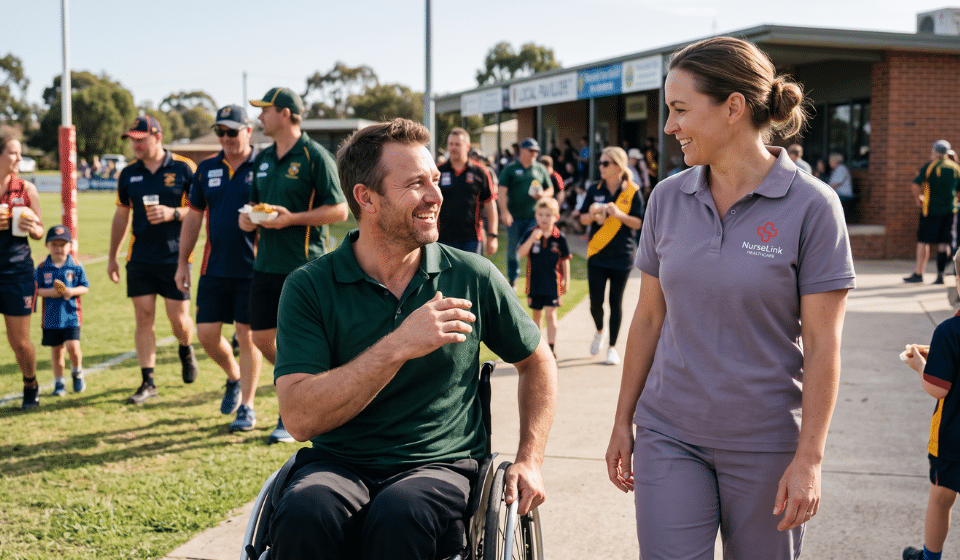
How NurseLink's NDIS Support Helped A Shepparton Man Rebuild Independence After A Spinal Cord Injury
A Case Study In Mobility Support That Looked Beyond The Wheelchair To The Life Behind It
Introduction
A spinal cord injury changes a life in ways that extend well beyond the physical. For many people navigating the early years after such an injury, the practical challenges, transfers, equipment, home modifications, are often more manageable, in the end, than the quieter loss that tends to follow: the sense that the life they had planned, the independence they had taken for granted, the future they had assumed for themselves, has been permanently and irreversibly narrowed.
Good NDIS support recognises that mobility assistance alone rarely addresses this. A participant can receive every piece of correctly prescribed equipment and every hour of appropriately funded personal care, and still remain, in the ways that matter most to how he sees his own future, stuck. The task is not simply to make daily physical tasks possible again. It is to help someone rebuild a sense that their own life, and not just their body, still belongs to them.
This case study documents how NurseLink Healthcare provided mobility and personal care support to a man in his early forties in Shepparton, whose incomplete spinal cord injury following a workplace accident had left him navigating a world redesigned almost entirely around able-bodied assumptions, and how a support approach built around his own goals, not just his physical needs, helped him return to a genuinely independent life.
To protect the privacy of the client, all names and identifying details have been kept confidential throughout this case study.
The Client & His Situation
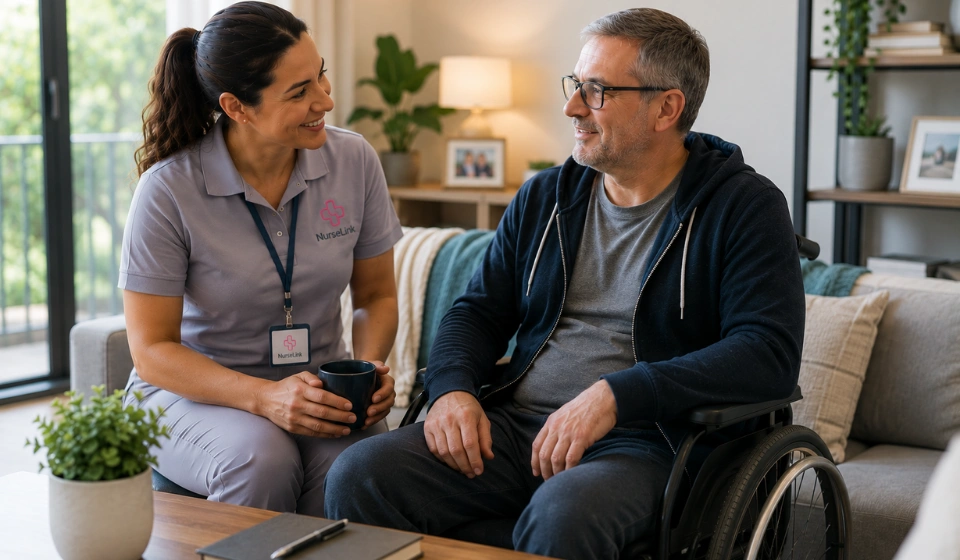
The client is a man in his early forties living in Shepparton, a qualified electrician and father of two, whose incomplete spinal cord injury, sustained in a fall at a workplace site eighteen months prior, had left him with significant lower limb weakness and reliance on a wheelchair for most daily mobility, alongside limited capacity for the standing and manual work his trade had always required.
The eighteen months since the accident had been, by his own account, a slow and often disheartening process of adjustment. He had received competent acute rehabilitation and appropriately prescribed equipment, a wheelchair, a modified vehicle hoist, grab rails through a home modification grant, but had, by the time his NDIS plan was reviewed and support coordination referred him to NurseLink Healthcare, largely stopped leaving the house beyond medical appointments. He had not returned to any form of work. His previous social life, built substantially around the football club he had played for and later coached at, had quietly fallen away, not because anyone had excluded him but because he had stopped putting himself in situations where his wheelchair felt like the only thing anyone would see.
His wife, present for the initial contact with his support coordinator, described a man who had become, in her words, a version of himself that mostly stayed home, competent and independent within the house but increasingly reluctant to engage with anything beyond it, a pattern she worried was becoming permanent rather than a phase of early adjustment.
Understanding What He Actually Needed
The initial assessment, conducted by a NurseLink Healthcare support coordinator in his home, identified a picture common to this stage of adjustment after a significant physical injury, a client whose practical needs, personal care assistance with morning routines, support with transfers, and general mobility assistance, were being met adequately, but whose broader goals, the things that had originally motivated his NDIS plan, community participation, a pathway back toward some form of meaningful work, remained largely untouched.
He needed, first, consistent and genuinely competent physical support that let him trust the practical side of his day without having to think constantly about it, morning personal care and transfer assistance delivered efficiently and respectfully, so that the physical foundation of his day was no longer something requiring conscious effort and worry.
But the coordinator recognised, from his own comments across the assessment, that what he actually wanted, beneath the practical requests, was a pathway back toward relevance, some version of purposeful activity, whether that meant an adapted return to his trade, further study, or simply a reason to leave the house that did not feel like a medical outing. He mentioned, almost in passing, that he had once considered training apprentices and had wondered, without much conviction, whether there was some way to use what he knew without needing to be the one physically doing the wiring.
His wife added that what she needed, beyond the practical support, was to see some sign that her husband’s world was widening again rather than continuing to shrink, a concern the coordinator treated as central to the support plan rather than incidental to it.
The NurseLink Healthcare Solution
Reliable Personal Care As The Foundation, Not The Whole Plan
NurseLink Healthcare assigned a consistent support worker for his morning personal care and transfer assistance, chosen for both technical competence with manual handling and a manner the coordinator judged would build easy rapport rather than clinical distance. Establishing this reliable foundation quickly, without drama or disruption to his routine, freed up both his energy and his trust for the broader work the coordinator believed mattered more.
Goal Setting That Started With Curiosity, Not A Form
Rather than working through a standard goals checklist, the support coordinator spent much of the early engagement simply asking him about his working life before the accident, what he had enjoyed about it, what skills he still felt confident in, and what had made him hesitate when he mentioned training apprentices. This unstructured conversation, more than any formal assessment, surfaced the outline of a genuinely achievable goal that a checklist alone would likely have missed.
Exploring A Modified Return To His Trade
Working with his support coordinator, the client was connected with a local TAFE offering a Certificate IV in Training and Assessment, alongside exploration of a role as a workplace assessor or trainer within the electrical trade, a pathway that used his deep technical knowledge without requiring the physical manual work his injury now prevented. Community access support was funded to assist with transport and initial orientation visits to the TAFE campus, easing what had otherwise felt, to him, like an overwhelming first step.
Rebuilding Community Connection Alongside Practical Goals
Recognising that his withdrawal from the football club represented a loss as significant as his career disruption, the support coordinator gently raised the idea of reconnecting, not as a player but potentially in a coaching or committee capacity, a conversation he initially brushed off but returned to himself several weeks later. Community access support subsequently assisted with his first return visits to the club, easing the practical and emotional barriers to a return that had previously felt too difficult to attempt alone.
Support That Adjusted As His Confidence Grew
As his TAFE enrolment progressed and his visits to the football club became more regular, his support coordinator gradually reduced the intensity of community access support in those areas, shifting funded hours toward the personal care and equipment needs that remained constant, an adjustment made collaboratively rather than imposed, reflecting his genuinely increasing independence rather than an arbitrary plan timeline.
Outcomes & Impact
He Completed His Certificate IV & Began Working Again
Within a year of beginning the engagement, the client completed his Certificate IV in Training and Assessment and secured part-time work as a workplace trainer and assessor with a regional electrical contractor, a role that drew directly on his trade expertise while accommodating his physical limitations.
He Reconnected With His Football Club
He returned to his former football club in a coaching support role within the junior program, a connection his wife described as having visibly changed his mood and outlook well beyond the specific hours he spent there each week.
His Daily Personal Care Became Reliable & Unremarkable
The consistent personal care support established early in the engagement remained a stable, low-friction part of his daily routine throughout, freeing his attention and energy for the broader goals the coordinator had helped him identify.
His Sense Of Identity Was Restored
Perhaps most significantly, his wife reported that the man who had spent much of the previous eighteen months staying largely at home had genuinely returned, engaged, purposeful and reconnected to the parts of his life that had once defined him, changes she attributed directly to a support plan that had looked beyond his wheelchair to the life he actually wanted back.
His Support Needs Became More Sustainable
By addressing his broader goals alongside his physical care needs, his overall support plan became more sustainable and better aligned with genuine long-term independence, rather than remaining indefinitely focused on physical assistance alone.
A Reflection From The Client
Toward the end of his first year working again, he shared the following with his NurseLink Healthcare support coordinator:
He said that for a long time after the accident, everyone around him seemed focused on what he could no longer do, and somewhere in that, he had started believing that his life from here on was mostly going to be about managing what he had lost. What changed things for him was a coordinator who kept asking about what he actually wanted, rather than just what equipment or care hours he needed, and who took an offhand comment about training apprentices seriously enough to help him do something about it. He said walking back into the football club for the first time in over a year was harder than starting the course, but that having support for that first visit meant he didn’t have to face it entirely alone. He said he still has bad days, but that he now has a job he’s good at and a club he belongs to again, and that most days, he feels like himself rather than like someone managing an injury.
Key Takeaways From This Case Study
Meeting physical needs adequately does not automatically address a participant’s broader goals. This client’s personal care and equipment needs were well managed for eighteen months, yet his sense of purpose and community connection had quietly disappeared alongside them.
Unstructured conversation often surfaces genuine goals that formal assessment tools miss. An offhand comment about training apprentices became the foundation of a real career pathway, but only because the coordinator was listening for it.
Using existing skills and expertise, adapted rather than discarded, can be more empowering than starting entirely new pursuits. Supporting a return to his trade in a modified form respected the identity he had built over decades, rather than asking him to abandon it.
Community reconnection deserves the same deliberate support as vocational goals. Facilitating his return to the football club addressed a form of loss that was just as significant to his wellbeing as his career disruption, even though it appeared nowhere on a clinical checklist.
Support plans should evolve as independence grows. Gradually shifting funded hours as his confidence and community connections strengthened reflected genuine progress, rather than support remaining static regardless of a participant’s changing needs.
Conclusion
A man who had, quietly and without anyone quite noticing, begun living a smaller version of his life following a life-changing injury, found his way back to purpose and connection through NDIS support built around who he actually was, not just what his body could no longer do. For the client at the centre of this case study, NurseLink Healthcare provided not only reliable, competent personal care, but the genuine curiosity and support that helped him rebuild a life he recognised as his own.
He trains apprentices now. He coaches junior football on Saturday mornings. And the life he once believed the accident had ended is, in most of the ways that matter to him, genuinely his again.
If you or someone you love is navigating life after a significant injury, we encourage you to reach out to the NurseLink Healthcare team. We are here to support the whole life you want back, not just the tasks that need managing along the way.
Latest Post
When Parents Learned to Trust NDIS Support
The Life He Thought The Accident Had Collapsed
Someone Finally Holding The Whole Picture
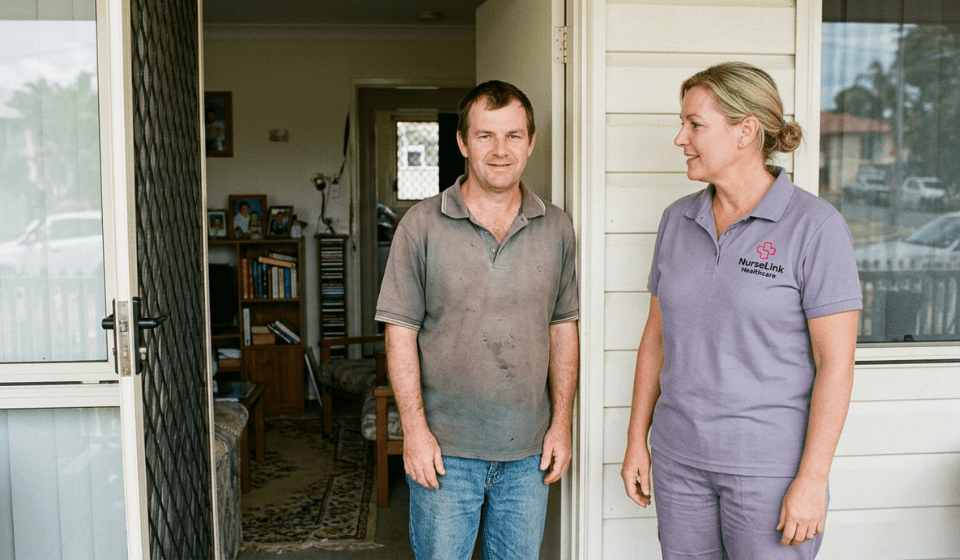
A Home That Was Finally His Own
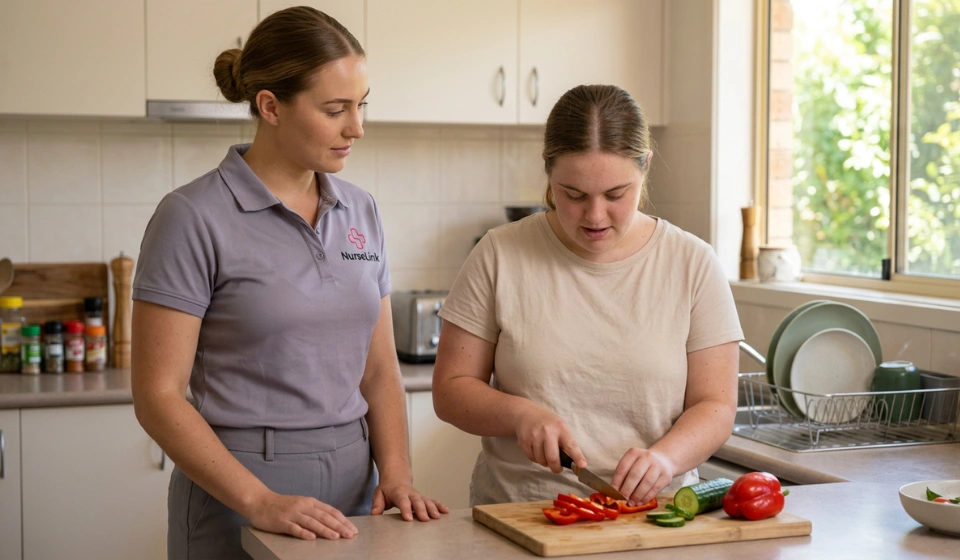
Learning To Do It Herself, With Someone Beside Her
What Was Still Possible
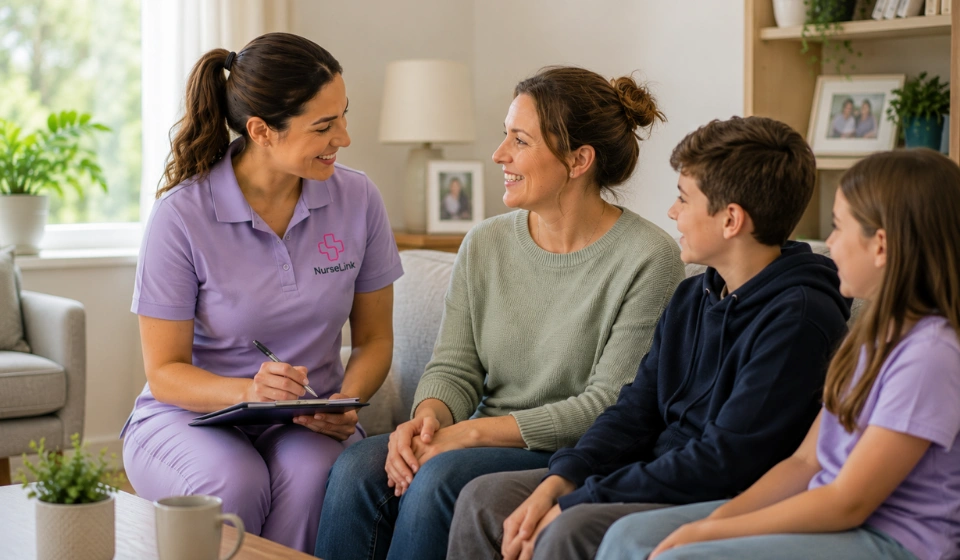
Finding Her Way Back To Her Own Kitchen Table
From Aged Care To Her Own Front Door
She Was Ready. We Helped Her Get There.
Room To Breathe
The Man He Was Getting Back To
They Did Not Give Up On Him
Returning To Community Life
Rebuilding Independence After A Diabetes-Related Amputation
Cooking By Heart
The World Beyond The Front Door
Finding Home Again After A Stroke
Relearning Independence After A Life-Changing Accident
Beyond The Diagnosis
Two Years In Care. One Giant Step Toward Home.
When Transport Barriers Disrupted NDIS Care
Supported Independent Living Success
A Journey Towards Independence With NDIS Support
Daniel’s Journey