Room To Breathe

How NurseLink Supported A Young Man With Autism Through His Transition
A Case Study In NDIS Support That Gave A Brisbane Family Back The Space To Be A Family Again
Introduction
The transition from school to adult life is difficult for most young people. There is uncertainty about what comes next, the loss of structure that school provided and the particular anxiety of stepping into a world that does not organise itself around you the way a good school does. For most young people, this uncertainty is temporary. The world gradually becomes familiar, the structure is rebuilt around employment or study or the rhythms of adult life, and the transition, however awkward, resolves itself into something workable.
For a young person with autism and severe anxiety, the transition from school to the community is not a difficult period that resolves. It is a cliff edge, approached at the end of years of structured support, after which the world that was not designed for them becomes the world they are expected to navigate without the safety net of a school system that at least tried to accommodate them. The loss of that structure, the familiar teachers and routines and the environment that had been, however imperfectly, shaped around their needs, can produce a period of crisis that the family managing it experiences as something close to freefall.
The families who land in this period are often families who have been managing for a long time already. Who have spent years advocating for their child within a school system, attending meeting after meeting, pushing for adjustments and resources and the particular kind of understanding that does not come naturally to a system built around neurotypical assumptions. They arrive at the school-to-community transition already depleted, and they find at the end of the school years not a resolution but a new set of battles to fight, in a new system, for a child who is now technically an adult but who needs support that the adult system has not yet found a way to provide adequately.
At NurseLink Healthcare, we understand the weight of this transition and the weight of the family managing it. This case study documents how our team supported a young man with autism and severe anxiety in Brisbane, Queensland, through his transition from school into the community, and how the right NDIS support gave a family that had been managing in crisis mode for years the space to find something they had almost forgotten was possible.
To protect the privacy of the client and his family, all names and identifying details have been kept confidential throughout this case study.
The Young Person & His Family's Situation
The young person at the centre of this case study is a man in his late teens living in Brisbane’s outer northern suburbs with his parents and his younger sister. He was diagnosed with autism spectrum disorder in early childhood and had spent his school years in a combination of specialist and mainstream educational settings, supported by a family that had been, from the earliest years, thorough and tenacious in advocating for what he needed.
He is, in the ways that matter most to his family, a person of considerable qualities. He has an encyclopaedic knowledge of a specific area of interest that he has pursued with the intensity and the depth that is one of the particular gifts of the way his mind works. He has a dry, precise sense of humour that the people who know him well appreciate and that people who do not know him well often miss. He has strong moral convictions and expresses them with a directness that can be disarming and that his parents have always found, privately, one of the things they love most about him.
He also has severe anxiety that manifests in ways that have shaped the structure of his family’s life for years. Transitions between activities, environments and people are significant events that require careful preparation. Unexpected changes to routine produce responses that range from visible distress to complete shutdown. Social situations outside his immediate family and small trusted circle carry a level of threat perception that is not proportionate to their actual risk but that is entirely real to him and that no amount of reassurance resolves. And the sensory environment of the community, the noise, the unpredictability, the proximity of strangers, represents a daily gauntlet that requires more energy to navigate than most people can imagine.
His school years had provided, at their best, the structure and the support that made his days manageable. His final years of school had been, by his parents’ account, among his more stable. The teachers who knew him understood him. The routines were established. The environment, however imperfect, was known.
When school ended, the structure ended with it. And the family, which had spent years managing the particular demands of supporting a child with autism and severe anxiety through the school system, found themselves managing the same demands in an environment that provided significantly less scaffolding.
What The Family Had Been Living With
The twelve months between his final year of school and the engagement with NurseLink Healthcare had been, in his mother’s description, the hardest year of their lives since his early childhood diagnosis. Not because his autism had changed. Because the world around it had.
Without the structure of school, his days had lost the scaffolding that had made them navigable. He had spent increasing amounts of time at home, in the parts of the house where he felt safest, disengaging from the community activities that his parents had tried to maintain and withdrawing from the social connections that his school years had, however tenuously, provided. His anxiety, without the containing structure of a predictable routine, had intensified in ways that affected every dimension of his daily life.
His parents had been managing this alongside their own work, alongside their younger daughter, and alongside the particular exhaustion of parents who have been managing something significant for a long time and had hoped that the end of school would represent a transition toward something better rather than a transition into something harder.
His father, who worked long hours in a management role and who had always been the parent who dealt with the practical and logistical dimensions of his son’s support while his mother managed more of the daily care, had begun to show the signs of accumulated strain that his wife recognised and that he did not fully acknowledge. He was less patient than he had been. He was sleeping badly. He had stopped doing the things he did to manage his own stress because there was no time for them.
His mother had attended several NDIS planning meetings and had navigated the funding application process with the same thoroughness she brought to everything related to her son’s care. The plan was in place. The funding was approved. What had not been in place was a provider who could translate the funding into support that actually worked for her son, in the specific and demanding way that his autism and anxiety required.
Two previous providers had been tried. Both had sent support workers who were, in her assessment, well-intentioned and insufficiently prepared. The first had lasted three weeks before his anxiety around the unfamiliar worker had produced a level of distress that the worker was not equipped to manage and that had resulted in an incident that the family had spent several days managing the aftermath of. The second had lasted longer but had provided support that was, in her precise and carefully measured words, adequate for a different person with different needs.
The NDIS plan coordinator who had been working with the family referred them to NurseLink Healthcare with a specific and honest account of the history that preceded the referral.
Understanding What He & His Family Actually Needed
The initial assessment NurseLink Healthcare conducted was approached with specific awareness of the failed previous arrangements and the particular sensitivity that this history had produced in the family. His mother, who had been the primary point of contact for every previous assessment and who had described his needs many times to people who had subsequently demonstrated that they had not fully understood them, was given the time and the space to describe her son in the way she needed to describe him, without being hurried toward the clinical categories that assessment frameworks tend to organise themselves around.
She described his autism and his anxiety with clinical precision, because she had been managing both for long enough to understand them with the depth of a person who has lived alongside something for years. She described the specific transition strategies that worked and the ones that had been tried and had not. She described the sensory profile that determined which environments were manageable and which were not. She described the communication approach that allowed him to engage and the communication failures that produced shutdown. She described what a good day looked like and what a difficult day looked like and the early indicators that distinguished one from the other before it became too late to manage the trajectory.
She also described what she needed from this arrangement in terms that were different from the clinical description of her son’s needs. She needed to stop being in crisis management mode. She needed to be able to go to work in the morning without spending the day managing her anxiety about how he was and what was happening at home. She needed her husband to sleep. She needed her daughter to have parents who were not entirely consumed by the management of her brother’s situation. She needed, and she said this last, to be able to sit in the same room as her son in the evening and feel something other than worried.
He was present for part of the assessment, which had been planned around the time of day when his anxiety was typically lowest and in the space in the house where he was most regulated. He did not say a great deal, but what he communicated was consistent with what his mother had described. He wanted, in the way that he expressed things, support that did not require him to manage the support worker’s reaction to him. He had experienced, with previous workers, the particular burden of feeling responsible for making an unfamiliar person comfortable in his presence, and it was a burden he was not willing to take on again.
The NurseLink Healthcare Solution
A Support Worker Selected With Exceptional Care
The selection of the right support worker for this engagement was the most consequential decision NurseLink Healthcare made, and it was made with the specific and detailed picture of the young person that the assessment had produced rather than with the generic requirements of an autism support placement.
NurseLink Healthcare identified a support worker whose background included specific experience in supporting young adults with autism and anxiety, including experience with transition support from school to community settings, which was the specific context this engagement required. She had training in low arousal approaches, a working familiarity with a range of augmentative communication systems and the personal qualities that the care coordinator had assessed as essential for this particular young person.
Those personal qualities were specific. She needed to be a person who did not require managing. Who did not produce the social demand that unfamiliar people produce in a young man whose nervous system interprets social interaction as inherently threatening until proven otherwise. Who could be present in his environment without her presence being an event that required his attention and his energy to manage. Who was, in the language of the autism community, low demand in her manner, not passive or disengaged but genuinely, naturally unhurried and undemanding in a way that was not a professional technique but a way of being.
She was identified, briefed comprehensively and introduced to him through a gradual process that was planned across several weeks rather than a single initial visit. The first contact was a photograph and a brief introduction sent to his parents, which they shared with him in his own time. The second was a brief, low-key visit to the family home in which she came for a cup of tea with his parents and was present in the house without making any demand on him, which allowed him to observe her from a distance in the way that felt safe rather than being introduced to her in a way that required a response. The third was a longer visit in which she and his parents talked while he moved in and out of the room as his comfort allowed.
He acknowledged her at the end of the third visit. He did not say anything. He looked at her directly for a moment on his way out of the room. His mother, watching, did not say anything either. She messaged the care coordinator that evening and said it was going better than the others had.
A Routine Built From The Ground Up Around His Needs
The support plan NurseLink Healthcare developed was not built from a template. It was built from the specific information the assessment had produced about what his days could contain, what they could not contain, what the transition toward community participation needed to look like and at what pace it needed to move.
In the earliest weeks, the support visits were structured entirely around his home environment and the activities that he engaged in there, because the home was the regulated environment and the community was the goal, not the starting point. His support worker came to his house and worked alongside him in the activities that were already part of his routine, establishing her presence as a familiar and safe element of his day before introducing anything that required him to extend beyond it.
The transition toward community activities was planned in careful increments, with each step communicated to him in advance, practised in imagination before it was attempted in reality and evaluated afterward with his input. The local library, which was quiet and predictable and which aligned with his specific area of interest, was the first community setting they visited together. The visit was brief, planned entirely around his comfort, and evaluated not by what had been achieved but by how he had experienced it.
He said it was okay. His support worker communicated this to his mother. His mother told the care coordinator and said she was trying not to cry.
Anxiety Management Built Into Every Interaction
The support worker’s approach to his anxiety was built on the low arousal principles that his mother had identified as the clinical framework most consistent with what worked for him, applied not as a set of techniques deployed in response to difficult moments but as the foundational approach to every interaction.
She did not push. She did not encourage in the ways that well-meaning people encourage, which can feel like pressure to a person whose anxiety is already managing the gap between what is expected and what feels possible. She followed his lead in the way that genuine support follows a person’s lead, offering options rather than directions, providing information without requiring responses and managing her own affect with the steadiness that allowed his nervous system to regulate against hers rather than against the anxiety that an anxious support worker would have amplified.
When difficult moments arrived, she managed them with the calm, matter-of-fact competence of someone who had seen difficult moments before and understood them as information rather than as failures. She documented them accurately and communicated them to his mother and the care coordinator without alarm and without the narrative of crisis that previous workers had inadvertently applied to events that were, in the context of his autism and anxiety, ordinary parts of his experience.
His mother noticed the difference in how difficult moments were communicated to her. She had been receiving accounts of incidents that were framed as problems to be solved or evidence of deterioration. She began receiving accounts that were framed as information about how he was managing and what had been tried in response. The difference in framing was the difference between a mother who spent the day managing her anxiety about what the next incident would look like and a mother who had information she could work with.
Building Community Participation At His Pace
Across the months of the engagement, his community participation grew in the gradual, non-linear way that genuine progress in this context looks like. There were weeks of forward movement and weeks where something that had been manageable the previous week was not manageable this week, and the support plan absorbed these variations as the expected rhythm of a recovery that was happening on his terms rather than on a projected timeline.
By the sixth month, he was attending the library regularly. He had begun attending a small group activity organised around his specific area of interest, identified by his support worker through careful research and attended initially with her present and subsequently with her in the background. He had taken a public transport journey with her and then, several weeks later, without her.
His mother heard about the solo journey from him, which was itself notable. He did not typically volunteer information about his day. He told her, briefly and with the precision that characterised how he communicated things that mattered to him, that he had done it and that it had been fine.
She did not say much in response because she did not trust herself to say the right thing in that moment. She said fine was good. He agreed that fine was good. They watched television together and she held onto the moment in the way that parents hold onto the moments that have cost a great deal to arrive at.
Giving The Family Back Its Equilibrium
The effect of a support arrangement that was genuinely working extended through the family in ways that were specific and measurable. His mother returned to work with a quality of attention that had not been available to her when the crisis management of his situation was consuming the parts of her mind she needed for other things. His father began sleeping better, which he attributed to nothing in particular but which his wife attributed to the fact that the daily management of their son’s situation had reduced from something that required constant vigilance to something that was being handled by people who knew what they were doing.
His younger sister, who had spent years managing the particular experience of growing up in a household where her brother’s needs were necessarily the primary focus and who had absorbed this with the quiet adaptability of a child who loves her family and does not want to add to its weight, began to have parents who had some capacity for her that the previous year had not provided. Her mother noticed this and felt the particular guilt of a parent who recognises something she had not been able to give and is now, with something like relief, able to.
The family did not become a different family. His autism and his anxiety were still the defining organising features of their daily life. But the intensity of the management had changed. The crisis register that had characterised the previous year had given way to something that, while still demanding, felt sustainable in a way that the crisis register had not.
His mother described it to the care coordinator at a review meeting eight months into the engagement as being able to breathe. Not deeply, she said. But enough. Enough to feel like themselves again.
Outcomes & Impact
His Community Participation Grew Meaningfully
Across the engagement period, his participation in the community grew from near-complete withdrawal to a level of regular, structured community engagement that his family had not believed would be achievable in the timeframe it was achieved in. The library visits, the interest group, the public transport journey, the gradual expansion of the environments that felt navigable, these were not small outcomes in the context of where the engagement had begun. They were the evidence that the transition from school to community, which had felt like a cliff edge, was navigable with the right support.
His Anxiety Was More Consistently Managed
The frequency and intensity of his most significant anxiety responses reduced across the engagement period in a way that his treating psychologist, reviewing his progress at a six month point, described as meaningful and attributed to the consistency and the quality of the support environment NurseLink Healthcare had created around him. The preventative approach of his support worker, which addressed the conditions that produced anxiety responses before they produced them, had achieved outcomes that the reactive management of previous providers had not.
The Family Found A Sustainable Way To Live
The most significant outcome of the engagement was the one that was hardest to measure and the most important to the family. They had stopped living in crisis. Not because the challenges had resolved, because they had not, but because the support around their son was adequate enough that the challenges were being managed rather than managed around. The distinction was the difference between a family that was surviving its own life and a family that was living it.
A Reflection From His Mother
Several months into the engagement, his mother shared the following with the NurseLink Healthcare care coordinator:
“The year before NurseLink, I spent every day managing the next crisis. I could not think ahead because thinking ahead meant thinking about what was coming and what was coming felt impossible to manage. What NurseLink gave us was not a solution to autism. There is no solution to autism. What they gave us was support that actually fit him, delivered by someone who understood him and who did not require him to manage her in order to receive her help. He is going to the library. He got on a bus by himself. I cried in the car. Not because it is small. Because it took everything we had to get here and we are finally here.”
Key Takeaways From This Case Study
The school-to-community transition for young people with autism requires specific, planned support. The end of school does not resolve the support needs of a young person with autism and severe anxiety. It removes the structure that had been containing them and exposes the family to a new set of challenges in a new system. NDIS support designed specifically for this transition is a clinical and practical necessity, not an optional addition.
Support worker selection for autism and anxiety placements is the most consequential decision in the engagement. A support worker whose manner produces social demand in a young person whose nervous system is already managing the world as a threatening environment will not build the relationship that effective support requires. NurseLink Healthcare’s selection process attended to personal qualities as carefully as clinical credentials.
Community participation must be built from the participant’s regulated environment outward. A support plan that begins with community participation goals and works backward to the participant’s current capacity is a plan that will produce anxiety rather than progress. NurseLink Healthcare’s approach began where the young person was, not where the plan said he should be, and built outward from there at his pace.
Family equilibrium is a clinical outcome of NDIS support. A family that is living in crisis management mode is not a family that can provide the consistent, regulated environment that a young person with autism needs. NDIS support that reduces the family’s crisis load produces direct clinical benefits for the participant that extend beyond what the support visits themselves provide.
Conclusion
The transition from school to the community is one of the most significant and most difficult periods in the life of a young person with autism and their family. The structure that school provided, however imperfect, is gone. The system that replaces it is not designed around the person navigating it. And the family that has been managing for years arrives at this transition already depleted and finds, too often, that the support available is not adequate for what the transition requires.
For the family at the centre of this case study, NurseLink Healthcare provided the NDIS support that made the transition possible. A support worker who understood him and whom he did not have to manage. A plan that began where he was and moved at his pace. A family that went from crisis management to something they had almost forgotten how to describe.
He got on a bus by himself. His mother cried in the car. That is the measure of it.
If your family is navigating the school-to-community transition and the weight of it has become more than you can manage alone, we encourage you to reach out to the NurseLink Healthcare team. We are here to help you find room to breathe.
Latest Post
When Parents Learned to Trust NDIS Support
The Life He Thought The Accident Had Collapsed
Someone Finally Holding The Whole Picture
A Home That Was Finally His Own
Learning To Do It Herself, With Someone Beside Her
What Was Still Possible

Finding Her Way Back To Her Own Kitchen Table
From Aged Care To Her Own Front Door
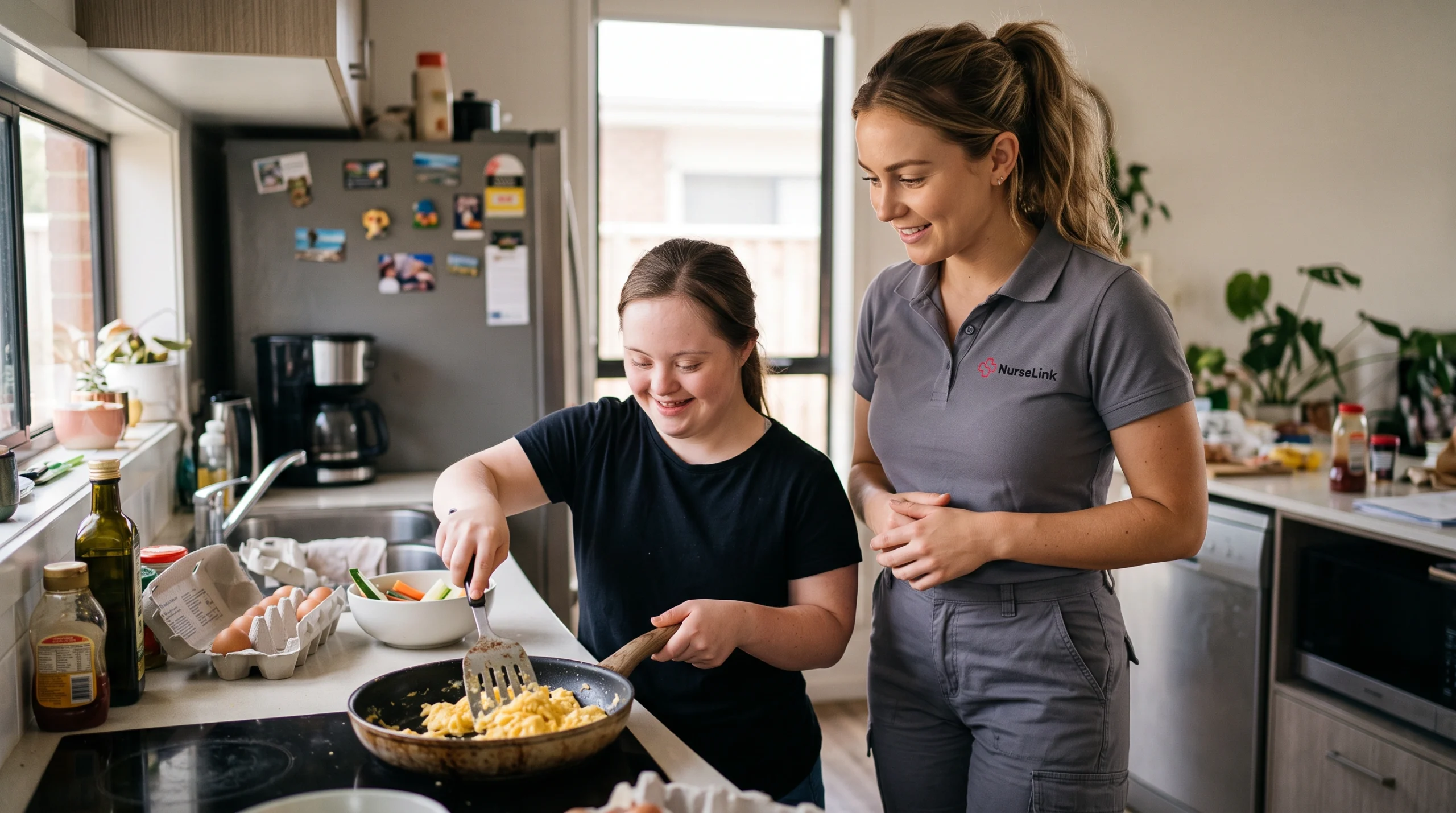
She Was Ready. We Helped Her Get There.
Room To Breathe

The Man He Was Getting Back To
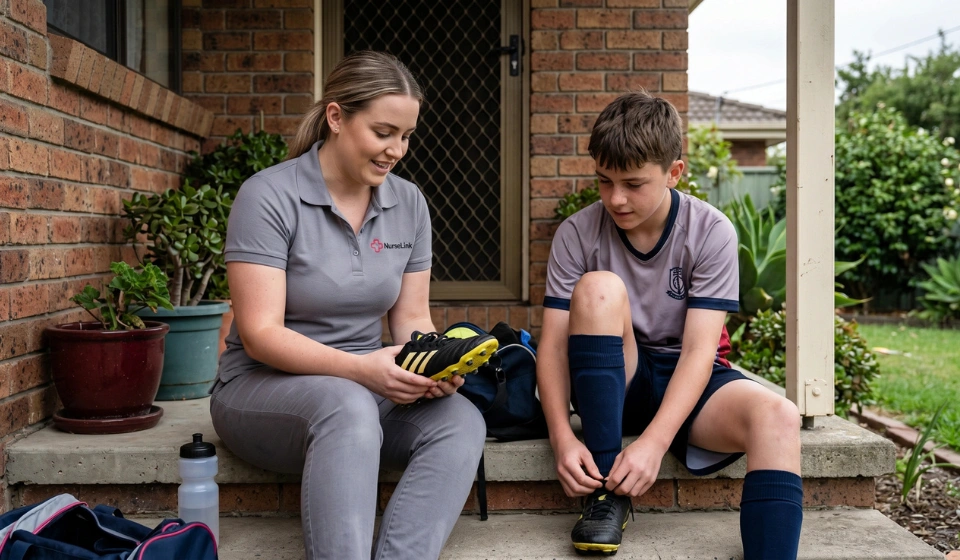
They Did Not Give Up On Him
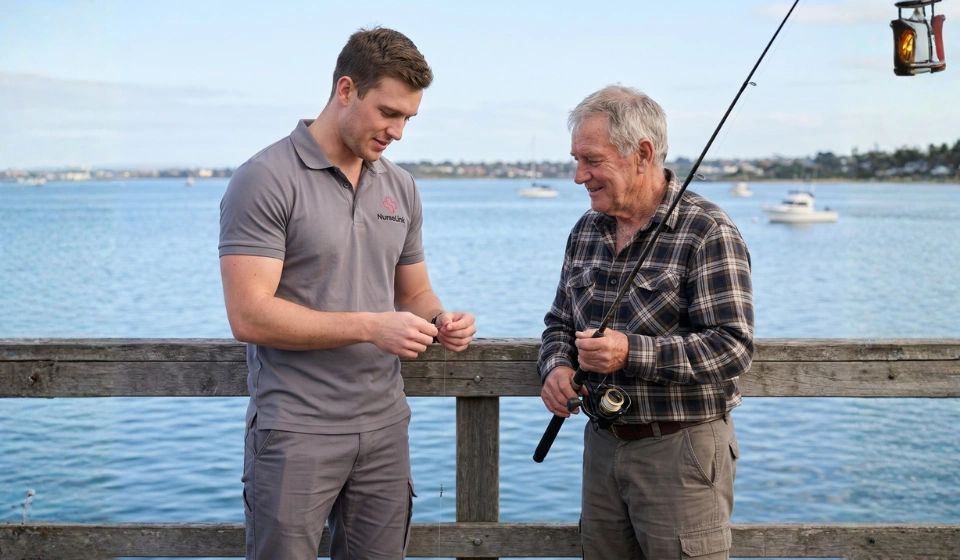
Returning To Community Life
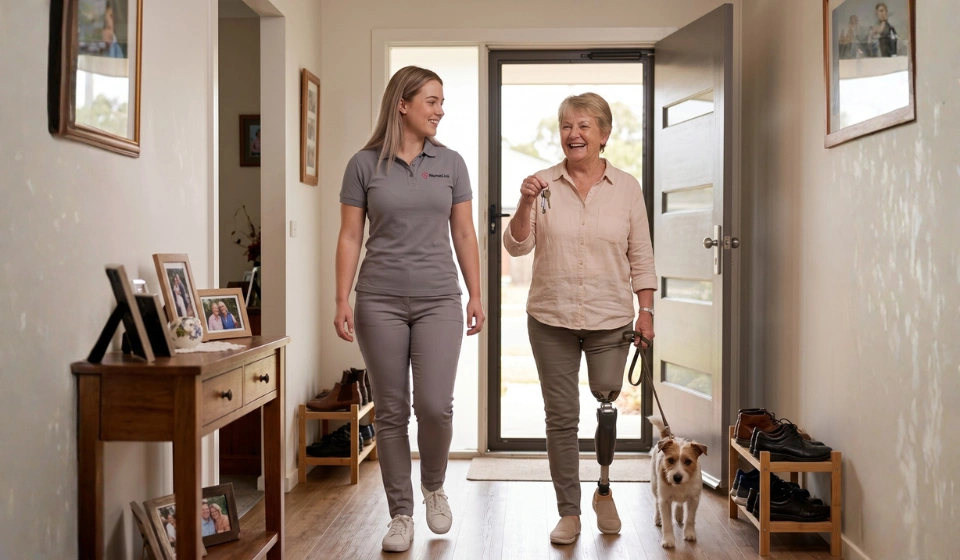
Rebuilding Independence After A Diabetes-Related Amputation
Cooking By Heart

The World Beyond The Front Door
Finding Home Again After A Stroke
Relearning Independence After A Life-Changing Accident
Beyond The Diagnosis
Two Years In Care. One Giant Step Toward Home.
When Transport Barriers Disrupted NDIS Care

Supported Independent Living Success
A Journey Towards Independence With NDIS Support

Daniel’s Journey