
Someone Finally Holding The Whole Picture
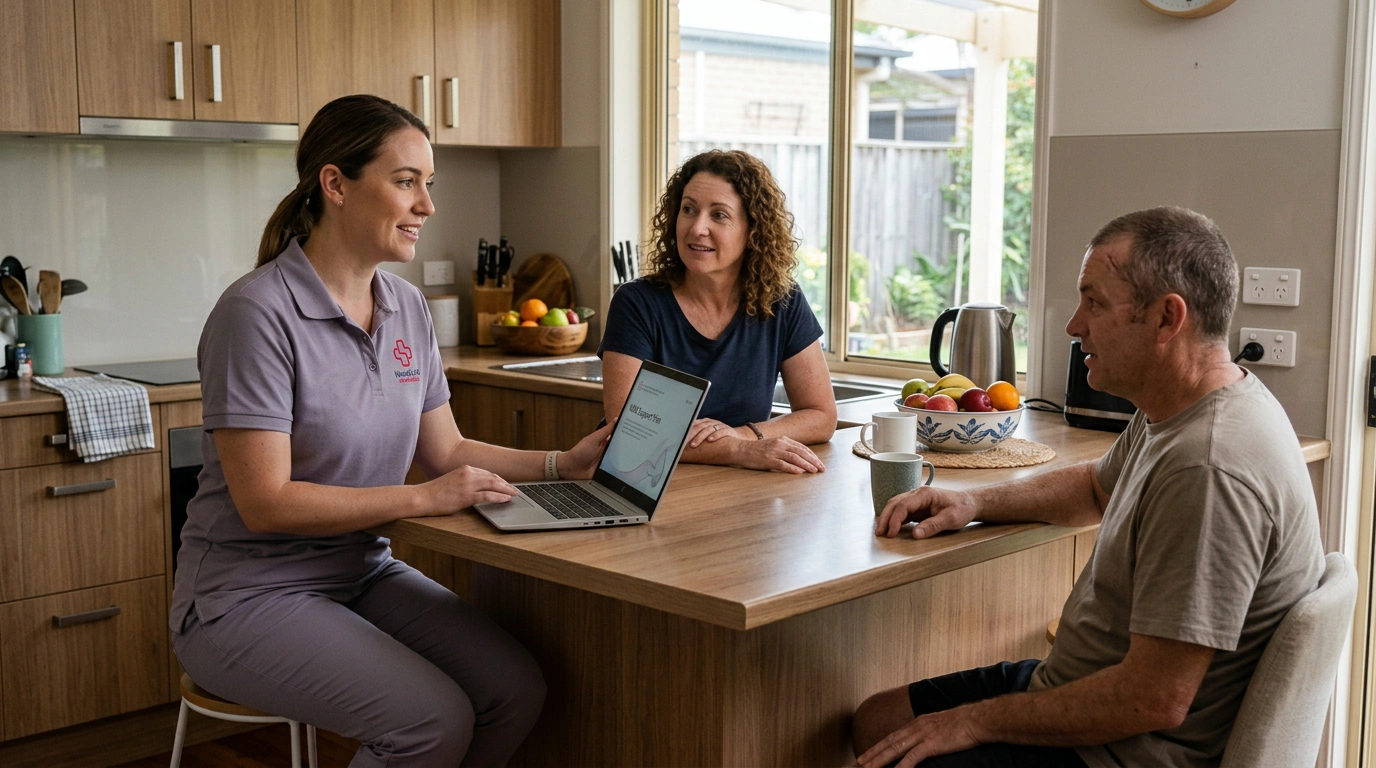
How NurseLink's Support Coordination Rescued A Brisbane Family After An Acquired Brain Injury
A Case Study In NDIS Support Coordination That Turned Chaos Into A Plan That Actually Worked
Introduction
An NDIS plan built around complex, multi-provider needs can, on paper, look like exactly what a participant requires, appropriately funded, comprehensive in scope, designed around genuine goals. In practice, for the participant and family responsible for actually making that plan function, it can become something closer to a second full-time job, a constant, exhausting cycle of invoices, provider communications, service agreements, plan reviews and scheduling coordination that consumes far more time and energy than most families have any capacity to sustainably provide, especially when they are also managing the practical and emotional demands of the disability itself.
This burden falls hardest on families managing the aftermath of an acquired brain injury, where the participant’s own capacity to manage administrative complexity is often significantly affected by the injury itself, and where the range of services required, therapy, support work, medical care, sometimes accommodation and equipment, can involve a genuinely large number of separate providers, each requiring their own communication, coordination and oversight. Without someone actively holding the whole picture together, a well-funded, well-designed plan can quietly fail to deliver its intended benefit, not because the services themselves are inadequate, but because no one has the capacity to make them function as a coordinated whole.
Support coordination exists precisely to solve this problem, and its value is often most visible in exactly the kind of situation this case study describes: a family who had reached a genuine breaking point managing the administrative weight of a complex plan, not because they lacked commitment or capability, but because the sheer volume of coordination required had become more than anyone reasonably could have managed alongside everything else already on their plate.
This case study documents how NurseLink Healthcare provided support coordination for a man in his late thirties in Brisbane, living with the significant and complex effects of an acquired brain injury, and how properly resourced coordination transformed a family’s exhausting administrative burden into a plan that finally functioned the way it was meant to.
To protect the privacy of the participant and his family, all names and identifying details have been kept confidential throughout this case study.
The Participant & His Family
The participant is a man in his late thirties who sustained a significant acquired brain injury in a workplace accident several years before NurseLink Healthcare became involved, an injury that left him with a complex combination of cognitive, physical and behavioural impacts requiring an extensive and multifaceted package of support under his NDIS plan. He lived with his wife and their two young children in Brisbane’s southern suburbs, in a household that had, in the years since his injury, absorbed an enormous amount of change and strain.
His plan, by the time NurseLink Healthcare became involved, included occupational therapy, physiotherapy, speech pathology, psychology, behaviour support, regular support work for daily living assistance and community access, and specialist equipment funding, a genuinely comprehensive package reflecting the significant complexity of his needs. But the plan’s comprehensiveness had, in practice, become its own considerable burden. Each service involved a separate provider, each provider required its own communication, scheduling, invoicing oversight and periodic review, and the sheer administrative volume of managing all of this had fallen, in the absence of properly resourced coordination, almost entirely onto his wife.
She described, in the initial conversation with NurseLink Healthcare, a level of administrative overwhelm that had become genuinely unsustainable. She was managing correspondence and scheduling with more than half a dozen separate providers, tracking invoices and plan budget usage across all of them, attending or arranging appointments around her own work and her children’s school schedules, and doing all of this while also providing a significant amount of direct daily support to her husband and managing the ordinary demands of raising two young children. She had, by her own account, reached a point of such sustained exhaustion that she had begun missing provider communications entirely, invoices going unpaid past their due dates, appointments double-booked or missed, not through any lack of care but through simple, human administrative overload that had finally exceeded what one person could reasonably sustain.
Her husband’s own capacity to manage this administrative complexity was significantly limited by his injury itself, meaning the burden could not realistically be shared with him in any substantial way, a reality the family had been navigating largely alone for a considerable period before a friend, aware of the family’s exhaustion, suggested they investigate whether their plan included funding for proper support coordination.
Understanding What The Family Actually Needed
The initial assessment conversation, conducted primarily with his wife given the practical realities of her husband’s capacity, revealed a family in genuine crisis, not around the quality or adequacy of the services his plan funded, but around the sheer administrative weight of managing them all without proper coordination support.
She needed, more than anything, someone to actually hold the whole picture of his plan and take direct responsibility for the coordination work that had been consuming her own life, provider communication, scheduling, invoice tracking, plan budget monitoring, and the periodic reviews and reporting the plan required. She was clear that she wanted to remain genuinely involved in decisions about her husband’s care and services, she did not want to be removed from the process entirely, but she needed the operational weight of managing it lifted from her shoulders in a way that let her actually be present for her family rather than perpetually consumed by administrative overwhelm.
She also needed, though she articulated this somewhat hesitantly, an acknowledgement that the family had reached a genuine point of crisis, not a minor inconvenience to be politely worked around, and a coordinator who would treat the scale of what she had been managing with appropriate seriousness rather than simply adding one more service to an already unmanageable list.
Her husband, participating in the conversation to the extent his injury allowed, indicated clearly that he wanted his own voice included in decisions about his care wherever possible, even where his wife necessarily carried much of the practical coordination on his behalf, a preference the care coordinator noted as important to how the engagement should be structured.
The NurseLink Healthcare Solution
A Dedicated Support Coordinator Who Took Genuine Ownership
NurseLink Healthcare assigned a dedicated support coordinator with substantial experience managing complex, multi-provider plans for clients with acquired brain injury, chosen specifically for her methodical, highly organised approach and her genuine capacity to take real ownership of the coordination burden rather than simply supplementing what the family was already managing. From the outset, she made clear to the family that her role was to actively hold and manage the plan’s complexity, not to add another layer of communication for them to track.
Mapping The Full Picture Before Making Any Changes
The coordinator’s first weeks focused on building a comprehensive, accurate picture of the plan as it actually stood, every provider, every service agreement, every outstanding invoice and every upcoming review or appointment, a mapping exercise that revealed, in itself, some of the disorder that had accumulated during the period the family had been managing without proper coordination support. Several invoices were found to be significantly overdue, one provider relationship had lapsed into inconsistent communication, and the plan’s overall budget tracking had become difficult to reconstruct with confidence, all consequences of an administrative load that had simply outpaced what one exhausted person could sustainably manage alone.
Taking Direct, Ongoing Ownership Of Provider Communication & Scheduling
Once the picture was properly mapped, the coordinator took direct responsibility for ongoing communication with each of his providers, managing scheduling, invoice processing and routine correspondence herself rather than relaying tasks back to the family, a shift that immediately and significantly reduced the administrative volume his wife was personally managing. Appointments were scheduled with proper lead time and coordinated sensibly around the family’s broader commitments, invoices were tracked and processed promptly against the plan’s budget, and provider relationships that had lapsed were actively re-established and properly maintained going forward.
Keeping The Family Genuinely Informed & Involved In Decisions
While taking on the operational coordination burden directly, the coordinator maintained regular, clear communication with both the participant and his wife, ensuring they remained genuinely informed of how the plan was being managed and properly involved in any decisions of substance, rather than being removed from the process entirely. This balance, active ownership of the administrative load paired with genuine ongoing involvement in decisions, was one the coordinator was deliberate about maintaining throughout the engagement, understanding that the family’s need for relief did not mean a wish to be excluded from decisions about the participant’s own care.
Proactively Identifying & Addressing Gaps In The Plan
Beyond simply managing the existing arrangement, the coordinator identified, through her thorough mapping of the plan, a number of areas where services were not being used as effectively as they could be against the participant’s actual goals, and worked with the family and the relevant providers to adjust and improve the plan’s function over time, ensuring the funding in place was genuinely serving the outcomes it was meant to support rather than simply being administered without ongoing review.
Preparing Thoroughly For Plan Reviews
As the participant’s scheduled plan review approached, the coordinator took primary responsibility for preparing the comprehensive documentation and provider reports the review required, a task that had previously fallen to his wife and had been, by her own account, one of the most dreaded and overwhelming parts of managing his plan each year. The coordinator’s thorough, properly resourced preparation meant the family arrived at the review confident and well prepared, rather than scrambling, as they had in previous years, to assemble the required information at the last minute.
Outcomes & Impact
The Plan Finally Functioned As A Coordinated Whole
Across the engagement, the participant’s plan moved from a fragmented, inconsistently managed set of separate services to a properly coordinated, functioning whole, with providers communicating effectively, invoices processed promptly and appointments scheduled with genuine reliability, a transformation the family described as making a fundamental difference to how well his services actually served him.
His Wife Recovered Significant Time & Wellbeing
Perhaps the most immediately significant outcome of the engagement, from the family’s own perspective, was the substantial reduction in the administrative burden his wife had been carrying largely alone. She described, at a review conversation some months into the engagement, having recovered a meaningful amount of her own time and mental space, allowing her to be more genuinely present for her children and for her husband rather than perpetually consumed by provider correspondence and invoice tracking.
The Plan's Funding Was Used More Effectively
Through the coordinator’s proactive review of how services were functioning against the participant’s actual goals, several adjustments were made that improved the plan’s overall effectiveness, ensuring funding was being directed toward the outcomes it was intended to support rather than simply being administered without genuine oversight of whether it was working.
A Plan Review Prepared Properly, Without Crisis
The participant’s subsequent plan review, prepared thoroughly and well in advance by the coordinator, proceeded smoothly and without the last-minute scramble that had characterised previous reviews, an outcome the family identified as a genuinely significant relief given how stressful this process had previously been.
The Participant Remained Genuinely Involved In His Own Care
Despite the substantial coordination now being managed on the family’s behalf, the participant himself remained genuinely informed and involved in decisions about his own services and goals, a balance the family identified as important given his own clearly stated wish, at the outset of the engagement, to remain part of decisions about his own care wherever his injury allowed.
A Reflection From The Participant's Wife
Several months into the engagement, she shared the following with the NurseLink Healthcare care coordinator:
“I had reached a point where I was managing more than half a dozen different providers, invoices, appointments, reviews, on top of caring for my husband and raising our children, and I was genuinely drowning. I was missing things, not because I did not care, but because there was simply too much for one exhausted person to hold. Our coordinator took the whole administrative weight off me without taking me out of the decisions that actually matter. Invoices get paid on time now. Appointments happen when they are supposed to. Our plan review, which used to be a nightmare I dreaded for weeks beforehand, was actually calm this year. I have time again, for my kids, for my husband, for myself. I did not realise how much that had been missing until I finally got it back.”
Key Takeaways From This Case Study
A well-funded, comprehensive plan can still fail in practice without proper coordination support. The quality and scope of services in a plan matter far less than a family’s ability to actually access and coordinate them, and families managing this burden alone, especially where the participant’s own capacity is affected by their injury, can reach genuine breaking point even with an objectively excellent plan.
Support coordination should take genuine ownership, not simply supplement what a family is already managing. A coordinator who actively takes on scheduling, provider communication and invoice management, rather than adding another layer of communication for an already overwhelmed family to track, delivers considerably more meaningful relief.
Taking over administrative ownership does not require removing the participant and family from genuine decisions. This engagement succeeded by balancing active operational ownership of the plan’s complexity with continued, genuine involvement of both the participant and his wife in decisions that mattered.
Thorough, proactive plan review preparation transforms a dreaded process into a manageable one. Properly resourced preparation for scheduled reviews protects families from the last-minute scramble that under-coordinated plans often produce, and improves the outcomes of the review itself.
Effective coordination improves not just administrative ease but the actual effectiveness of a plan’s funding. Proactively reviewing whether services are functioning well against a participant’s genuine goals, rather than simply administering them, ensures a plan’s funding is doing the work it was designed to do.
Conclusion
A complex NDIS plan can only deliver the outcomes it was designed for if someone is genuinely holding the whole picture together, and for families managing this burden alone, particularly where a participant’s own capacity is affected by an acquired brain injury, that weight can become entirely unsustainable well before anyone outside the family fully realises it. For the family at the centre of this case study, NurseLink Healthcare provided support coordination that took genuine ownership of a fragmented, overwhelming administrative burden and turned it into a plan that finally, properly functioned.
Invoices are paid on time now. Appointments happen when they should. And a wife who had been quietly drowning in paperwork for years finally has the time and space to simply be present for the family she has been holding together all along.
If you or someone you support is managing a complex NDIS plan that has become an administrative burden too heavy to carry alone, we encourage you to reach out to the NurseLink Healthcare team. We are here to hold the whole picture, so you can hold your family instead.
Latest Post

When Parents Learned to Trust NDIS Support
The Life He Thought The Accident Had Collapsed
Someone Finally Holding The Whole Picture
A Home That Was Finally His Own

Learning To Do It Herself, With Someone Beside Her

What Was Still Possible

Finding Her Way Back To Her Own Kitchen Table
From Aged Care To Her Own Front Door

She Was Ready. We Helped Her Get There.

Room To Breathe

The Man He Was Getting Back To
They Did Not Give Up On Him
Returning To Community Life
Rebuilding Independence After A Diabetes-Related Amputation
Cooking By Heart

The World Beyond The Front Door
Finding Home Again After A Stroke
Relearning Independence After A Life-Changing Accident

Beyond The Diagnosis

Two Years In Care. One Giant Step Toward Home.
When Transport Barriers Disrupted NDIS Care

Supported Independent Living Success

A Journey Towards Independence With NDIS Support

Daniel’s Journey