NurseLink Healthcare's NDIS Support Helped A Preston Family Prepare Their Son For A Home Of His Own
A Case Study In Supported Accommodation That Treated The Move As A Family Transition, Not Just A Placement
Introduction
For many families of young adults with Down syndrome, there is a question that sits quietly in the background for years. Where will he live when we are no longer able to care for him? It is rarely asked out loud at the dinner table. It is carried privately, at night, and it grows heavier with each birthday.
At the same time, the young person at the centre of the question is often asking a different one. He is asking when he gets to have a home of his own, like his brother and sister, with a key and a bedroom and friends who come over. These two questions, one about security and one about independence, are rarely in conflict. But they are often not discussed in the same conversation, and families can find themselves stuck between them.
Shared supported accommodation, where a small group of people live together in a home with tailored support, can answer both. But getting there is not simple. It involves choosing the right home and housemates, preparing the young person for a change that may feel enormous, and helping parents let go of a role they have held for decades. This case study documents how NurseLink Healthcare supported a family in Preston whose son, a young man with Down syndrome, moved into shared supported accommodation, and how a patient, family-centred transition helped everyone, including his parents, feel ready.
To protect the privacy of the participant and his family, all names and identifying details have been kept confidential throughout this case study.
The Family & Their Situation
The family lives in Preston and consists of two parents, in their early sixties, an older sister who lived in Brunswick with her partner and the participant, a young man of twenty-six with Down syndrome.
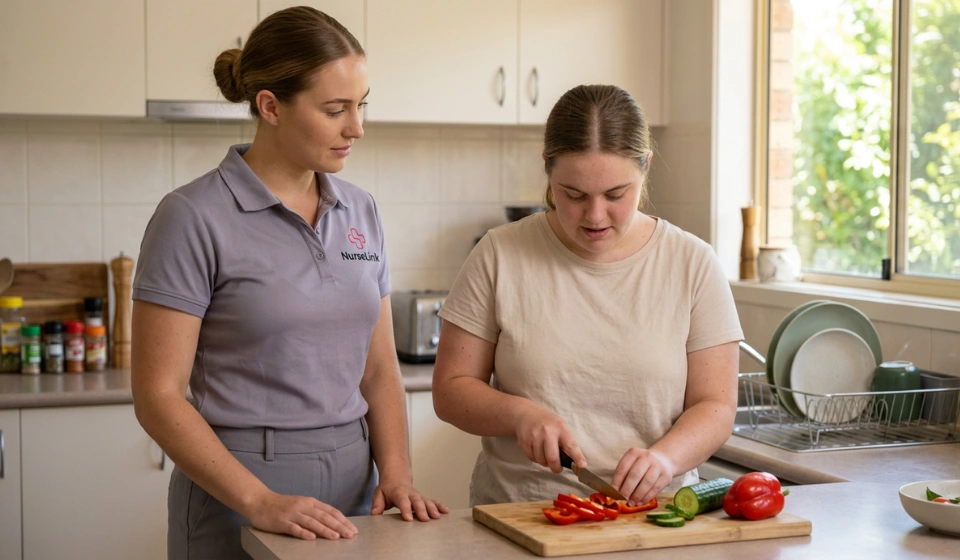
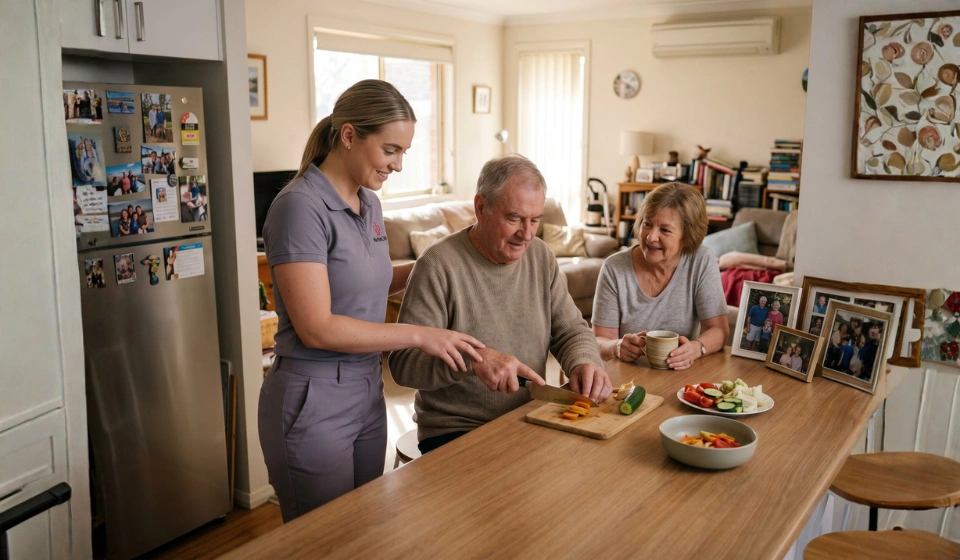
The participant was cheerful, sociable and fiercely loyal. He loved music, especially anything with a strong beat, and spent much of his spare time with headphones on, dancing in the kitchen. He worked two days a week at a local community café, where he was well liked, and attended a weekly social group for young adults. He could manage most of his personal care with prompting, helped with simple cooking and travelled independently on a familiar route. He needed support with money, with decisions that involved planning and with managing unexpected changes.
His parents had devoted their lives to making his life full. His mother had worked part time for years to be home for him. His father had adjusted his own career. They were proud of their son and had always assumed that he would live with them. In recent years, though, they had begun to feel their age. His father had had a health scare. His mother’s knees were failing. They had started, quietly, to worry about what would happen if one of them became ill.
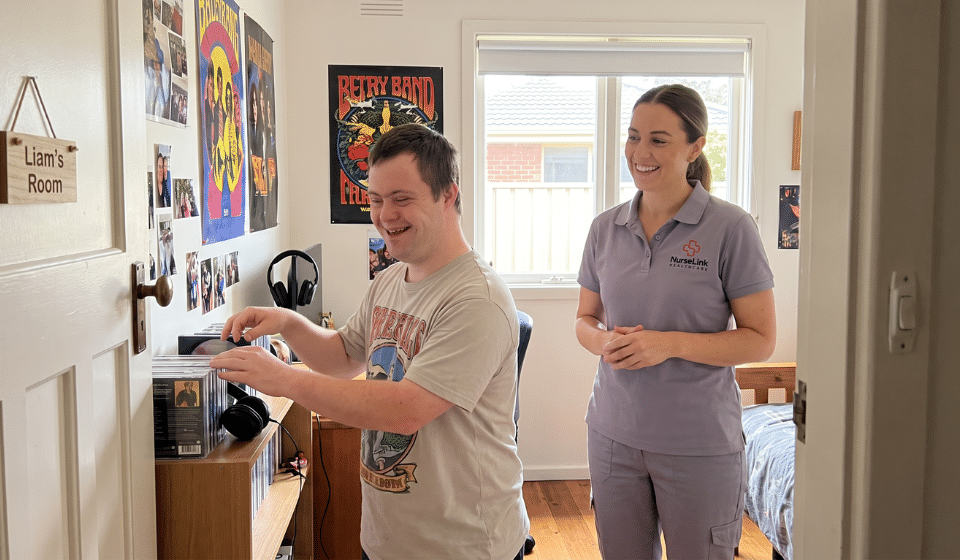
The participant, for his part, had been dropping hints. He had pointed out his sister’s flat, a house he liked on the way to the café and an advertisement for a shared home. At a planning meeting, when asked what he wanted for his future, he said, clearly and without hesitation, that he wanted his own room with his name on the door.
His parents had heard him, and they had said they would think about it. In truth, they were frightened. They did not know whether he was ready, whether he would be safe or whether anyone else could look after him as well as they did.
Understanding What The Family Actually Needed
The NurseLink Healthcare coordinator who began working with the family recognised, early, that this was not a case of an unready participant or unwilling parents. It was a case of a family approaching a genuinely significant transition from two directions, and needing help to meet in the middle.
The participant needed a home that was right for him. He needed housemates who were compatible, staff who knew him and respected him, and a place where he could keep his routines, his job and his friends. He needed time to prepare, and a gradual introduction so that the move did not feel like a sudden departure.
His parents needed something harder to define. They needed information, not reassurance. They needed to see the home, meet the staff and understand how it worked. They needed to know what would happen if he was unwell, if he was unhappy or if something went wrong. They also needed permission to grieve a little, and to be reminded that letting go was not the same as stepping away.
His sister, who had always been protective, needed to be included, and to know that she would remain part of his life and part of any decisions.
The NurseLink Healthcare Solution
Starting With The Participant's Vision
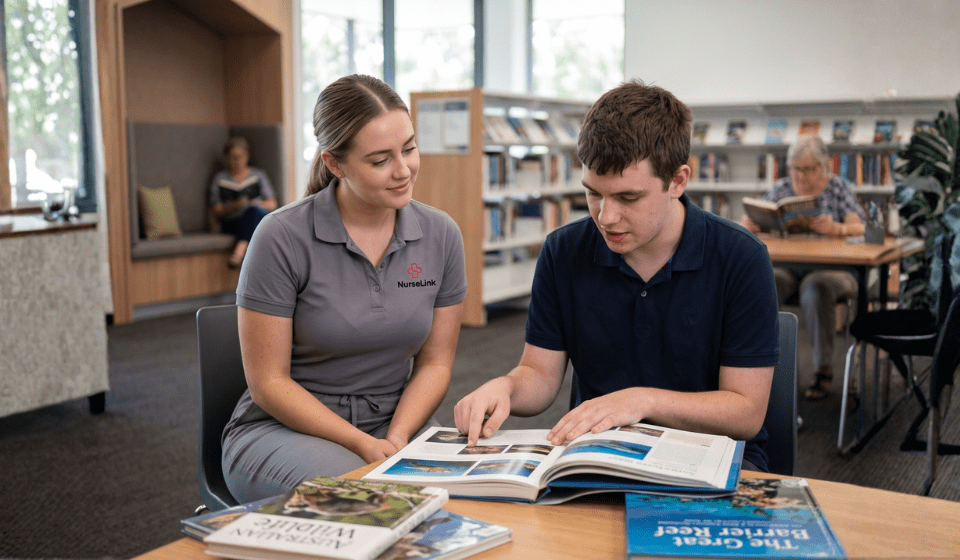
The coordinator began with a conversation with the participant, supported by an easy-read format and photographs. She asked him what a good home looked like, who he wanted to live with and what he wanted to be able to do. He said he wanted a quiet room, a place to play music, friends and a short walk to the café. These became the starting points for the search.
Finding A Home & Housemates That Fit
Working with a local supported accommodation provider, the coordinator identified a four-bedroom home in a nearby suburb. It was close to his café, near public transport and had a garden. The other three residents were young men of similar age and interests. The coordinator arranged for the participant to meet them in a casual setting, over lunch, and he got on well with them, particularly a housemate who shared his love of music.
A Gradual Introduction, Not A Sudden Move
The transition was planned in stages. First, the participant visited the home for an afternoon. Then he stayed for dinner. Then he stayed for a night, and later for a weekend. Each stage was reviewed with him and his parents before moving on. The support staff at the home learned his routines, his preferences and the signs that he was anxious or overwhelmed. By the time he was ready to move in, the home felt familiar.
Showing His Parents How It Worked
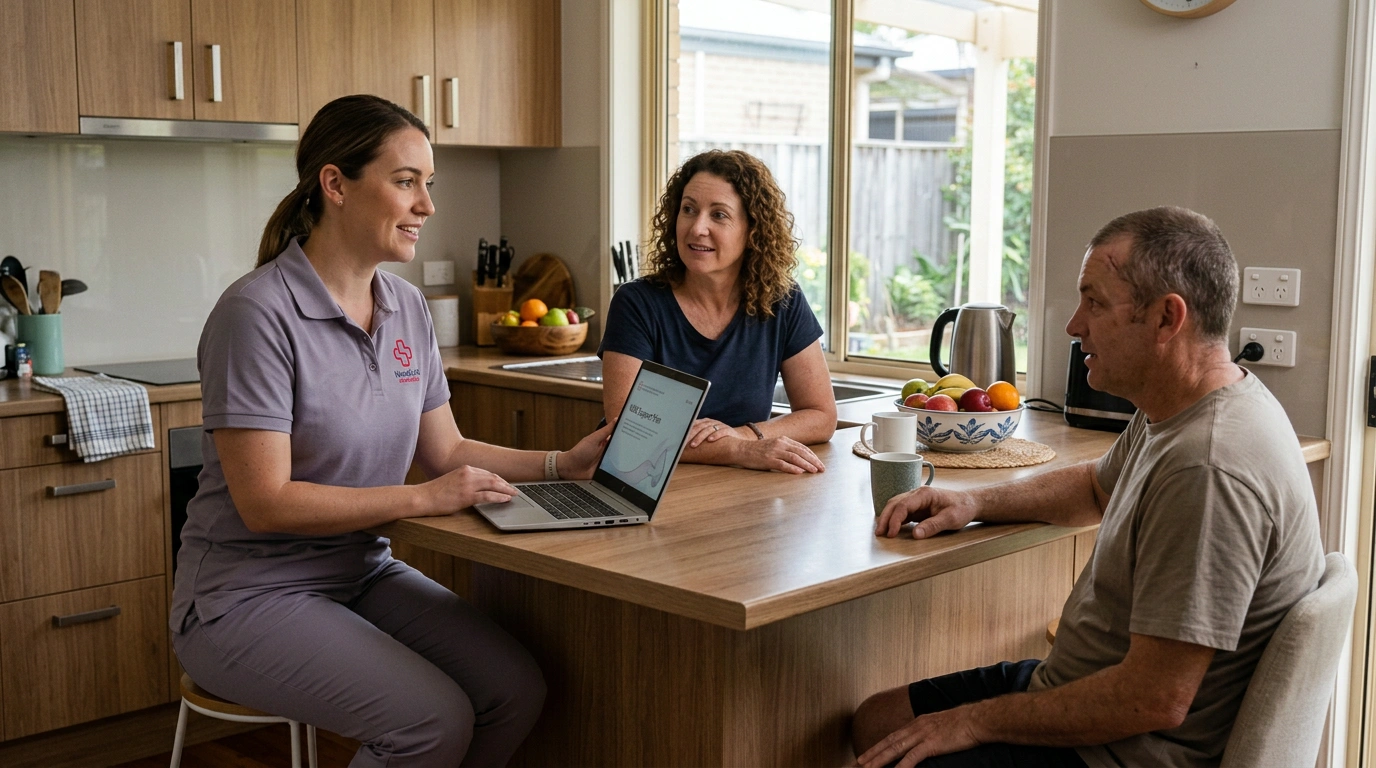
The coordinator arranged for his parents to visit the home several times, meet the staff and ask questions. They were shown the support roster, the emergency procedures and how the household was run. They were introduced to the house coordinator and to the other residents’ families. His mother said that the most important moment was meeting the night worker and seeing that he knew her son’s name.
Building A Plan For When Things Went Wrong
At his parents’ request, the coordinator worked with the family and the provider to write a clear plan for difficult situations. It covered what would happen if he was unwell, how his parents would be contacted and who would make decisions. Having the plan in writing gave his parents confidence, and the participant a sense of safety.
Making The Room His Own
The participant chose the colour of his bedroom wall, bought a new lamp and arranged his music collection on a shelf. His sister helped him hang his posters. On the door, a sign painted with his name was hung before he moved in. When he saw it, he said it was the best thing he had ever seen.
Supporting His Parents Through The Move
The coordinator spent time with his parents in the weeks around the move. She encouraged them to look after themselves, and arranged for them to speak with other parents who had been through the same transition. She reminded them that they would be welcome at the house, and that they were still his parents. His mother said that it helped to hear that others had felt the same fear and had come out the other side.
Keeping His Life Running
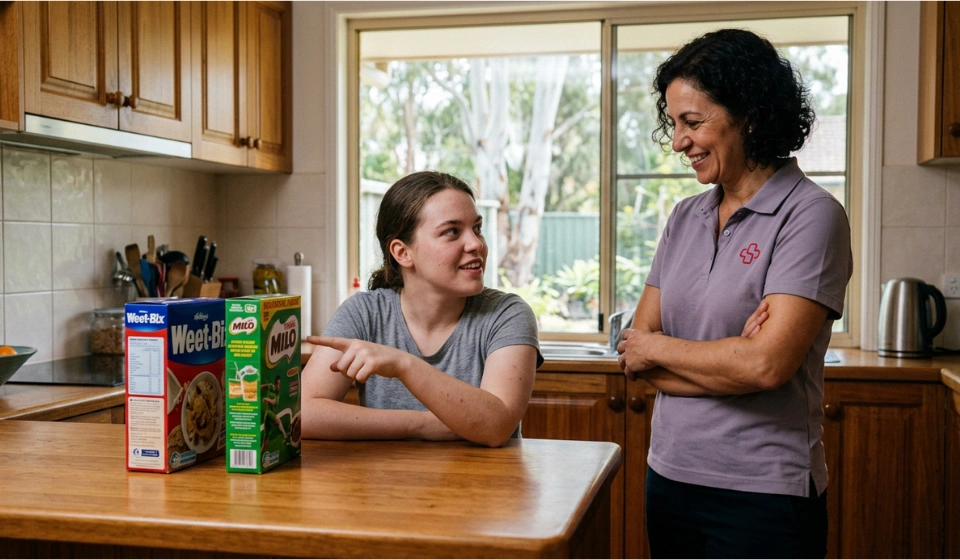
Throughout the transition, the participant kept his job at the café and his weekly social group. Support was arranged so that he could travel to both. His routine remained intact, which helped him adjust to the change.
Outcomes & Impact
He Moved In With Confidence
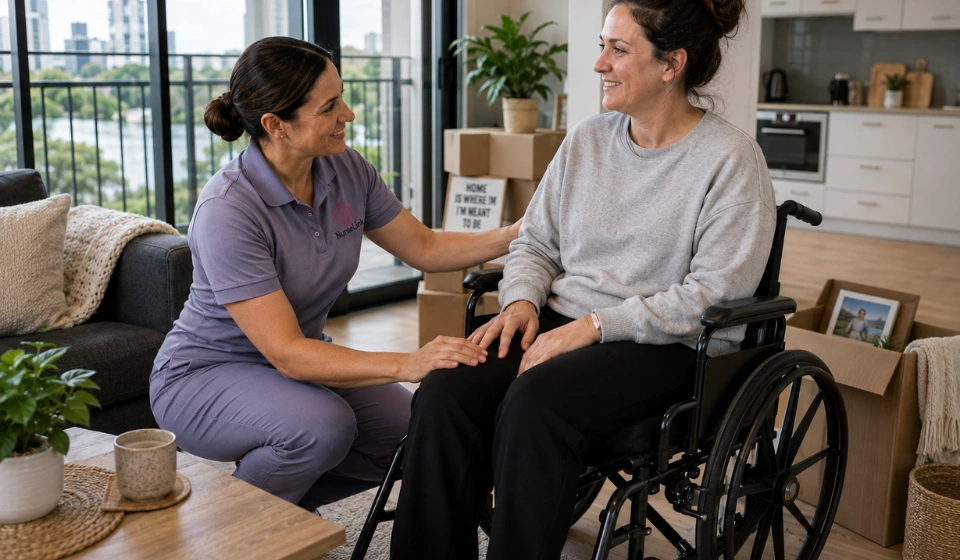
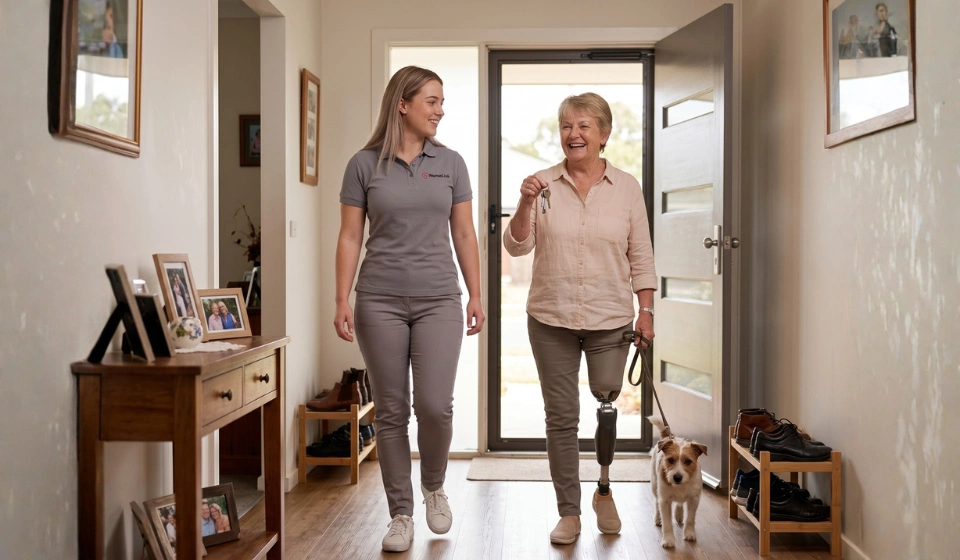
After about six months of gradual preparation, the participant moved into his new home. He arrived with his lamp, his headphones and a large smile. He told his parents, with great seriousness, that they could go home now.
He Settled Quickly & Happily
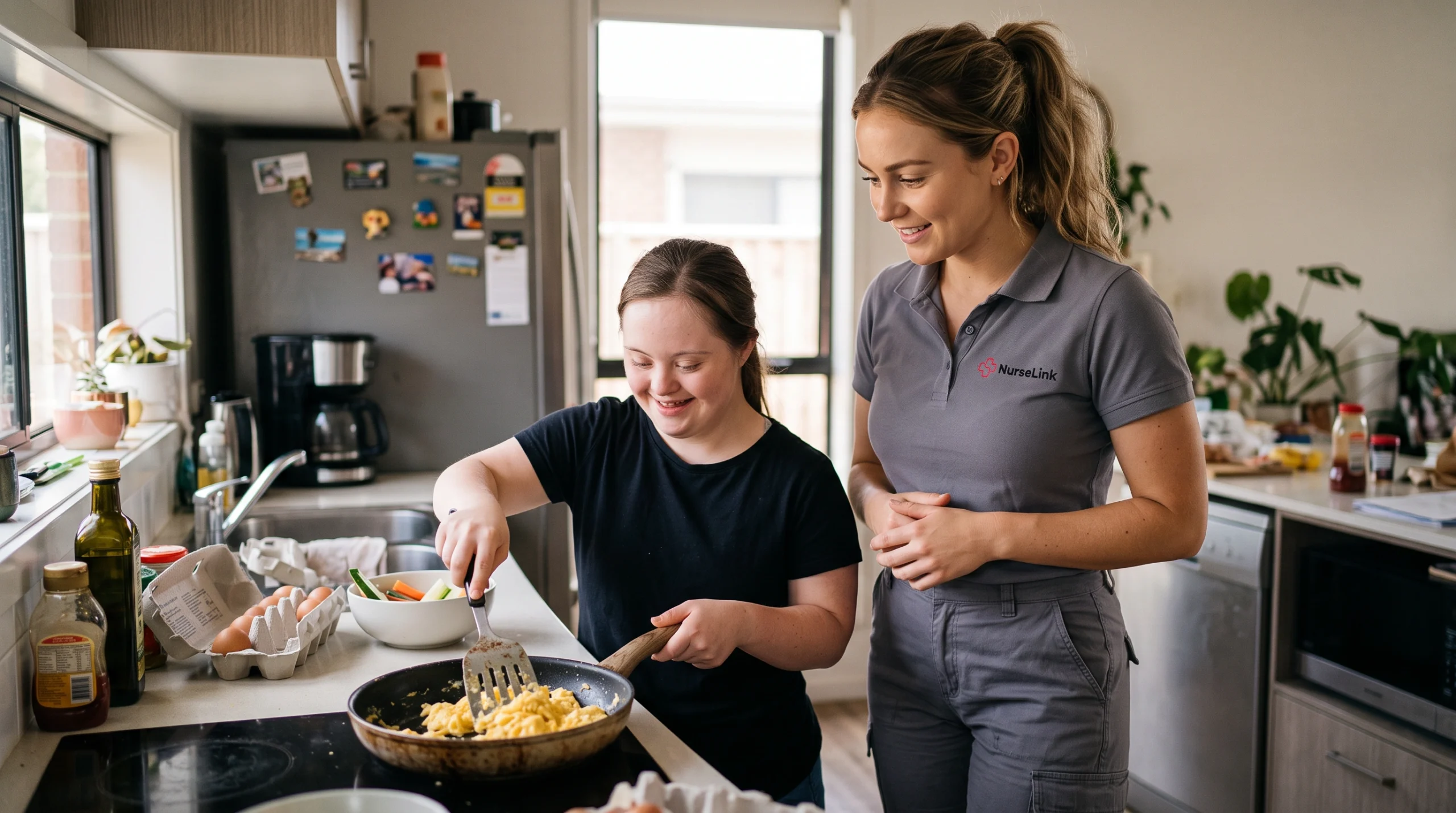
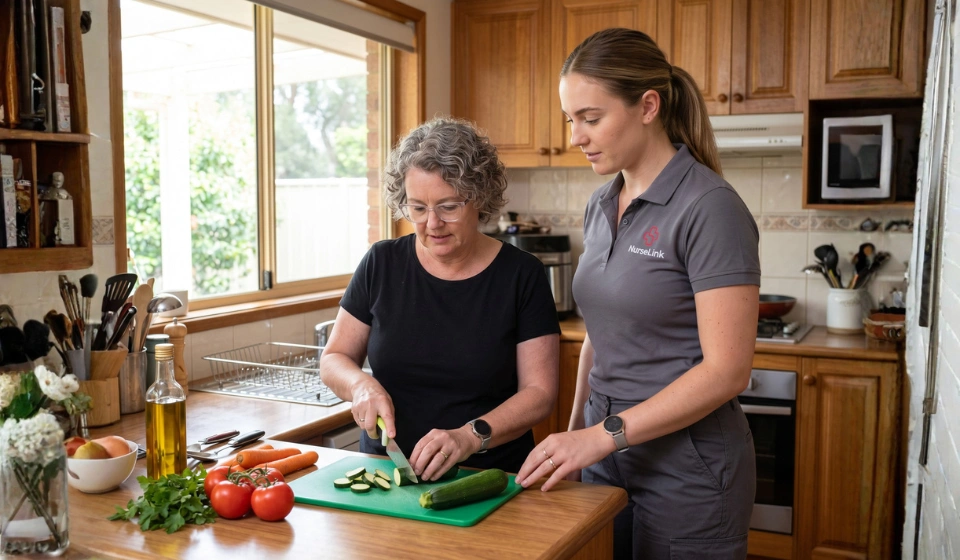
Within weeks, the participant was fully part of the household. He cooked with housemates, joined house outings and played music in the living room. The staff said that he had settled in more quickly than many new residents.
His Independence Grew
Living away from his parents, the participant took on new responsibilities. He learned to manage his own laundry, to plan his weekly shopping with support and to take part in household decisions. His sister said that he seemed taller.
His Parents Found A New Rhythm
His parents, after an initial period of adjustment, found that their relationship with their son had become easier and more joyful. His father’s health improved as his stress eased. His mother returned to her own interests. They visited weekly, and were welcomed warmly.
The Family Felt Secure About The Future
Perhaps most importantly, the family said that the question that had weighed on them for years had been answered. They knew that their son was settled in a home he loved, with people who knew him, and that he would be looked after if anything happened to them.
A Reflection From The Participant's Mother
Several months after the move, the participant’s mother shared the following with the NurseLink Healthcare coordinator:
She said that for twenty-six years she had believed that no one could look after her son as well as she could, and that it had never occurred to her that he might want, and deserve, a life that did not revolve around her. What changed things for her was a coordinator who listened to her fears without dismissing them, and a staff team who treated her son as a young man with his own preferences. She said the day he moved in, she cried in the car all the way home, and that the next morning, she woke up and realised she had slept through the night for the first time in years. She added that when she visited and saw his name on the door, she understood that this was not the end of her role. It was the beginning of another one.
Key Takeaways From This Case Study
Moving into supported accommodation is a family transition as well as an individual one. Parents need information, time and support to let go as much as the young person needs preparation.
Starting with the participant’s own vision keeps the plan about him. Asking what a good home looked like, in a format he understood, put his voice at the centre.
A gradual introduction reduces fear for everyone. Staged visits allowed the participant to build familiarity, and his parents to build trust.
Parents need evidence, not just reassurance. Seeing the home, meeting the staff and reading the plan gave them confidence that a promise of safety was real.
Small, personal touches make a house a home. Painting his room, hanging his posters and putting his name on the door helped him feel it was truly his.
Conclusion
A young man who had been asking, in his own way, for a home of his own, and parents who had been quietly dreading the question, found through patient, family-centred NDIS support that both could be honoured. For the family at the centre of this case study, NurseLink Healthcare provided not only a thoughtful transition plan, but a way of seeing the move as a new chapter for everyone.
His name is on the door. His music fills the living room. And a Preston family has found that letting go can be one of the ways a family holds on.
If someone in your family has a disability and you are thinking about a home of their own, we encourage you to reach out to the NurseLink Healthcare team. We plan the move with the whole family, at the pace that is right for them.